Hello, everyone.
This is Enta.
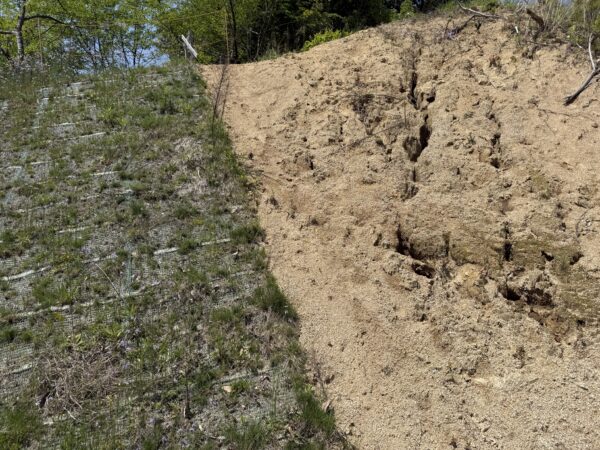
For vegetation engineering projects, there is a two-year warranty against defects.
What this means is that if the vegetation does not take root within two years, we will redo the work at no charge.
So, based on the previous three installments,
This is a continuation of the previous post.
Reflections on the Future of Vegetation Engineering and Material Selection (Part 1)
Reflections on the Future of Vegetation Engineering and Material Selection (Part 2)
Reflections on the Future of Vegetation Engineering and Material Selection (Part 3)
In summer, ensure that the seeds do not die, that they sprout at the appropriate time, that they survive the winter, and that they sprout again at the appropriate time.
Vegetation engineering—a type of slope protection that uses living organisms, which is extremely difficult and highly susceptible to weather conditions lol
There's no other job as tough as this, right? lol
Personally, I've always felt that even the seeds...If I can't put it in...I was thinking, "It's growing!"
The reason was that the seed (forage grass) wasn't suited to the soil, and also because they had sown as many as 10,000 seeds per square meter all at once, so,
They force the plants to grow and quickly drain the soil of its nutrients.
I just didn't think there was any way this could last.
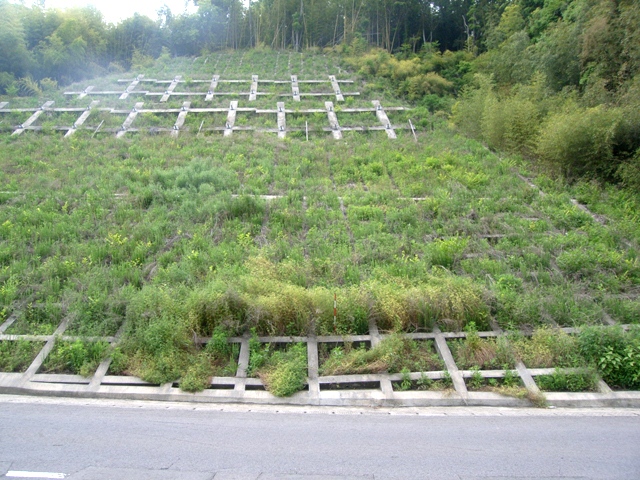
Back in the day, landscaping basically meant getting the place overgrown within three months.
These days, if you don't have any hair when you get inspected, the inspector will scold you lol
Since I had been using fewer seeds than recommended even back then, I was scolded several times during inspections for using too few...
So, what about the vegetation these days?
Construction Methods Suited to Weather Conditions from 2025 Onward
I think this is the only option left.
A construction method that makes sense is
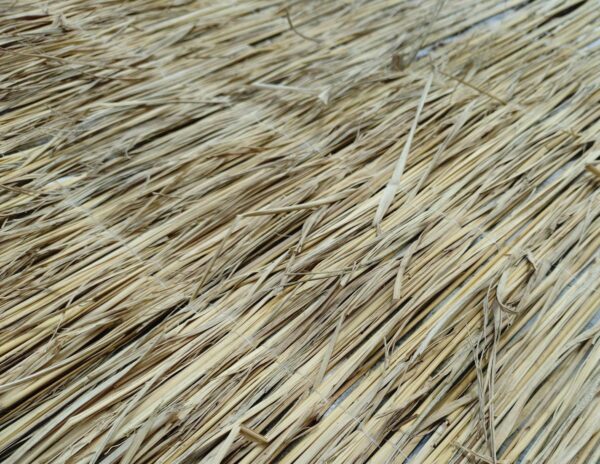
This is the only option.
This is a construction method that goes back to basics.
All we've got is straw, right?
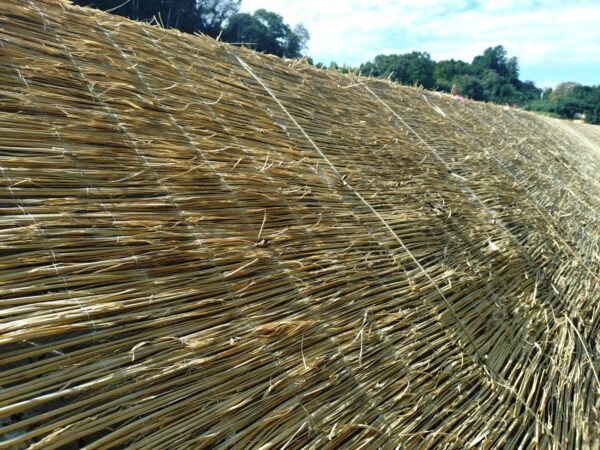
Spread straw on the slope.
Do you remember me mentioning before that future vegetation engineering will shift toward mat-based systems?
This construction method makes it easy to establish vegetation in any location.
A Look at the Future of Slope Greening!?
There's no need to bring in large machinery; installation can be done easily by hand.
There's nothing but ground-cover vegetation there.
What's more, they're protected in the summer and in the winter, too!
Isn't this the strongest?
When I saw this product, I thought, "This is the best."
Or rather, I happened to come across it at just the right moment while I was thinking about vegetation patterns lol
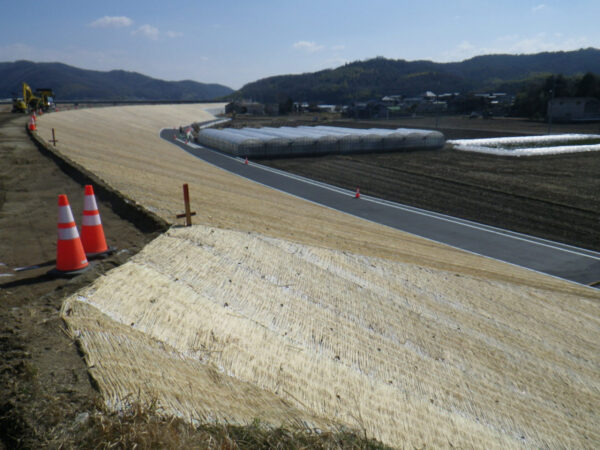
With straw, you can prevent it from being washed away during heavy rain, and there's no need to worry about ruts forming (since it spreads out).
There are many different types of groundcover plants out there, but to be honest, from the installer’s perspective, any type will do.
As light as possible and as easy to install as possible.
And as long as it's the market price, that's fine. (Though it doesn't have to be.)
It's a pain to have all that wire mesh and stuff strung up, isn't it? lol
Simple is best!
All-Weather (Summer and Winter)
When it comes to an all-purpose, all-weather mat, I think one with a higher straw content is definitely better.
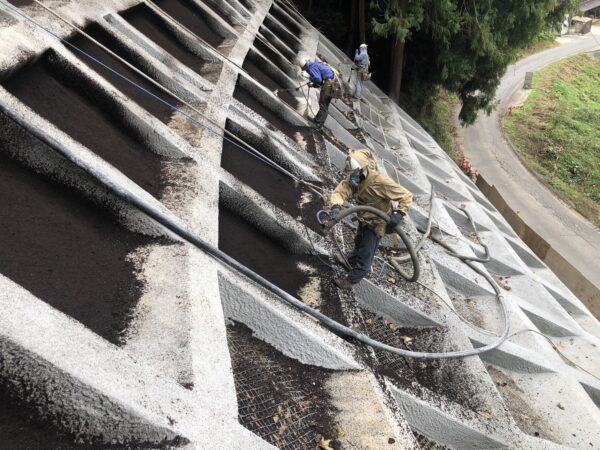
For example, suppose the design calls for a 3-centimeter-thick sprayed vegetation substrate layer.
We'll replace it with a straw-based mat of a higher quality.
It seems more likely that the vegetation will be in place two years from now if that approach is taken.
Depending on the region, there’s a chance straw could cause damage to wildlife, lol (the same goes for sprayed vegetation substrates).
No need to worry about the gully being washed away by rain, and there's little risk of heat damage or frost damage!
I guess this is what the future vegetation will look like, huh?
Or maybe we should just lay some straw on top of the geotextile? lol (Though that would be a huge hassle, lol)
I think we can hold our own based on our ingenuity and technical proposals.
See you later.
By the way, the product mentioned above was made by Rontai.
This is the vegetation stabilization method used in slope engineering.