



Hello, everyone.
This is Enta.
Were you okay during the typhoon?
The rain and wind here weren't as bad as I'd expected.
Tomorrow starts with a site inspection first thing in the morning, doesn't it?

But that's beside the point.
I get asked this a lot.
Is this really necessary?
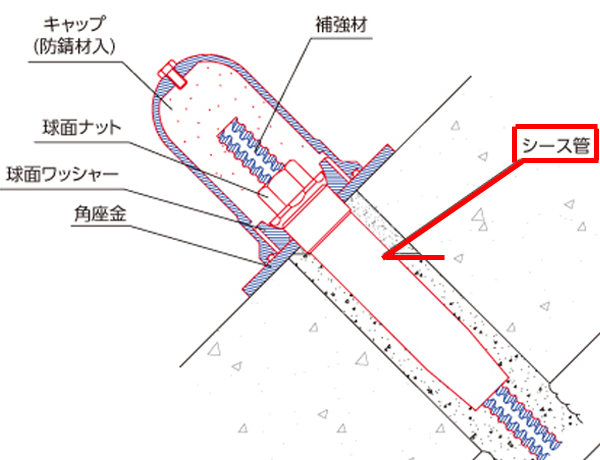
After inserting the rebar, pour the concrete, fill in the gaps, and attach the caps and other components.
It still happens sometimes that you end up putting the sheath on, right? lol
In conclusion,This is completely unnecessary!
This situation continues to arise because consultants who are unfamiliar with the actual site are still designing projects based directly on the reference drawings provided by materials manufacturers.
Strictly speaking, the manufacturer should be the one to remove it, but business is business. Since they probably still have inventory, they can’t just get rid of it that easily.
What's more, this sheath tube costs about 400 yen. That's quite a bit, actually.
Wouldn't it be better to remove this as part of a design change and add one more bolt?
I generally opt out when I'm a first-tier subcontractor. If I'm a second-tier subcontractor, though, I'll leave it up to you.
When removing items from the design, I clearly tell the general contractor and the local government that these items are unnecessary and will be removed.
Well, I'll explain in the documents why it's not necessary, though.
As for why it isn't necessary, I'm sure everyone involved in construction understands this well, but,
We're going to fill in the gaps, right? lol
On the contrary, there’s no reason not to do it, right?
I'll be filling the gaps, so I don't need the sheathing.
Let's go back 20 years. Back then, sheathed conduit was the norm.
The reason is that we did not perform the "gap-filling" process.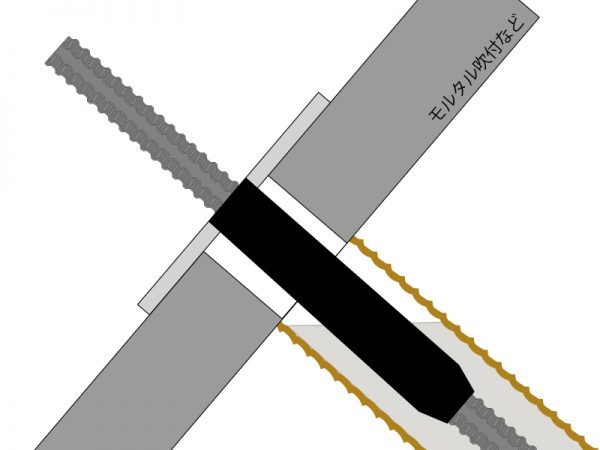
With this in place,It was common practice not to pack the gaps when using a seed tube.
That was the purpose of the sheath tube. It was designed to compensate for areas where injection wasn't possible. (The concept of backfilling didn't exist.)
It's designed to prevent that area from coming into contact with rainwater and the like; in the past, rebar was made of ungalvanized steel.
Well, since they had applied caulk to the corner washers, water probably won't get in, but,
I think there was water there due to wear and tear and condensation.
On the flip side, that makes you wonder, “So even now, if there’s a conduit, is it okay not to backfill?” lol
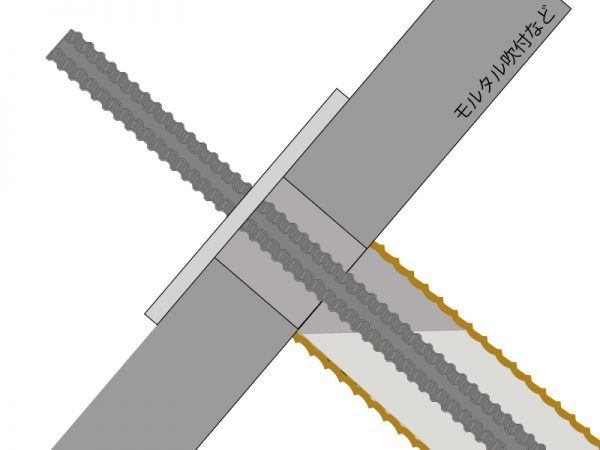
Nowadays, filling the gaps with mortar without a sleeve is the standard practice.
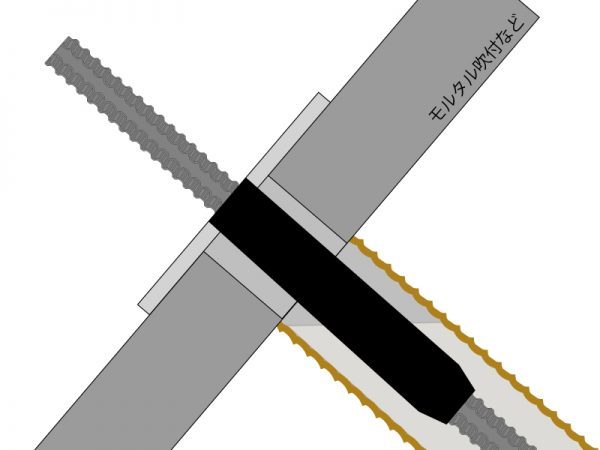
However, with the addition of sheathing and backfill, the situation has become absolutely chaotic. (There are also plenty of areas that weren’t included in the original design.)
This is really a waste of time, so to any construction consultants reading this,A conduit is not required.
Please don't include this in the design.
I believe that reducing costs is also part of being creative and resourceful.
Please submit your proposal highlighting how removing the sheath tube led to cost savings through your ingenuity!
Distinguishing between what’s truly necessary and what isn’t is part of a professional’s job, isn’t it?
See you later.



Thanks for all your hard work. Just the other day—actually, last year too—I had a conversation with a government official at a certain job site where I asked, “Is this really necessary?” (referring to the sleeve) (lol). It’s such a waste, isn’t it? You have to inject the grout (after confirming it doesn’t sink), and then you have to install the sleeve before it hardens—and before that, you can’t even attach the clip spacers (sob). Stay safe starting tomorrow!
Thank you for your hard work.
It's such a waste, isn't it?
Well, I guess it'll go away eventually, lol.
Stay safe!