Hello, everyone.
This is Enta.
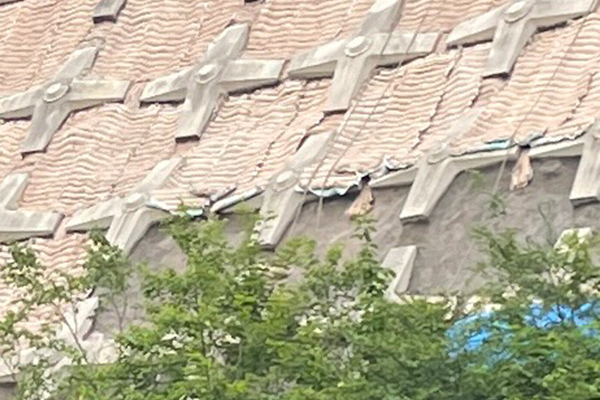
Do you do vegetation engineering?
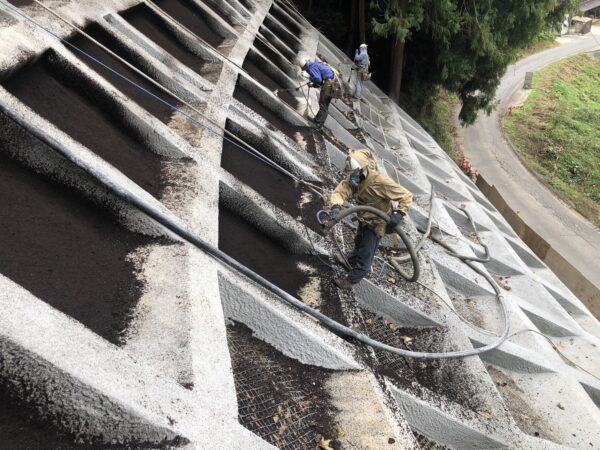
Although the use of sprayed vegetation substrates has declined significantly in recent years,
I think we should rethink the future of vegetation engineering—or rather, starting from this point on.
It was insanely hot this year, wasn't it?!?
I'm guessing most of the seeds used in the vegetation restoration work—whether it was the vegetation substrate or the seeds themselves—that were sprayed on this past summer have probably died, right?
That's what I thought.
I was wondering, “Up to what temperature can seeds be stored?” so I did some research.
Seed Germination Temperature
The optimal germination temperature for seeds is said to be 20–25°C.
While this may not apply to all seeds, it is said that germination rates drop significantly at 35°C.
Lifespan (Survival Rate) During Seed Storage
A review article states that temperature, humidity, and moisture content are particularly important for seed storage, and that seed deterioration accelerates under conditions of high temperature and high humidity.
It appears that the shelf life (loss of viability) of seeds depends primarily on “temperature” and “moisture content.”
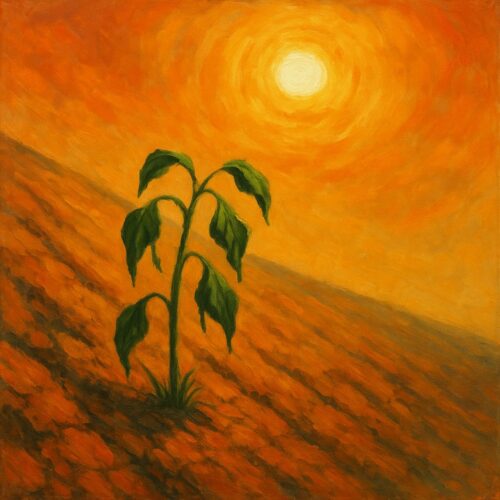
⚠️ Regarding “Don’t they die even in extreme heat?”
This scenario assumes conditions of extreme heat outdoors in Japan (e.g., temperatures of 35–40°C, direct sunlight, and soil surface temperatures that may reach 50°C or higher).
If the temperature exceeds the optimal range for germination, the germination rate will drop significantly.
(Example: Germination rates drop significantly at 35°C or higher) = Therefore, “extreme heat = high likelihood of failure to germinate.”
There is a difference between a seed “germinating and sprouting” and the seed “completely dying (becoming unable to survive),” and
Some seeds can withstand certain conditions and remain in a state of dormancy or storage for a certain period of time.
Under storage conditions (high temperature and high humidity), seed deterioration and death are accelerated.
Since data from accelerated aging tests show that 50% die within a few days or a few hours at temperatures of 55°C or higher,
There is a risk of reduced survival rates in outdoor environments with direct sunlight, high temperatures, and high humidity.
Since resistance varies greatly depending on the type of seed, it is not possible to generalize by saying, “This year’s extreme heat killed—or did not kill—”all’ seeds,” and
While many dry seeds (orthodox) are relatively tolerant,
Dangerous when wet or in high-humidity conditions. (Japanese summers are almost always hot and humid.)
Typical Japanese heat waves (e.g., 35–40°C) are, for seed germination,“It has exceeded the ”optimal temperature,” and、
And also for seed preservation“Deviating from ”Ideal Conditions”For this reason, it is not a recommended environment.
*References: “Controlling Seed Longevity” and “Comparison of Storage Conditions for the Long-Term Preservation of Genetic Resource Seeds” by the RIKEN Institute
Seed Survival in Cold Climates
It is said that certified seeds can be stored for more than five years if the storage temperature is kept at around −18 °C.
However, it also states that “even when dry, damage can occur at low temperatures (such as −5 °C)” and that “cell damage may occur due to the formation of ice crystals”...
Honestly, it’s a case of “which is it?”, but the point is that it’s dangerous when frost forms while the surface is still wet.
And that means they last longer in winter than in summer.
Here's what the seed temperature looks like.
After all, it’s always been said that spring and fall are the best times for planting seeds.
Other than that, it's best not to blow on it as much as possible.
What should I do next time?
What is that construction method?
I’d like to think about how to do this.
See you later.