Hello, everyone.
This is Enta.
How many technical interns does your company have?
What percentage of cases occur on-site?
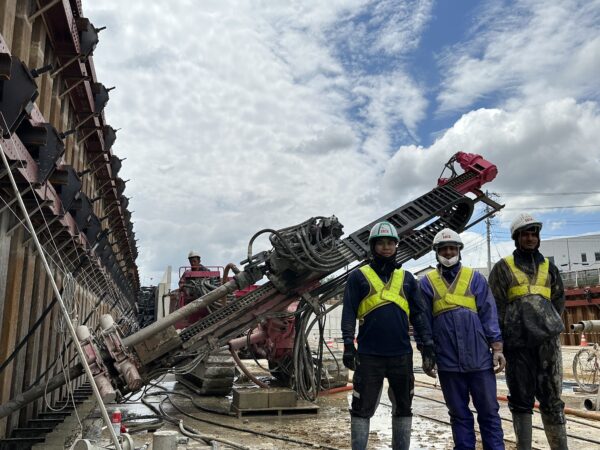
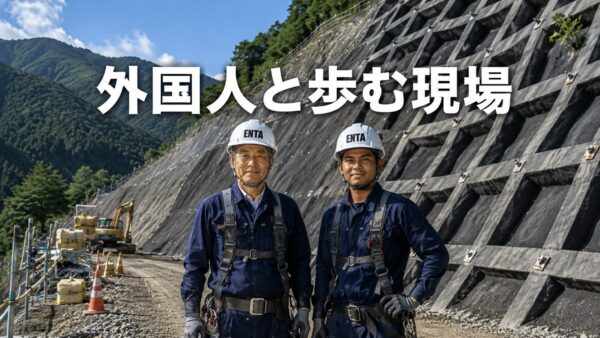
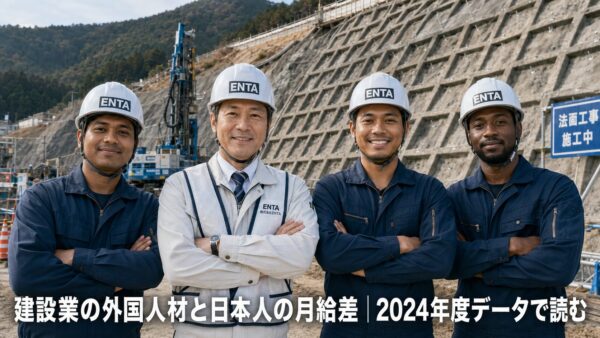
At our company, there are 3 to 5 technical interns for every 1 or 2 Japanese employees.
The Japanese man will serve as both the driver and the foreman.
If there are trainees or foreign nationals with driver's licenses here, and the foreman happens to be a technical intern, it’s possible that everyone could end up being foreign nationals (technical interns).
The Proportion of Foreign Technical Trainees at Construction Sites and the Outlook for the Next 10 Years
In recent years, construction sites have seen an increasing number of foreign technical interns and workers with “Specific Skilled Worker” status, in addition to Japanese workers.
We used AI to analyze what the actual percentage is and what it is likely to be over the next 10 years.
Current Situation
According to statistics from the Ministry of Health, Labor and Welfare (as of the end of October 2024), the number of foreign workers in the construction industry isApproximately 178,000 people。
Meanwhile, according to a survey by the Ministry of Internal Affairs and Communications, the total number of workers in the construction industry isApproximately 4.77 million peopleThat's it.
If we simply divide the numbers, the percentage of foreign nationals isApproximately 3.71 TP3T. In other words,"For every 25 to 26 Japanese people, there is one foreigner."That is the percentage.
However, this is the national average.
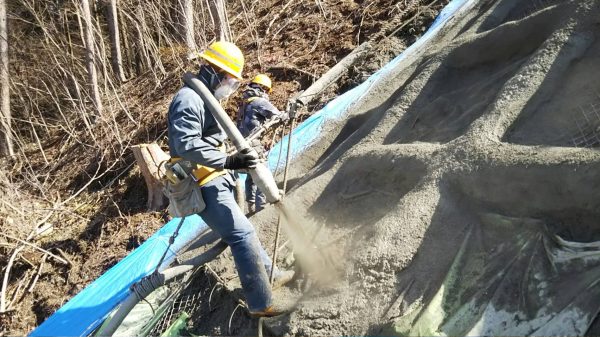
In urban areas and for certain types of construction work (such as formwork, demolition, and slope stabilization), the proportion of foreign workers is likely to be even higher.
Based on my experience in the field, I get the sense that “there are 2 to 4 foreign nationals on each team.”
In fact, if you look at other companies, there are quite a few of them.
It doesn't seem like we have an unusually high number.
Outlook for the Next 10 Years
A Tailwind from Policy
-
Abolition of the Technical Intern Training Program and Transition to the “Skills Development and Employment Program”(Scheduled for around 2027) (What difference would it make to change the name of this thing? It would just make things even stranger and stricter.)
→ This will enable longer-term employment and increase retention rates at workplaces. (Currently, the program consists of 5 years as a Technical Intern and 5 years as a Specific Skilled Worker.) -
Expansion of the Specified Skilled Worker Program(The government expects to accept up to 820,000 workers across all industries over the next five years.)
→ The construction industry is also included, and it is expected to play a key role in addressing the labor shortage.
Calculation Conditions
-
As of 2024: 4.77 million people employed in the construction industry (of which 178,000 are foreign nationals = 3.71 TP3T)
-
Percentage of people aged 60 and older: 20% (approximately 950,000 people)
-
Half of them will retire over the next 10 years (a decrease of approximately 470,000 people)
-
Assuming that the number of foreign workers will increase at an annual growth rate of +8%
Trends in the Percentage of Foreign Residents (Forecast)
-
2024: 3.71 TP3T (1 foreigner for every 25–26 Japanese people)
-
2027: 4.81 TP3T (approx. 1/21)
-
2030: 6.41 TP3T (approx. 1/15–16)
-
2034:9.2%(About one foreigner for every 10 Japanese people)
In other words, it is certain that in 10 years, working alongside foreign nationals will be “the norm” at every worksite.
From the perspective of those receiving the training, it’s not just about technical guidance, but also... How to Overcome Language and Cultural Barriers ...will become increasingly important in the future.
Furthermore, as the Japanese workforce continues to age and shrink, the proportion of foreign workers will rise even further as the denominator gets smaller. (This is certain.)
Based on my gut feeling, it’s highly likely that most of the slope construction workers will be foreigners!
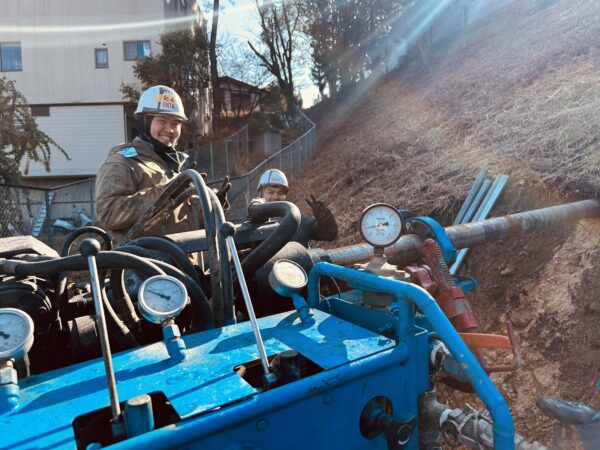
At some major companies, the number of foreign visitors is determined based on the proportion of Japanese employees on-site.
To be blunt, I think this is clearly discrimination.
Companies that employ a large number of technical interns are making a considerable effort.
Only when a company has obtained the necessary certification (certified by the Ministry of Health and Welfare) and established the appropriate environment (such as living conditions) can it begin to accept a large number of people.
Unless a company is certified as a "high-quality" employer, it cannot hire a large number of people.
To say that a company is no good just because it has a lot of foreign employees, even though it’s trying hard to recruit people, is—
That means I won't be able to work for that company in the future, right?
And the slope construction industry is already a specialized field as it is.
In our case, we already have some Specific Skilled Workers who are at the master craftsman level.
Going forward, they will (already are) holding meetings with the general contractor, finalizing the construction schedule, and carrying out the work.
It's not just a matter of showing up on site.
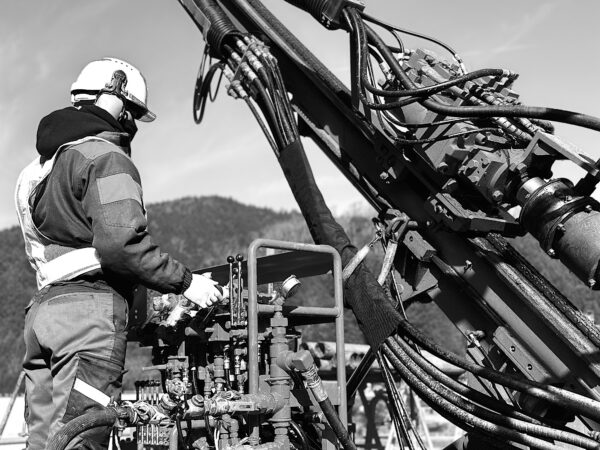
The truly capable workers actually take construction management into account when they’re doing their work.
It's no longer a matter of distinguishing between Japanese and foreigners.
It doesn't matter how many capable people there are, does it?
If you went abroad, could you speak the local language well enough to understand local construction practices, get a license, and do the work?
While I certainly respect them, I think it’s absolutely out of the question to criticize or discriminate against them.
Going forward, our construction industry—and the slope stabilization sector in particular—will rely primarily on foreign workers for both labor and construction! It will reach 99 percent.
Our main focus will be on thoroughly teaching them about reliable construction and error-free Japanese quality.
And we have no choice but to rely on Japan's infrastructure.
It’s not that the work is shoddy because foreigners are involved; it’s just that the Japanese people supervising them are at fault.
I believe the companies that will survive are those capable of thoroughly training the ever-increasing number of foreign workers and developing them into skilled craftsmen and construction managers.
See you later.