

Hello, everyone.
This is Enta.
As construction professionals, what do you think of this article?
| TBS NEWS DIG "The real thing is a whole different level of hardness..." Firefighters Demolish 'Concrete Walls and Floors' at the Closed Maru Building for Training |
Looking at this work, don't you think it's taking too long to chisel?
For the record, I have not taken into account the meaning, significance, or underlying concepts of this training.
I just had some questions about the chiseling technique.
That said, as civil engineers, we are, in a sense, professionals in the eyes of the general public.
The difference between us and the rescue workers is clear. (After all, this is our job.)
Just drill a hole—leave the rescue work to the professionals!
That’s exactly why I’m writing this—in the hope that we can share information here.

If you had to chisel through or drill a hole in a 25-centimeter-thick concrete slab, how would you go about it?
This is strictly for disaster response, but what materials and equipment are used to drill holes?
I'd like to think about that.
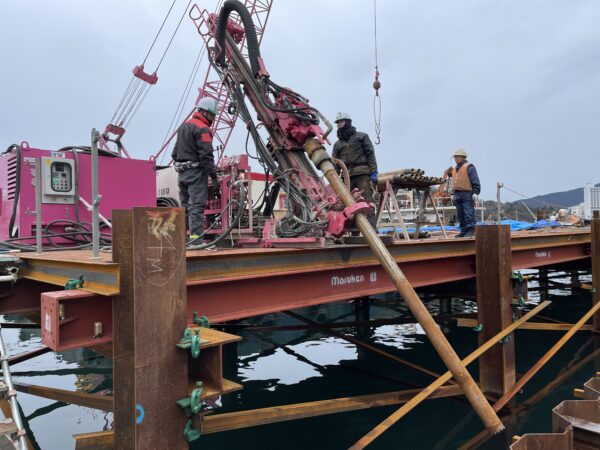
Under normal circumstances, we’d use rotary percussion to clear it in an instant (if it’s about 25 centimeters).
However, please imagine doing this by hand on a building floor.
First, here’s the equipment you’ll need to get started.
1. Engine-powered cutter (Shin Daiwa Engine Cutter)(Electric is also acceptable)
2. Hammer drill (Makita HR3811)
3. Core Drill (Shibuya TS-095)
4. Seriya (Tsuchiushi Industries Seri-ya 19mm)
5. Thunder (Makita 18V Disc Grinder )
6. Fiber-optic scope (About 10 mm, with a light)
7, 2.5 kVA generator (Inverter Generator, Output: 2.5 kVA)
It looks something like this.
For now, I'll use a hammer drill with a 600 mm × φ22 bit to drill through 25 cm of concrete.
After penetration, check the inside with a fiberscope (that’s important in a rescue situation, right?)
I think it would take about five minutes to drill a hole, provided it doesn't hit any rebar.
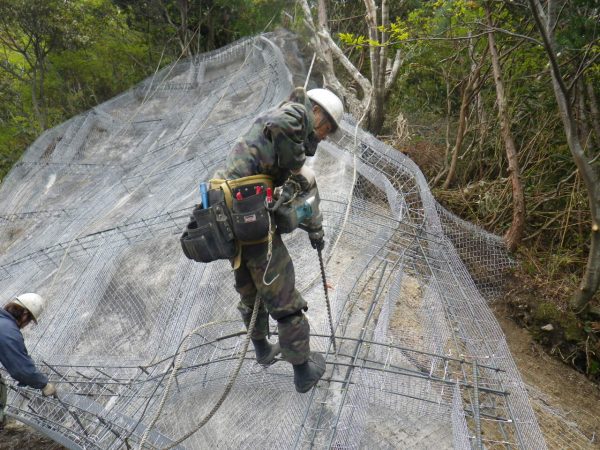
For us slope engineers, it's easy since we drill holes about 1,000 mm (φ22) into bedrock, right? ^^
How do I open it from here?
Should I drill a few pilot holes with a hammer drill before chiseling away?
Should we set up the core drill and cut out a circle?
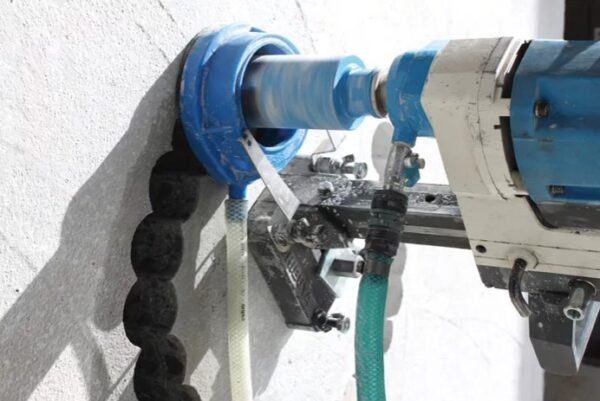
For a momentIt's easier to work with Hatsuru when there are through holes.So it seems like it would be best to drill at least a few holes in the core.
Anyone who’s ever had a core sample taken knows this all too well—concrete comes out pretty easily, doesn’t it?
The rebar is a bit of a hassle, but the concrete is soft, so it cuts through easily.
In buildings and such, the compressive strength seems to be around 50 N, but compared to bedrock, lol.
If you don't want to lose the center piece that would normally fall out when you remove the outer ring,
I think it would be best to install a few hole-in-anchors and suspend them with wire or something similar.
The problem is waterThat's right.
Drilling fluid during core drilling!
Would it be that easy to find water in an emergency?
In that case, you'll need both wet and dry blades.
It depends on the situation which one to use.
If the concrete is a little thinner, I think a hand-held core drill would work just fine.
Hatsuru without making a holeIn that case,
Cut around the edges with an engine-powered cutter.
For example, I think a square with sides of 100 cm would work well.
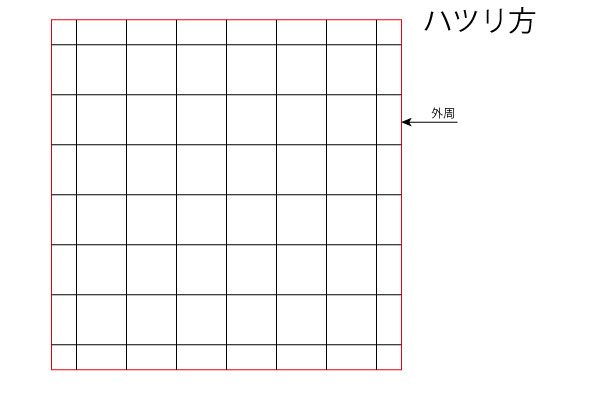
The red line marks the outer edge; decide on this first, then use the cutter.
Next, use a utility knife to make cuts along the black lines as needed.
Insert it until the cutter blade is fully inserted.
With a standard engine-powered cutter, the blade can penetrate about 100 mm, so I’ll cut all the way through.
And now I'll start chiseling with a hammer drill!
The blade to use for this is the Bullpoint!
Definitely don't use Hirano, lol (it'll take forever)
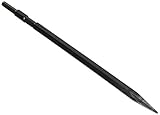

Use this to chisel away at the square within the selected area, bit by bit.
I think it’s much easier to chisel away than a concrete surface that doesn’t have a single scratch on it.
If you see any rebar sticking out, cut it with an angle grinder.
Once you've chiseled away about 100 mm, use the cutter again and repeat the process.
If it's okay to chip away the concrete, I'll cut the rebar and then use a chisel to get it done all at once.
I'm guessing the coring process is incredibly fast. (We run two machines.)
Ideally, it would be great if you could bring some water and use the Core to get out, but,
I suppose there are situations at disaster sites where you just can't afford to be that picky, right?
If you're cutting a large piece, a wire saw might be a good option, but
It seems like the minimum requirements will suffice for rescue operations, so it probably won't see much use.
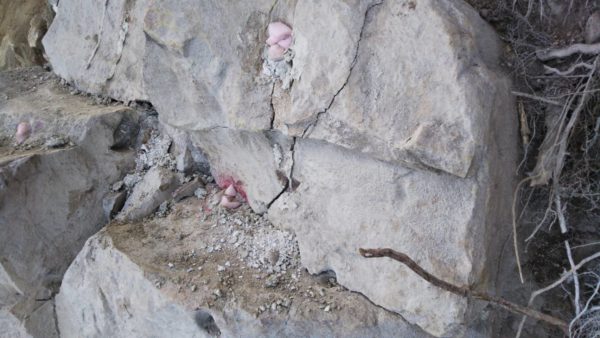
Since this is strictly based on the assumption of a building or similar structure, I think this is what it would look like if we were to handle it with the smallest possible equipment.
If you want to destroy a specific part all at once,
Using a static fragmentation agent (Super Blaster) is also an option.
It cuts through hard rock with ease, so it seems like it would cut through concrete just as easily.
I think it took about two hours to break down even with the Super Blister (depending on the temperature).
If materials and machinery could be used where they are best suited, and if civil engineers could exchange ideas with fire and rescue personnel,
I think we could carry out rescue operations more efficiently.
Construction companies have a system in place where they take the lead in volunteering during disasters, and
Everyone here is ready to help anyone in need! (Disaster response agreements with municipalities, etc.)
It would be great if we could make full use of the technologies we have—both for building and for demolition—even during disasters, wouldn't it?
There are probably other ways besides the ones mentioned above, but,
Please give it some thought, everyone.
See you later.