Hello, everyone.
This is Enta.
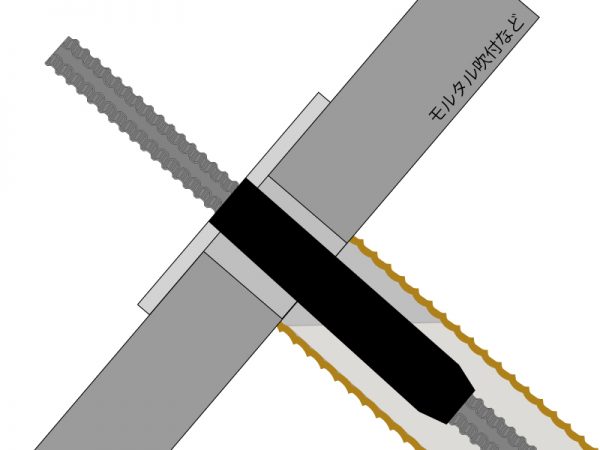
Are you still using conduit?
You don't need a sheath pipe for rebar insertion!
I've been talking about this for a while, but the other day I did some calculations.
The section consisting of the sheath and tip cap does not adhere to the grout.
Sheath tube = 200 mm
Tip cap = 20 mm
We'll subtract just this portion to calculate the rebar bond.
| Allowable Bond Strength of Reinforcing Bars | |
| 4-meter rebar | Allowable Adhesion Stress × Circumference × Bond Length = Tensile Load |
| D19 | 1,600 kN/m² × 0.019 m × π × 4.00 = 382.1 kN |
| Sleeve + Cap | 1,600 kN/m² × 0.019 m × π × 3.78 = 361.1 kN |
We will perform the calculation assuming the rebar length is 4 meters.
The adhesive strength has decreased by about 5%.
In actual design, there is a safety factor, so it should be fine to a certain extent.
The problem is that, even though the design calculations are based on 4 meters (for the sake of argument),
The actual length of the rebar used is 220 mm shorter.
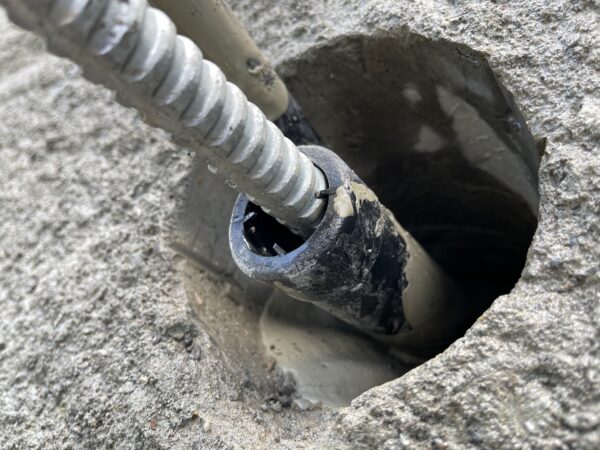
I find myself wondering, "Is this really a good idea??"
We are using 4-meter-long rebar.
However, the argument that using a sheath tube or a tip cap reduces friction is on the unsafe side.
That’s the part where I really think, “Installing something completely pointless is such a waste of taxpayer money,” ^^;
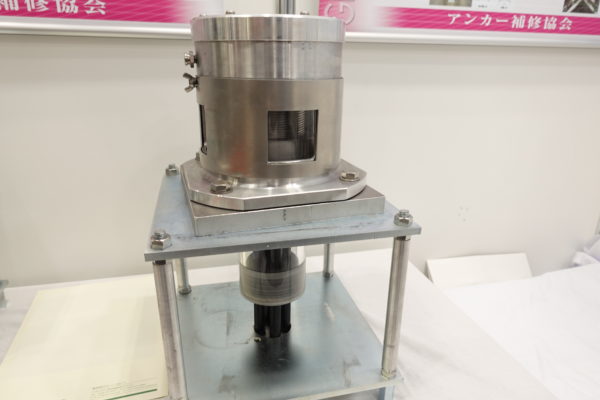
In recent ground anchor installations, the area most prone to deterioration due to aging is the back of the anchor head.
Given the current situation, where we are focusing our efforts on how to protect this area,
The sections of the rebar insertion work where the sheath tubes are used are exposed and left bare.
I wonder how it’s possible that the rebar, which is supposed to be fully embedded, is being obstructed by the casing pipe.
It's about time the construction consultants really took notice.
Without using the blueprints that have been passed down since ancient times,
Please check carefully and use the drawing with these unnecessary elements removed lol
See you later.