Hello, everyone.
This is Enta.
When you think or say “yes!” (hai), what do you do with your head?
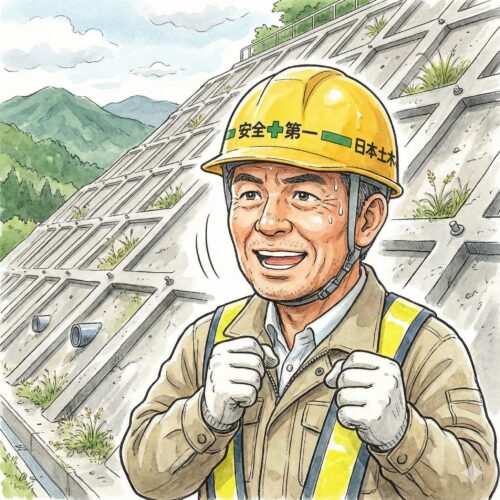
We Japanese nod our heads up and down, don't we?
He nodded his head in agreement.
There are actually people who disagree with this, lol.
From a Japanese perspective, this gesture can be interpreted as “No” or “I’m still thinking about it,” which can be very confusing.
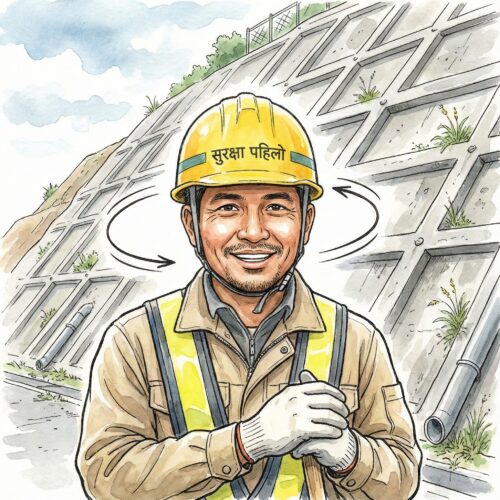
In the world, there areCountries where shaking or tilting the head from side to side means “yes”There is.
Our Nepalese guy is the same way, lol.
At first, I was like, “Huh???”
I did some research online and found the following:
Regions where people "sway" their heads from side to side (South Asia)
This is less a matter of “shaking one’s head” and more a matter of,"Gently sway (tilt) your head from side to side" It seems to be a unique movement.
-
Major Countries: India, Nepal, Pakistan, Sri Lanka, Bangladesh
-
Operational Characteristics: Keep your gaze straight ahead, and gently sway your neck from side to side, bringing your ear toward your shoulder (imagine drawing the symbol for infinity).
-
Nuances of meaning:
-
It seems that its meaning extends beyond a simple “Yes” to include “I understand,” “I can hear you,” “OK,” and “showing respect,” depending on the context—so what does this mean for Japanese people!?
-
I was told that it’s known as the “Indian Head Wobble” in English-speaking countries and is quite famous.
-
Important Notes: If you shake your head vigorously from side to side, it means “No,” but a gentle side-to-side tilt indicates a positive response (Yes/OK).
Regions where “shaking your head side-to-side” means “YES” (around the Balkan Peninsula)
This is the region where the gesture for “Yes”—which is almost identical to the Japanese gesture for “No” (rotating the head from side to side)—is most likely to cause misunderstandings.
-
Major Countries: Bulgaria, Albania, parts of Greece, parts of Turkey, etc.
-
Operational Characteristics:
-
Yes: He shakes his head.
-
No.: Nod your head (or click your tongue and lift your chin).
-
-
Background: While there are various theories, a well-known one suggests that this is a remnant of a practice from the time when the region was under Ottoman rule, when people would reverse their gestures in response to questions—similar to religious “fumi-e” tests—in order to deceive the enemy.
What percentage is that globally?
Conclusion: They are an overwhelming minority.
In most countries around the world (including Europe, the United States, East Asia, Africa, and South America), just like in Japan, a nod up and down means “Yes” and a shake of the head means “No.”
As Charles Darwin also pointed out, there is a theory that this stems from the movements babies make when seeking breast milk (vertical shaking) and when refusing it (horizontal shaking), and it is considered to be similar to a physiological movement common to all humans.
However,Given the population of the region surrounding India (over a billion people), this is a scale that cannot be ignored in terms of sheer numbers.The people of,
This means you're using this "side-to-side shake = Yes/OK" gesture.
Who knows, maybe this will become the standard someday!? lol
How are the interns and foreign workers at your company doing?
Being aware of these kinds of cultural nuances can help you avoid problems.
In particular, people who aren't familiar with this might react with "Huh? That's annoying," so please let younger people and those who already know about it know.
| Movements (Gestures) | Meaning | Major Countries and Regions | Features and Additional Information |
|---|---|---|---|
| Nod your head | Yes | Japan, Europe and the United States, and the majority of the world | The most common style worldwide. There is a theory that the name comes from the way a baby sucks while breastfeeding. |
| Gently sway your head from side to side (Tilting her head slightly) |
Yes OK |
India, Nepal, Pakistan, Sri Lanka (South Asia) |
It is called the “Indian Head Wobble.” It has a broad range of meanings, such as “Got it” and “I can hear you.” |
| Shake one's head | Yes | Bulgaria, Albania, Parts of Greece and Turkey |
Because the gesture is almost identical to the Japanese "no,"Caution。 Conversely, to say “No,” nod your head up and down (or lift your chin). |
Japanese people are good at easily adopting and blending foreign cultures
The Japanese really are amazing!
Let's work on recognizing the responses as well.
See you later.