

Hello, everyone.
This is Enta.
The other day, at a drinking party, the conversation turned to how to calculate unit prices.
I'm from a different industry, but basically, the way unit prices are calculated is the same.
So, since the basic approach is the same whether you’re a slope contractor or an earthwork contractor, I’ll try to explain it here.
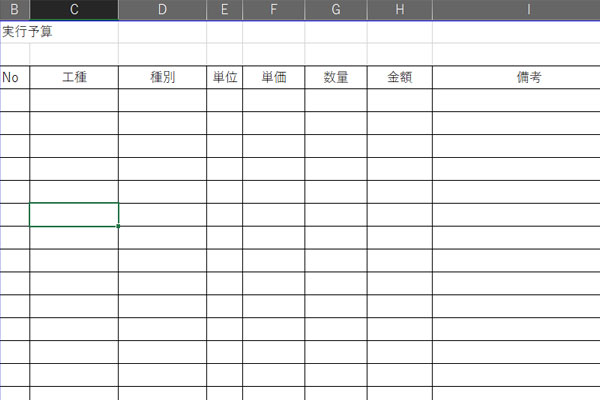
Since we'll be creating this in Excel, please download the data below.
The standard unit price in the real world is, first and foremost, the government unit price!
Please keep this in mind.
And where is that unit price?
It is included in the Ministry of Land, Infrastructure, Transport and Tourism’s labor cost rates.
Regarding Labor Unit Rates for Public Works Design Effective March Reiwa 5
On the page above, there is a link titled "Press Release."
The daily rates for each industry are listed there.
That is the basic unit price.
Please check the amount for your prefecture.
This amount is strictly the daily rate for one person working.
This amount does not include any expenses.
That said, there are standard rates in each industry, but let’s set that aside for now lol.
This time, I’d like to calculate the unit price for a business in a completely different industry.
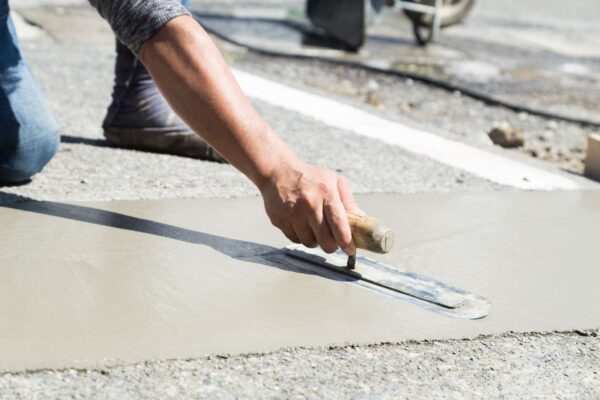
I'll give it a shot in the plastering business in Kanagawa Prefecture lol
I have absolutely no idea, but I'll give it a try.
The labor rate for plastering work in Kanagawa Prefecture is 28,700 yen. (From the table)
Let's say we're building a 1,000-square-meter parking lot.
The most important thing when spending money isBugakariThat's it.
How much work can each person do in a day?That's the point.
There’s a difference between the people at that company who are really good at their jobs and those who aren’t, but,
We'll stick to average figures.
Since I'm not familiar with the specifics of plastering work, I'll just base my calculations on the general process of "pouring concrete and finishing it with a trowel" for now.
Let's assume the daily output per person is 50 m². (I'm not sure if this number is high or low.)
Let's say three people are doing the work.
28,700 yen × 3 people = 86,100 yen per day
The work volume per person is 3 people × 50 m² = 150 m²
It will take 1,000 m² ÷ 150 = 6.6 days ≓ 7 days.
That means 86,100 yen × 7 days = 602,700 yen
This is the amount needed to build a 1,000-square-meter parking lot, for now.
Divide the total amount by the quantity to get the unit price.
This is the unit price per square meter.
602,700 yen ÷ 1,000 m² = 602.7 yen ≈ 610 yen/m²
This is the unit price for labor only!
If we were to put this into an Excel spreadsheet, it would look like this:
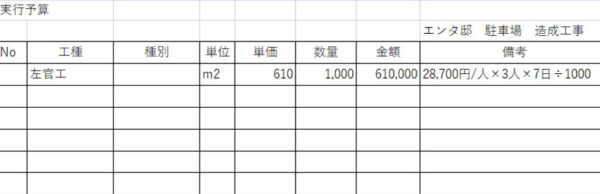
What do you think?
Can you picture it?
This category also includes vehicle expenses (for machinery and commuting), social insurance premiums, and other company operating expenses.
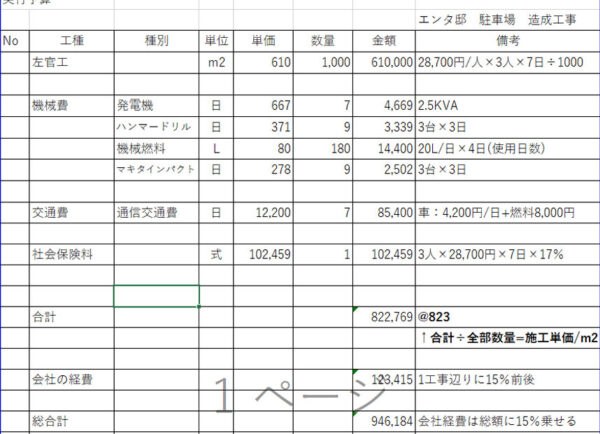
Tally the machinery and other items separately, and then divide the total to get the unit price.
You’re free to choose your own approach and calculation methods, so feel free to write it in whatever way is easiest for you to explain.
Include all machinery and tools used.
There’s absolutely no such thing as a free machine!
Some people act like they're the general contractor and think the machinery and tools owned by subcontractors are free, lol.
That's crazy, isn't it? lol
Since expenses are incurred in every aspect, the basic rule is to record them all!
Company expenses also include storage fees and warehouse fees.
We calculate the annual costs and record them as expenses.
Be sure to carefully assess how much your expenses will be over the course of a year.
And let's make sure we don't miss any entries ^^
You can download the Excel file containing the calculations shown above as is.
Excel File for the Actual Budget
Once you’re able to thoroughly prepare everything from your operating budget to your quotes, you’ll find that you can understand your cash flow with surprising clarity.
Once you realize that, you'll immediately see what's wrong and what's right.
You can tell at a glance which sites are problematic and which aren’t even before construction begins, so let’s get a handle on the numbers!
See you later.