Hello, everyone.
This is Enta.
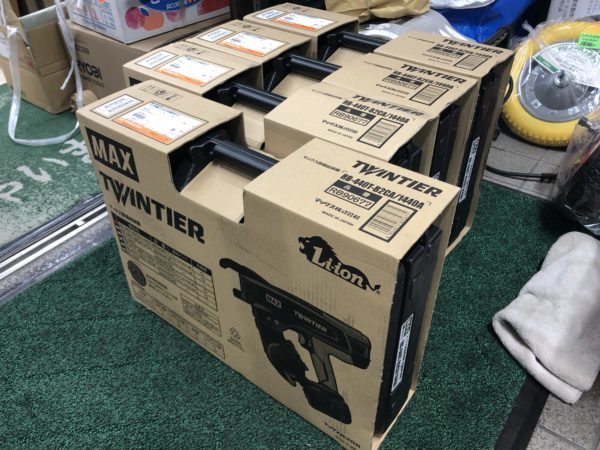
I bought some more lol
Four of them, lol
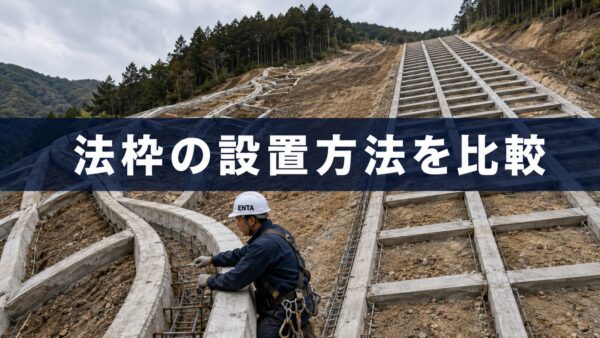
Assembly of the legal framework will begin next week.
I was working on the lower frame this week, but it was so incredibly fast that I just had to buy it!
Actually, I had planned to pit a beginner (using a binding machine) against a veteran (a hacker), but when I had the veteran try it out on the lower rail for now, it seems they were able to work about 1.5 times faster.
Once we're within the legal framework, it looks like we'll be able to let them compete and show just how fast they are.
Using this binding machine and the one-touch frame seems like it would make things incredibly fast.
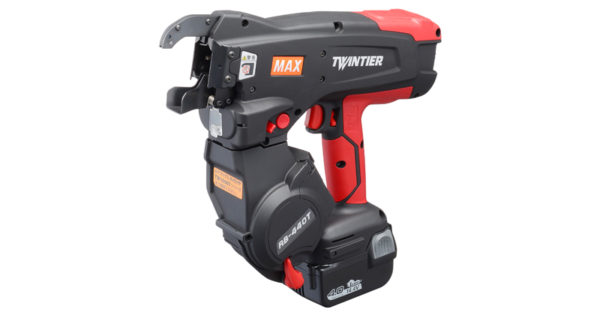
Of course, for places we can't get into, we have no choice but to use hackers, so we have hackers and connection cables on hand.
I'm looking forward to next week.
For example, suppose there is a 1,000-meter race using the □300 method.
Let's assume the assembly cost is 5,000 yen per meter (for illustrative purposes).
If five people take turns running 20 meters each, that comes to 100 meters per day.
10 days / 1,000 m = 5 people × 10 days (50 people)
50 people × 30,000 yen = 1,500,000 yen
Let's say that using a strapping machine increased work efficiency by 1.5 times.
If five people take turns running 30 meters each, that comes to 150 meters per day. (20 meters × 1.5)
6.7 days/1,000 m = 5 people × 6.7 days (33.5 people)
33.5 people × 30,000 yen = 1,005,000 yen
The difference is 495,000 yen
For those of you thinking, “No way, it can’t be that good!”, I’ve created a table showing the different magnification ratios.
| Per 1,000 meters | ||||||||
| Multiplier | Per person | 5 people | Number of days | Total Man-Hours | Unit Labor Cost | Total Amount | Difference from the norm | Profit Margin |
| Usually(Hacker) | 20 | 100 | 10.0 | 50.0 | 30,000 | 1,500,000 | 0 | 0% |
| 1.1 | 22 | 110 | 9.1 | 45.5 | 30,000 | 1,365,000 | 135,000 | 9% |
| 1.2 | 24 | 120 | 8.3 | 41.5 | 30,000 | 1,245,000 | 255,000 | 17% |
| 1.3 | 26 | 130 | 7.7 | 38.5 | 30,000 | 1,155,000 | 345,000 | 23% |
| 1.4 | 28 | 140 | 7.1 | 35.5 | 30,000 | 1,065,000 | 435,000 | 29% |
| 1.5 | 30 | 150 | 6.7 | 33.5 | 30,000 | 1,005,000 | 495,000 | 33% |
| 1.6 | 32 | 160 | 6.3 | 31.5 | 30,000 | 945,000 | 555,000 | 37% |
| 1.7 | 34 | 170 | 5.9 | 29.5 | 30,000 | 885,000 | 615,000 | 41% |
| 1.8 | 36 | 180 | 5.6 | 28.0 | 30,000 | 840,000 | 660,000 | 44% |
| 1.9 | 38 | 190 | 5.3 | 26.5 | 30,000 | 795,000 | 705,000 | 47% |
| 2.0 | 40 | 200 | 5.0 | 25.0 | 30,000 | 750,000 | 750,000 | 50% |
For now, using the hacker in the standard installation at the top as a reference,
I tried writing it up to twice as much.
While doubling the figure is obviously out of the question, I think a range of about 1.2 to 1.4 would be reasonable, given the context.
Since there are significant differences depending on the terrain and conditions of the mountains, I guess that’s about right.
Even so, it's amazing that the profit margin has improved by as much as 10%, isn't it?
Each of these binding machines costs about 160,000 yen.
If you finish 1,000 meters, you can buy one.
Since a special tie wire is required, we’ll need to either be provided with it or have the cost of the materials added to the bill.
However, whether implementing this actually leads to faster results depends on the company's own efforts.
Just because it’s faster doesn’t mean we should lower the unit price.
In fact, we should raise the unit price.
That way, the contractors make a profit, and the general contractor also makes a profit because the project is completed sooner.
It's a win-win, right?
By the way, I heard our general contractor came up with this through some creative thinking lol.
As a tool to shorten the construction period even slightly.
See you later.