


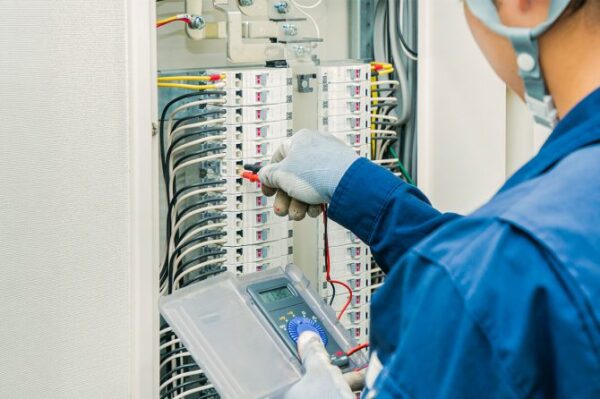
Take several photos of the entire site before and after construction and keep the evidence on file.
At first glance, this may seem obvious, but without evidence, it could lead to problems with customers down the road and potentially escalate into serious disputes.
In this post, I’d like to share a personal experience that made me keenly realize, firsthand, just how important evidence is.
One day, I suddenly received a phone call
This happened during the construction phase of a project I was in charge of designing. I suddenly received a phone call from the client.
"Some wiring that isn't part of the construction project has come loose. Could you come take a look right away?"
Normally, the person in charge from the construction department serves as the point of contact for all communications during the construction period.
However, when I spoke with the customer, they told me they hadn’t exchanged contact information with the construction supervisor, so they reached out to me—the designer—since I had the supervisor’s contact information.
I immediately reported the situation to the construction supervisor, but unfortunately, he was busy with another project and said he “couldn’t come right away.” So, I, from the design department, had to rush to the site at short notice to fill in for the construction supervisor.
The situation I faced on site
When I arrived at the site, the customer showed me to the electrical room and opened the panel door for me.
"This wiring wasn't supposed to be part of the renovation, but look—it's just hanging there, isn't it?"
When I looked in the direction the customer was pointing, I could indeed see a single wire hanging in midair.
"Actually, this wire is supposed to be connected here," he continued, pointing to the electricity meter as he explained.
However, the electricity meter the customer pointed to was,A location completely unrelated to this construction projectThat was the case. Why did this situation occur, even though it was outside the scope of the construction work?
I wasn’t actually present at the construction site that day, so I could only assess the situation right in front of me—namely, that “the wiring was disconnected.” Therefore, I promised to first verify the situation, informed the construction supervisor of the issue, and told him I would return to explain it in more detail, then hurried back to the office.
A response stating, “I have no recollection of that,” and a lack of evidence on hand
When I returned to the office, the construction manager had already come back, so I immediately explained what had happened at the job site.
However, the person in charge told me that"I don't recall doing that."That was the only response I ever received, so I just couldn't figure out the cause.
The biggest obstacle here was the fact that “we didn’t have any evidence on hand.” We hadn’t taken photos of the entire interior of the panel before and after the work.
If we had kept even a few photos taken before and after the construction work, we would have been able to determine exactly whether it had been loose to begin with or had shifted during the work. However, since we had absolutely no objective evidence, we found ourselves in a situation that was extremely disadvantageous for our company.
In the end, we were unable to determine the cause of the loose wiring outside the scope of the construction work, so we decided to repair it free of charge.
Why didn't they keep a record of the evidence?
In this case, the lack of evidence from before and after the construction work was the biggest obstacle to identifying the cause.
So why didn't they keep any records at the time?
At the time, we had carried out construction projects dozens, even hundreds of times within the company, and such mistakes had never occurred before. It wasn’t that we were overconfident—believing we “would never make a mistake”—but I think there was a sense, somewhere deep down, that “that kind of thing wouldn’t happen to us,” as if it were someone else’s problem, and we simply hadn’t even considered the possibility.
As a result,I had completely lost sight of the importance of documenting evidence.That's right.
To Prevent Problems Before They Happen
Through this bitter experience, I was once again strongly reminded of the importance of evidence.
In response to this incident, as a measure to prevent recurrence, our company has now established a policy requiring that “several photos of the entire interior of the electrical panel must be taken both before and after any work” during panel-internal work on electrical installations. We have changed our procedures to ensure that we carefully compare the before-and-after photos to verify that there are no changes in areas not subject to the work.
Keeping this kind of evidence on file in advance serves as a reliable safeguard against potential disputes with customers down the road.
For those of you reading this article, are you successfully documenting evidence before and after construction at your job sites?