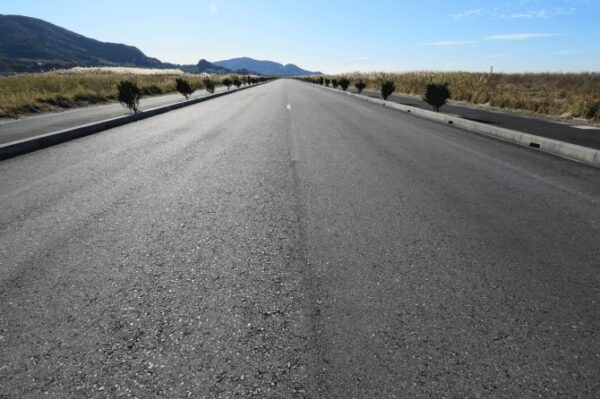
What Is Asphalt Paving?
Asphalt paving involves mixing aggregate (such as gravel or sand) into asphalt, heating it, andSpreading EvenlyてRollerA paving method that involves compaction using equipment such as [...].
Because it is relatively easy to install and inexpensive, it is widely used in roads, parking lots, airport runways, and other applications.
In addition to asphalt pavement, concrete pavement is another common type of pavement. Let’s take a look at how it differs from asphalt pavement.
Differences from Concrete Paving
Concrete paving is a paving method in which concrete—a mixture of cement, water, sand, gravel, and other materials—is spread evenly and allowed to cure to develop strength.
So far,Paving WorkWhile asphalt pavement used to be the norm, concrete pavement has become increasingly common in recent years due to its durability and lower environmental impact.
Concrete pavement has the advantage of excellent heat resistance, which helps keep surface temperatures from rising and keeps repair costs low. On the other hand, it has the disadvantage of being labor-intensive to install, which results in longer construction periods and higher construction costs.
Advantages of Asphalt Paving
Here are three benefits of asphalt paving.
Easy to install and inexpensive
Since asphalt paving is relatively easy to install, construction projects can be completed in a short period of time. Traffic can be restored at an early stage after construction is complete.
Since construction costs are low and the project duration is short, it is possible to reduce costs such as labor expenses and those associated with traffic restrictions during construction.
Less likely to generate noise or vibration
Asphalt pavement with a high porosity is effective at reducing traffic noise. Another advantage is that the absence of joints helps minimize traffic noise and vibration.
Easy to repair and maintain
Compared to concrete, asphalt is a softer material, which makes it easier to shape. As a result, it is easier to repair, allowing for low-cost maintenance.
Another advantage is that partial repairs or repaving can be performed as needed, and regular maintenance is easy.
Disadvantages of Asphalt Paving
Asphalt pavement also has its drawbacks. Here, we’ll introduce two of them.
It is prone to deformation due to temperature fluctuations.
Asphalt is prone to deformation and cracking due to fluctuations in temperature. This can reduce the durability of roads.
Regular maintenance and repairs are required
Compared to other paving materials, it has lower durability and heat resistance, and may deteriorate more quickly. Regular maintenance and repairs are required, especially in areas with heavy traffic.
Let's Understand the Characteristics of Asphalt Paving
Asphalt paving is a method in which aggregates such as gravel and sand are mixed into asphalt, heated, spread evenly, and compacted using rollers or similar equipment. It is widely used primarily for roads, parking lots, and airport runways.
While it offers advantages such as being easy to install, inexpensive, low in noise and vibration, and simple to repair and maintain, it also has the disadvantage that it is prone to deformation due to temperature fluctuations and may deteriorate rapidly, making regular maintenance and repairs necessary.
If you are considering asphalt paving, be sure to understand its characteristics and choose a method that suits your construction environment and budget.