Hello, everyone.
This is Enta.
The other day, our drainage rock bolts were featured in the Hokkaido Construction News ^^
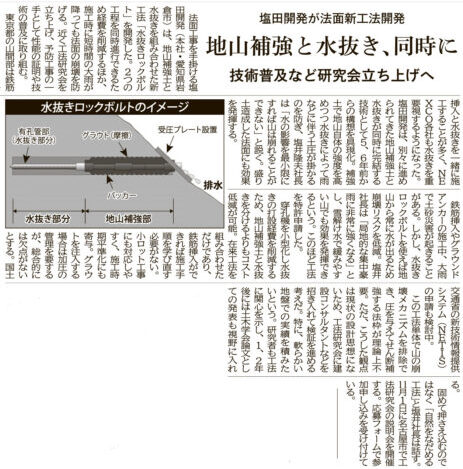
Click here for the Hokkaido Construction News.
If you're in Hokkaido, please be sure to check this out.
I hope this piques your interest, even just a little.
Thank you so much^^
As mentioned in the article,
Information Session on Friday, November 1, Reiwa 6We'll be holding this event, so please come join us if you're interested.
However, there’s a “but” here, so please read the article below.
But that's beside the point.
Under what conditions are drainage rock bolts used?
That's what you're thinking, right? lol (I hope you are)
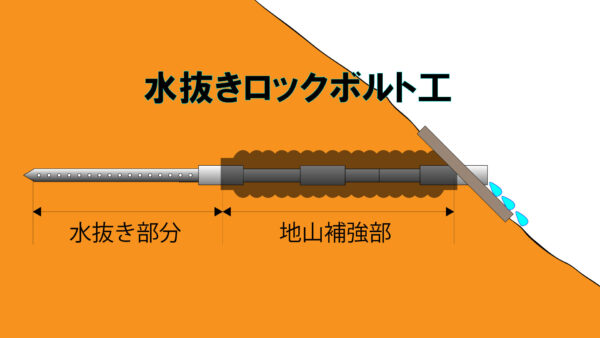
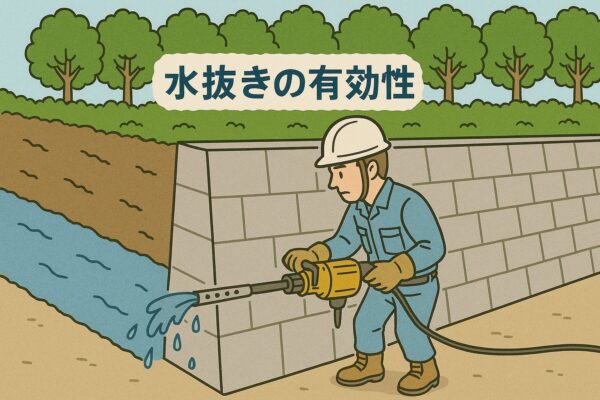
Basically, we would like you to use it as a standard rebar inserter.
The structure is exactly the same, after all.
Since it consists of reinforced earth walls and drainage, it can be used on both collapsed and intact slopes.
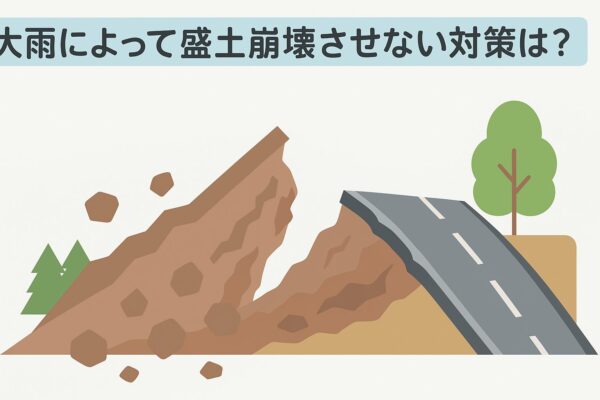
For example, simply installing it on the slopes of steep terrain makes it capable of handling even localized heavy rainfall.
This is an extreme example, but it means that just driving in a single pile drains the water from that area, so the structure can’t collapse!
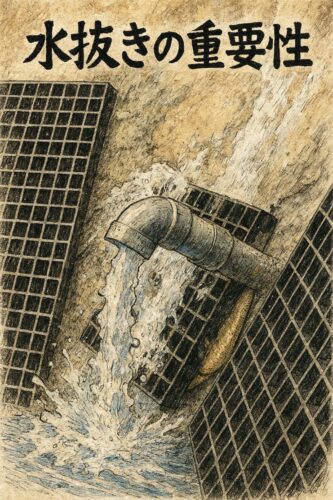
This is what the ground looks like after a localized downpour.
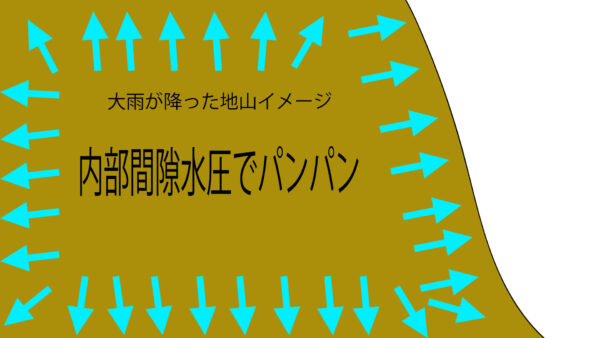
It looks like it's about to explode—or maybe not.
Just when you think, "This is getting really bad!"—that's when the murky water starts flowing.
It’s common knowledge among us, but murky water comes out before a collapse, right?
This is the moment when the pressure began to release from the narrow water channel.
The moment this starts, it will collapse. (It will explode like a balloon popping.)
What happens if there is a thick Mizumichi from the start? (Drainage rock bolt)
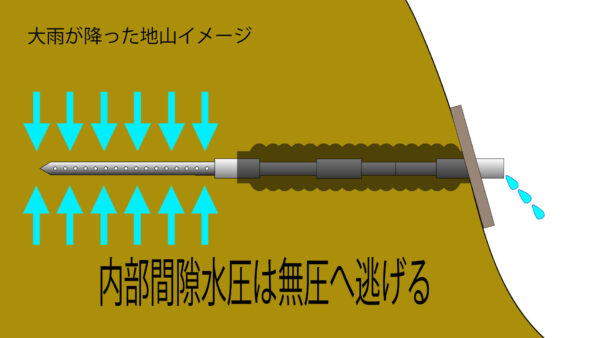
What would happen if there were a section with no pressure in a high-pressure area?
The only place for that pressure to escape is an area with no pressure, right?
That meansA mountain cannot collapseThat’s how it works.
Drainage rock bolts are
In other words, it serves both as a landslide prevention measure and a landslide mitigation measure.
The possibility that simply installing it could prevent the surrounding area from collapsing (this is just a hope; no data is available)
At first, I was designing it with the slopes of highways (NEXCO) in mind—structures that must not be damaged in a disaster—but,
In the end, I ended up developing this construction method while thinking, “I guess this can be used anywhere, after all.”
So, while I’m confident that it’s effective at NEXCO job sites,
This means it can be used on steep slopes in general as well as on standard slopes.
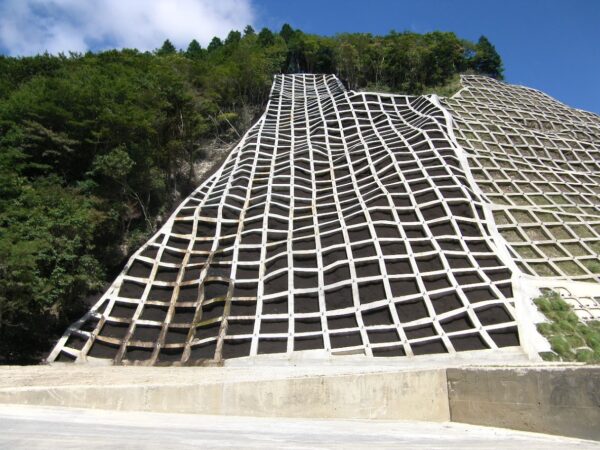
And I also feel that the significance of the legal framework is gradually fading.
However, that doesn't mean it will always turn out that way, and,
Reduce the size of the formwork and use drainage rock bolts to create a slope that is not subjected to earth pressure.
You can also create shapes like this.
Anyway, the biggest advantage is that water pressure prevents soil pressure from building up.
And since grout is used in the reinforced soil section, it ensures a strong frictional bond!
I suppose the downside is that the material costs are higher than those for standard rebar installation.
Since this involves rebar insertion and drainage, the drilling costs will be higher as a result.
It’s done in a single session, so the total time is reduced, though.
If you look at it in isolation, it might seem expensive.
So, where can “drainage rock bolts” be used?
A: Can be used anywhere(As I’ve written at length above)
See you later.
The deadline is Friday, October 18, 2024.