Hello, everyone.
This is Enta.
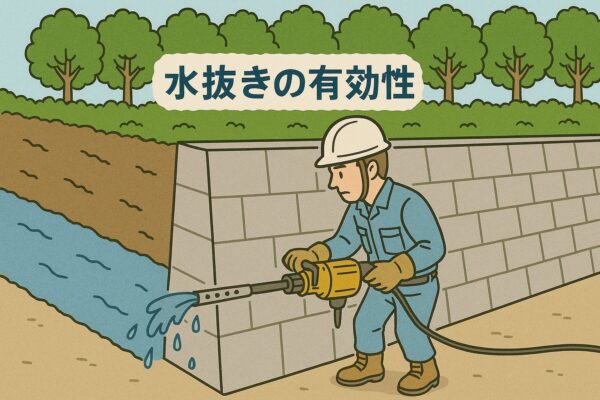
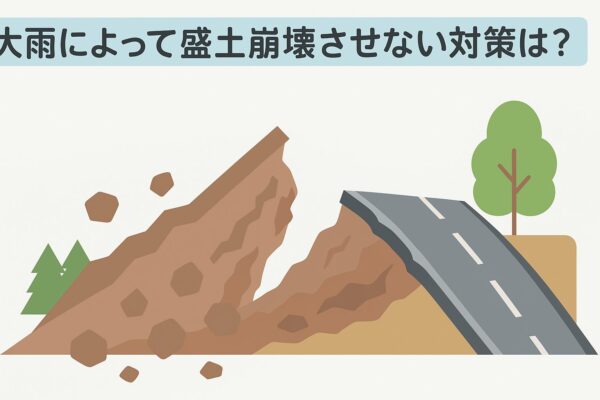
The other day, I wrote that dewatering drilling and dewatering rock bolting are effective methods for reducing earth pressure during heavy rain.
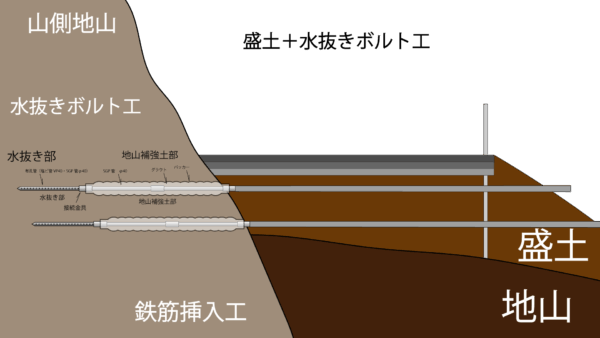
Civil engineering is about coexisting with water,He who masters civil engineering masters water.
As the saying goes, water treatment is so important!
So, we had previously installed ground anchors as a measure to address deformation in a retaining wall we had built.
Part of that retaining wall seems to be shifting slightly!?
So, that's it.
Scaffold Angle for Ground Anchor Construction on Retaining Walls on Steep Slopes
This is the scene, lol
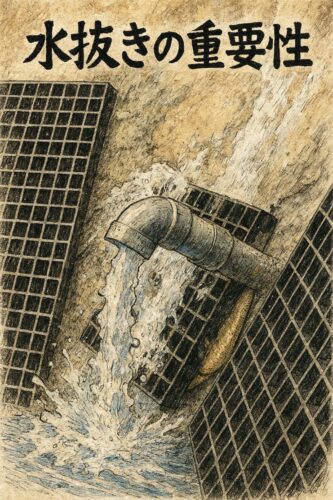
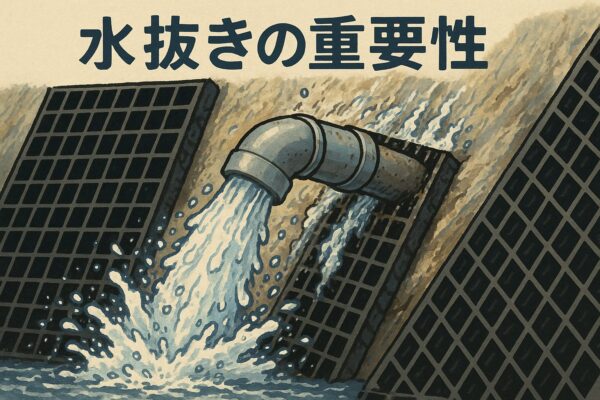
I remember how, whenever it rained at this site, an incredible amount of water would come gushing out.
There is a bamboo grove upstream, so it is expected that there is plenty of water.
It feels like it's been securely fastened in place with ground anchors.
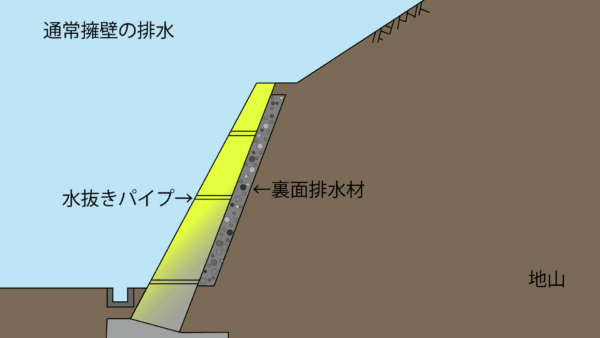
This is what drainage for a typical retaining wall looks like.
Scaffold Angle for Ground Anchor Construction on Retaining Walls on Steep Slopes
It appears that the retaining wall at this site was stabilized using ground anchors because the earth pressure likely increased, causing it to be pushed forward.
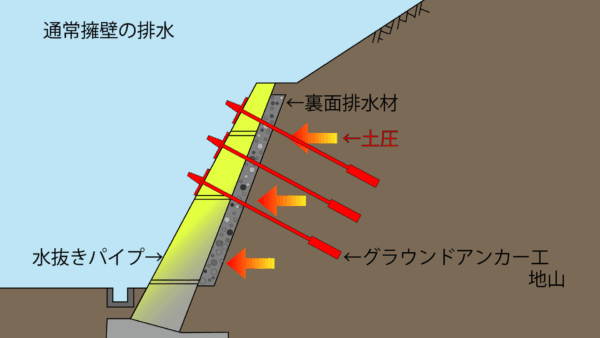
It looked something like this.
Private homes are already built in front of this retaining wall, and at the time of construction, the steep slope was designated as a "red zone."
Since displacement occurred in that retaining wall, ground anchor work was carried out on short notice.
I remember that ground anchors were used to apply a heavy load, partly as an earthquake countermeasure.
As shown in the illustration, drainage from a retaining wall generally involves discharging only water seeping from the natural ground through the rear drainage system.
However, as long as it seeps out, it’s not a problem, but if it gets clogged inside, the pore water pressure can get really high, right?
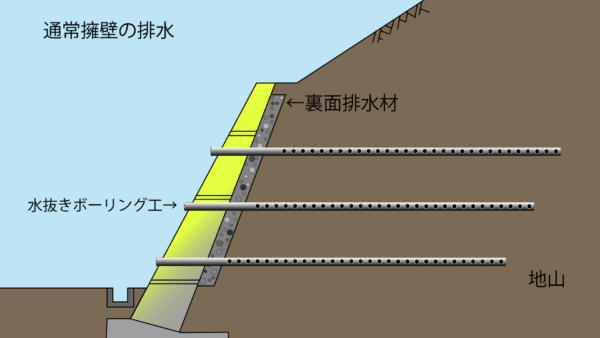
If you follow the method shown in the illustration above, water will drain effectively from the back, which could significantly reduce the likelihood of excessive pore water pressure.
It's certain that water will pour out in a steady stream during heavy rain.
We had a similar job site last year, where we proposed a drainage solution and carried out the work.
About two months after installation, water started flowing constantly, and I’ve really noticed the difference.
I’d like to make this public, but since it’s a private construction project, I can’t… (Maybe if there’s another Real Entertainment meetup sometime, lol)
I hope to incorporate the effectiveness of dewatering in surface collapse scenarios more fully into the design.
See you later.