Hello, everyone.
This is Enta.
I managed to capture some really great footage during the heavy rain in Noto the other day.
Take a look.
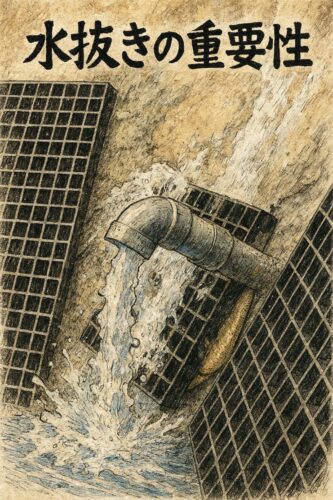
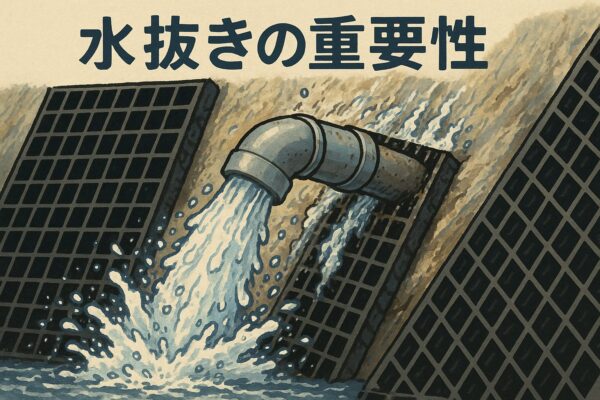
Water is also leaking from the upper section, so we installed a drain pipe as a safety measure (we install these proactively as part of our in-house service).
It is about 4 meters long.
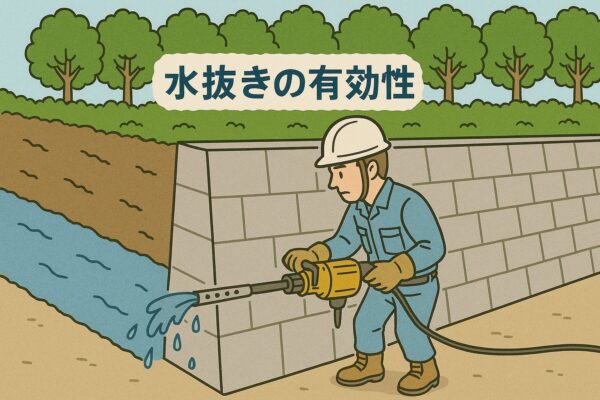
This drainage system was created by drilling a hole with a 65-diameter drill bit and driving a perforated pipe into it.
And then there was that heavy rain in Ishikawa the other day.
Water that had barely been coming out until then started gushing out of the drain.
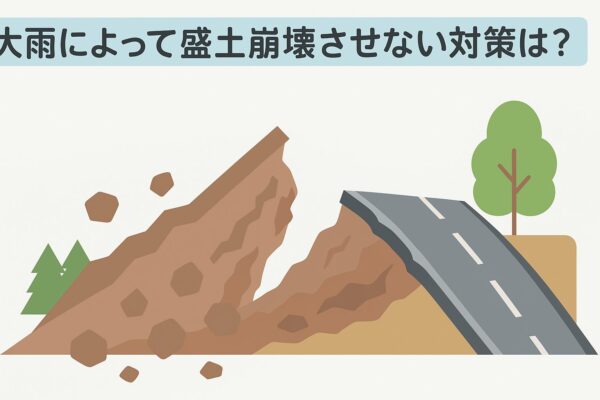
What’s more, if this amount of material hadn’t been removed from the natural rock, there’s a very high probability that the structure would have collapsed even after the rebar installation was completed!!!
Personally, I believe that drainage is essential, whether it’s for rebar installation or formwork.
I think this is what true preventive maintenance is all about.
And please pay special attention to the drain below it.
It's in the same direction as the bolt.
Drain downward. (In areas where machinery cannot enter.)
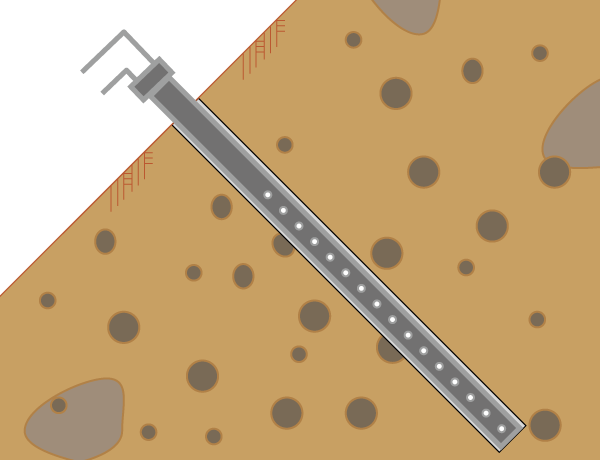
This is what it looks like when it's not raining.
Under what circumstances does water come out of this downward-pointing drain pipe?
Of course, it could be caused by pressure from the underlying rock, but if you think about it logically, this is the most likely explanation, right?
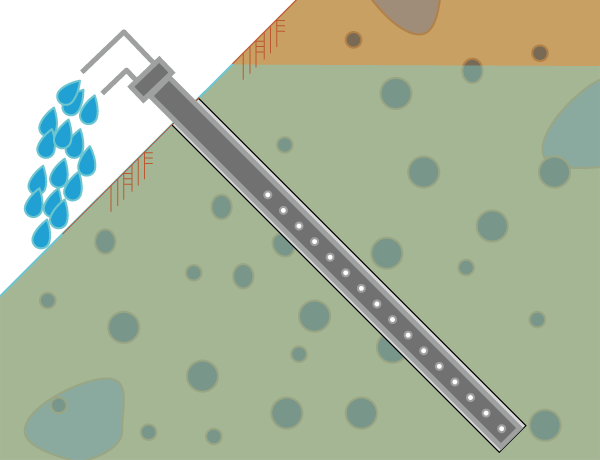
This means that the groundwater level has risen to the vicinity of the hole in the ground.
Of course, water is constantly flowing in from all sorts of streams in the mountains, so it’s hard to say for sure, but,
The Mizumichi, which extend in all directions, converge and emerge from the drainage borehole.
That makes me wonder—are downward-facing drainage rock bolts more likely to be approved??? But for now, I guess I’ll just have to experiment, lol.
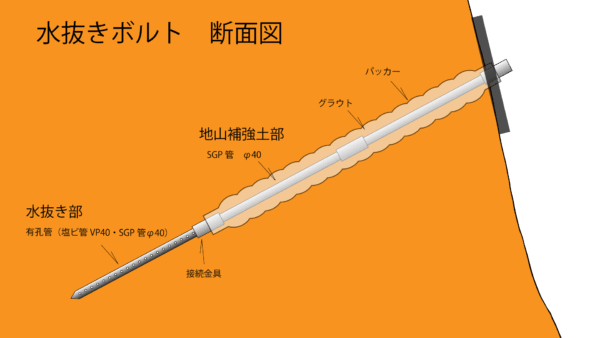
After all, shouldn't preventive maintenance involve draining the water?
Honestly, as long as you have a drain, you don't even need a frame.
That's what I think, too.
Actually, at the construction sites I work on for private projects, the main task is draining water.
Due to issues such as the red zone, we will be performing rebar insertion and dewatering work.
Right now, water is gushing out of the drain—is this okay!?
I’ve received messages saying that, but it’s never actually collapsed.
Since excessive pore water pressure does not build up during heavy rain, the structure does not collapse.
And since it includes rebar insertion work, I guess it’s the strongest!!? (Well, it’s a private-sector project on a slope, so...)
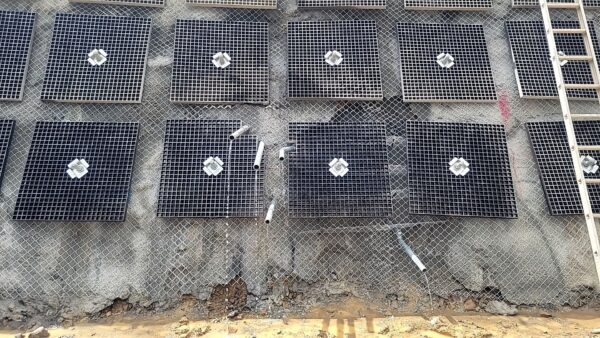
Even when we do the construction ourselves, we prioritize safety and proactively drain the water, so we have plenty of proven results showing its effectiveness, but,
After all, the problem is that it's hard to quantify, lol.
It’s definitely not an easy topic to bring up with consultants.
Based on experience, we recommend that the length of the drainage channel be at least as long as the rebar insertion process.
2 meters isn't enough, so if possible, I'd like at least 4 meters.
Please be careful, as cement slurry may seep in depending on the construction sequence and method.
See you later.