Hello, everyone.
This is Enta.
Right in the middle of a three-day weekend, I headed out to the job site the other day! lol
Then, we installed the machine and ran a test operation.
The hammer won't strike!! (Rotary Percussion)
I just moved it from one site to another...
I made sure to finish up at the previous job site before coming here.
And yet it still won't work...
So, we had to do some emergency repairs right on the spot!!
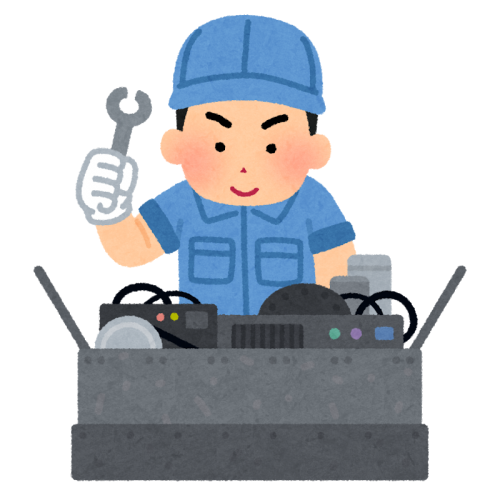
Buuuut! I don't have enough tools, so this is super hard!!
I do have a fair number of tools for situations like this, but,
I’m like, “I don’t even have a socket wrench that big!!!” So I’m going back for another repair on Monday!
So, it just occurred to me that when you install bolts and nuts, you probably put washers or spring washers in between them.
I have a feeling there might be people who don't know what this means, so I'll write it down.
Basically, this is installed to increase the contact area—so the bolt doesn't dig into the base material—and to prevent loosening.
In Japanese, they are called "washers." There are many different types, such as spring washers.
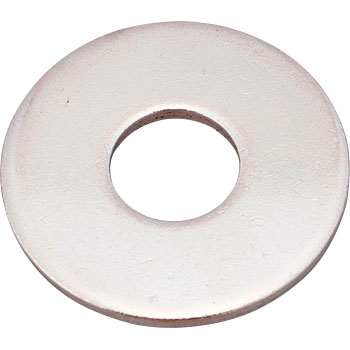
I think we'll use spring washers as well.
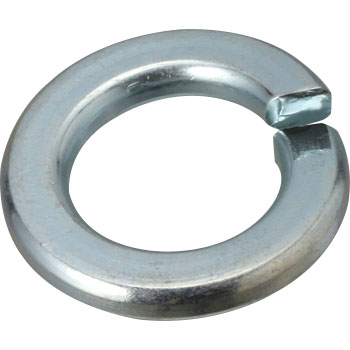
This works the same way—it uses spring tension to keep it from coming loose.
Generally speaking, the correct way to install it is with the spring washer protruding in the direction the nut loosens.
When installing a washer and two spring washers,
The order is: bolt → spring washer → washer → nut.
Even if you actually get it wrong, it won't come off unless you've really loosened it, but it doesn't hurt to know.
Tomorrow is Coming-of-Age Day, and I’m looking forward to some news that will entertain all the middle-aged men and women out there (myself included)!
See you later.