Hello, everyone.
This is Enta.
Let's put the topic of retaining walls aside for a moment and talk about data transfer.
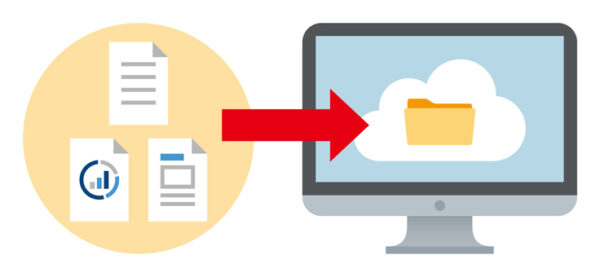
In public works projects, people often ask for data on XX.
I think that's the kind of conversation that will come up.
By "○○," I mean things like CAD data, photo data, and design calculations.
Recently, it’s become much easier to send data stored in the cloud directly to the recipient.
Handing things over on CDs and DVDs—something that used to be the norm—now feels like a thing of the past.
These days, email is the main form of communication.
And for large amounts of data, we use cloud services.
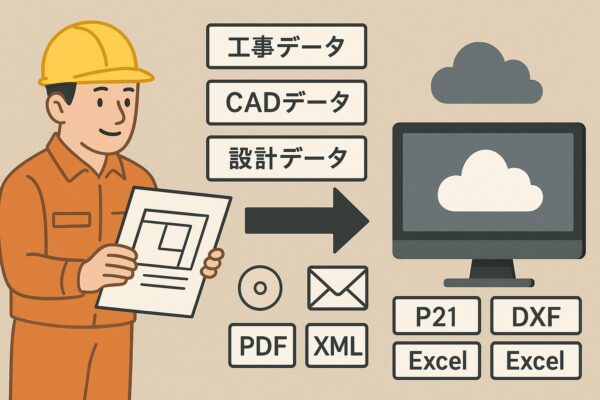
To be honest, CDs and DVDs are the ones people are starting to dislike when it comes to sharing data these days!
There's a reason for this: these days, cloud services and email are the norm.
My computer doesn't come with a CD/DVD drive!!!!!
These days, since transferring data via CD or DVD is so slow, most people use the cloud or a USB drive.
And best of all, even the cheapest USB drives are more than twice as fast as CDs when it comes to transfer speeds.
If it were the USB 3 standard, the transfer speed would be about 50 times faster!
I don't need CDs anymore, lol.
Given the factors mentioned above and cost-cutting measures, there are no longer any reasons why computers don't come with CDs.
So that means I’d be in a bind if I got a CD, lol
Well, just in case the worst happens, I have an external CD recorder.
So, please send the data via email, the cloud, or a USB drive whenever possible.
I think there are probably quite a few people who feel this way.
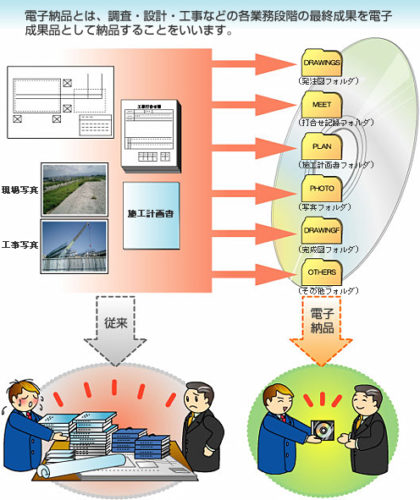
However, the problem is that the Construction CALS files submitted to the government office have to be on CD...
It was a huge breakthrough back then!!
But over the past 20 years or so, it has quickly become outdated.
But I'm still active!!
That's why CDs are still around at this government office lol (We deliver our work on CD, too.)
I wonder when this will become the standard way of delivering software—whether it’s to the cloud or to government systems!?
Currently, in some regions, the exchange of documents with government offices can be handled through the systems of each prefecture, including for consultations and other matters.
However, there's still the step of burning it to a CD at the end, but it's much easier than it used to be, isn't it?
I don't think the trend with CDs is likely to change anytime soon, though...
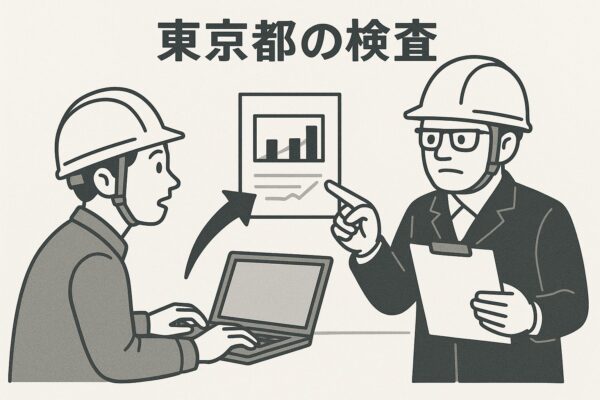
As an aside—and as I've mentioned before—
TokyoTokyo is the most behind in the whole of Japan.
Apparently, there are still inspectors who say things like, “Submit it on paper!” or “The inspection has to be on paper!” lol
Our company also works on projects for the Tokyo Metropolitan Government as a subcontractor, and there are so many things that surprise us.
It really makes you wonder, “Where did the SDGs go?”
To everyone in other prefectures who thinks Tokyo must be incredibly advanced!
When it comes to handling electronic systems—such as Construction CALS and electronic submission—regions outside Tokyo are by far more advanced.
Don't worry! Tokyo is actually way behind where you might think it is, lol.
Well, the cloud will certainly become the main method for data transfer going forward.
That's already the case.
Is USB better from a security standpoint?
I think about things like that, but when you consider things like keeping a record of edit history, the cloud is probably the way to go, right?
It’s become much easier than it used to be, but as a result, there are more things to learn and do.
Construction companies that are trying to improve efficiency while battling inefficiency really have their work cut out for them.
I've got more work than I used to, lol.
See you later.