



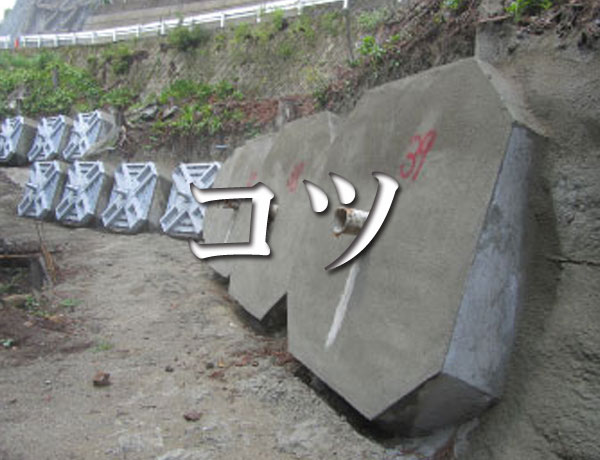
You don't need to cut out the box for a zabuton frame!
Hello, everyone. This is Enta. Do you notice anything when you look at this? lol Well, it’s just a standard zabuton frame, the kind you see everywhere. Below are some of our past projects. Like this one. Or this one. Something’s different from the photo above, isn’t it? Did you notice? That’s…
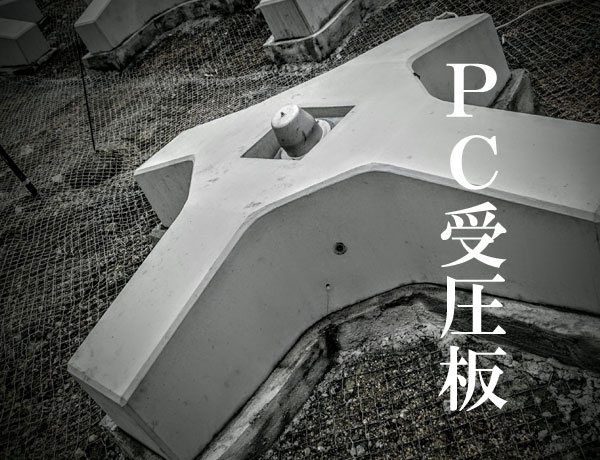
Workability of PC Load-Bearing Slabs | Installation of a 2-metric-ton Load and Measures to Address Uneven Loading from Backfill
Hello, everyone. It’s Enta here. It’s been scorching hot, hasn’t it! But the forecast says it’s going to rain nonstop next week… Huh? Is it the rainy season already?? Even so, there’s only half a year left in 2023! Actually, so far this year, I’ve only really worked in January, February, and March… lol. This year’s sales…

Rates for Leveling Material Installation Work | Cost Estimation Information
Hello, everyone. This is Enta. The other day, I had a hard time figuring out which leveling mat to use under the load-bearing plate. It wasn’t on-site, but I was stuck because I didn’t know which mat was specified in the cost estimate. These days, there are quite a few types of leveling mats available to place under load-bearing plates…

Even the Most Ordinary Things Cost Money | Slope Construction Company
Hello, everyone. This is Enta. Lately, I can’t stop thinking about pressure plates, lol. As I’ve been doing all these calculations, I’ve found myself wondering things like, “Why is this metal plate here?” or “Why is it this size?” It really makes you think. I wonder what the developers were thinking…
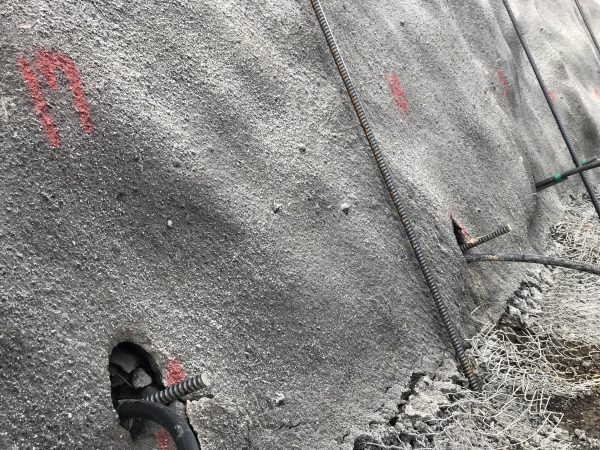
The protrusion length of rebar inserts is determined based on the surrounding terrain | On-site judgment
Hello, everyone. This is Enta. I’d like to talk about the basic guidelines for rebar protrusion when inserting rebar after spray-applied mortar work. Generally, the standard protrusion length for rebar insertion is 100 mm. The surface can be challenging when applying spray-applied mortar, especially on slopes with significant unevenness. Unevenness…
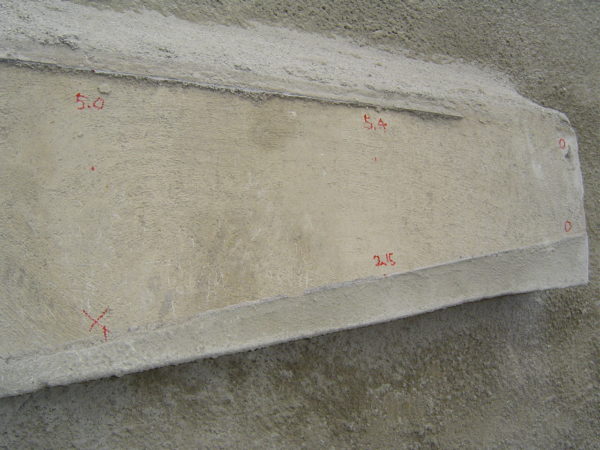
Clear Autumn Skies and Grade Adjustment | The Season for Slope Work
Hello, everyone. This is Enta. As you’d expect at this time of year, my schedule is really starting to fill up. I’m up on the scaffolding this fall. Man, it feels so good! Working on-site at this time of year is absolutely the best. It’s cool thanks to a light sweat, and it’s neither too hot nor too cold…

Experiencing Both the Good and the Bad | A Slope Engineer’s Outlook on Life
Hello, everyone. This is Enta. I was wondering what to write about for my blog, so I was looking through some old photos. I happened to come across a photo where I accidentally added the date, lol. It’s a photo from 2003, taken during a lift-off test and unloading operation—which were probably quite rare in the industry at the time! …
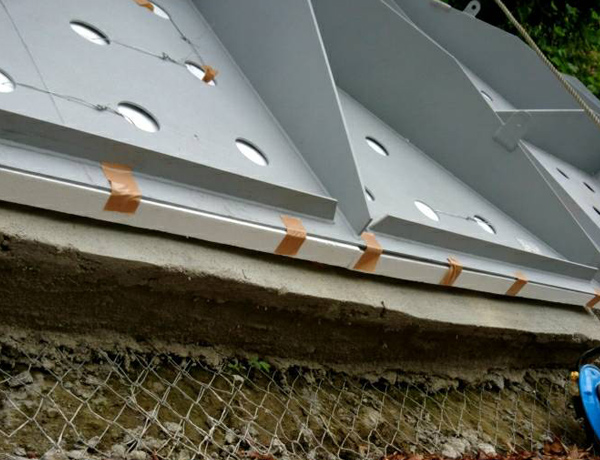
Backfill Material Is Required Behind Concrete Load-Bearing Slabs | Construction Principles
Hello, everyone. This is Enta. Lately, I’ve noticed that during ground anchor installations, there are often cases where backfill isn’t being placed even though a load-bearing plate is in place. How about at your job sites? The natural ground is really uneven. Yet, there aren’t any zabuton frames or anything like that. Just the other day, we made a design change…
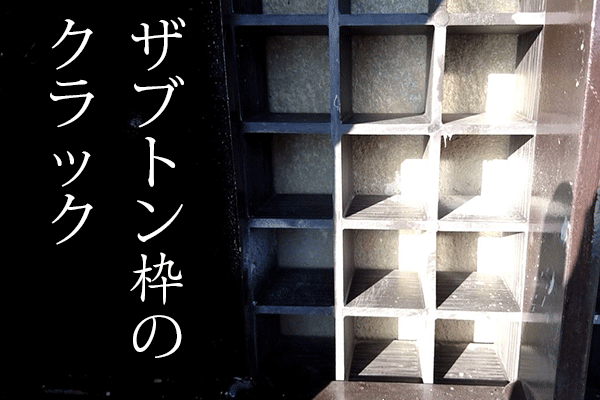
What should I do about the crack in the zabuton frame?
Hello, everyone. This is Enta. Are you installing zabuton frames? What do you think when you hear, “The zabuton frame has cracked, and the load-bearing plate has settled in”? Do you think it’s a problem if cracks appear? Or, on the contrary, do you think it’s okay as long as the load-bearing plate has settled in? Actually…