



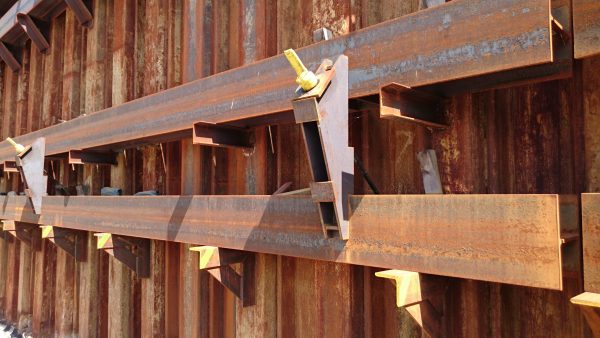
Guidelines for Project Management of Temporary Ground Anchor Work (Retaining Wall Anchors)
Hello, everyone. This is Enta. I’m at a job site where we’re installing temporary anchors for the third time. We’ve been doing a lot of temporary anchor work lately. That’s right. Since we’ve recently started taking on urban civil engineering projects, the number of times we’ve been called in has gone up, lol. We have three temporary anchor projects lined up by next year. (Including those currently in progress…)

Changes in Soil Conditions Are the Most Frightening | The Reality of Drilling
Hello, everyone. This is Enta. When designing based on a columnar diagram, we consider where exactly within which stratum to anchor the structure. Naturally, cost-effectiveness is the top priority. However, there are quite a few cases where the actual strata turn out to be completely different from what was expected. This is especially true for clay-based strata. As for the design…

The Heads of Existing Anchors Are Abnormal (Part 2) | Root Cause Analysis
Hello, everyone. This is Enta. Here’s the answer from the other day (lol)—the one with the weird-looking head treatment. Actually, the metal plates and wires attached to this anchor head are there to prevent accidents in case the PC steel strand breaks and flies off! They’re covering it up. The ground anchored into the existing formwork…

Even After Closing a Deal, There's Still More to Do | Continuing Sales Efforts
Hello, everyone. This is Enta. Lately, I’ve been getting requests for cost estimates and design work from city hall and construction consulting firms. It’s great that they’re coming in, but even though they’re marked “urgent,” they often don’t specify the soil conditions or provide any requirements… Late at night, I find myself thinking, “How am I supposed to do this?!”…
The Head of an Existing Anchor Is Abnormal (Part 1) | Inspection Case Study
Hello, everyone. This is Enta. The other day at a job site, I found an existing anchor that had ended up looking like this. The anchor had been set into the formwork. Even though I may not look like it (though I have no idea what I actually look like, lol), I’m a pro, so I figured it out right away. That said, this kind of thing…
Stories of Civil Engineering Structures | Documentation and Preservation
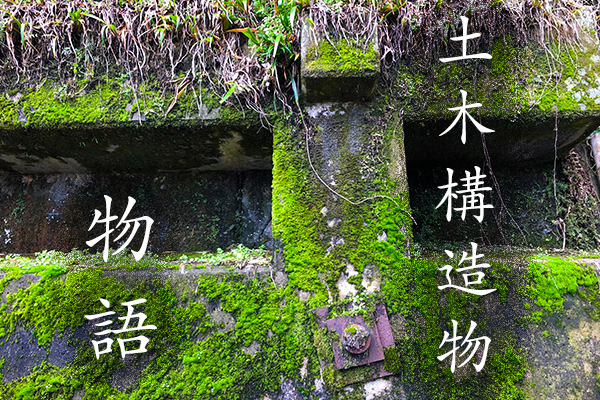
Hello, everyone. This is Enta. The other day, I went to check out a slope a bit far away! On my way back, I discovered an incredible slope that looked just like something out of *Laputa*! It’s an on-site formwork system. This is the type of slope formwork where you build the formwork and pour fresh concrete into it. It’s quite an old system. Why…
Tips for Temporary Anchors (Earth Scaffolding and Drilling Locations) | On-Site Decision-Making
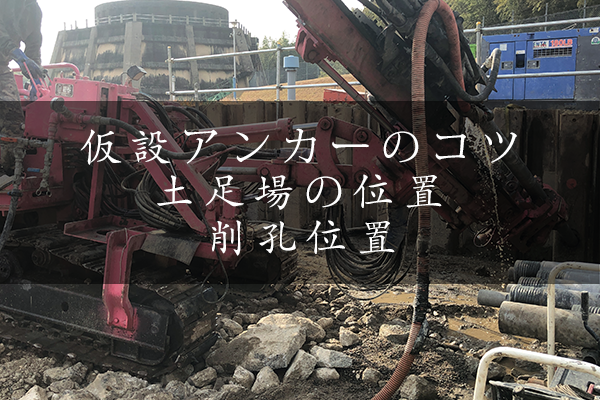
Hello, everyone. This is Enta. I get asked a lot about the height of earth-retaining walls using temporary anchors. I really do get asked that a lot! I wonder if few people know the answer, or if they just forget it right away? lol I’m going to explain the height of earth-retaining walls using temporary anchors. First, what does a core drill do…
Considering the Angle of Stress (Part 2) | Decisions on Construction Methods
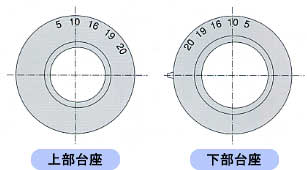
Hello, everyone. This is Enta. This is a continuation of my previous post. Today, I’ll discuss how to handle situations where the composite angle exceeds 20 degrees. Situations like this are really a pain, aren’t they? But since we have no choice but to do it, I’ll give it a try—and see if I can find the simplest method possible. For now, …
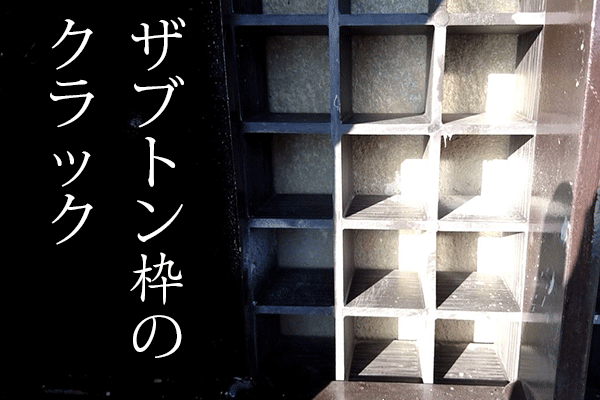
What should I do about the crack in the zabuton frame?
Hello, everyone. This is Enta. Are you installing zabuton frames? What do you think when you hear, “The zabuton frame has cracked, and the load-bearing plate has settled in”? Do you think it’s a problem if cracks appear? Or, on the contrary, do you think it’s okay as long as the load-bearing plate has settled in? Actually…