



Hello, everyone.
This is Enta.
I received some photos from the Soil Research Institute showing the ground anchors that were damaged during the recent Noto earthquake, so,
I was looking through some stuff to show you all when I came across something that made me go, “????” lol
Please take a look at the other photos as well.
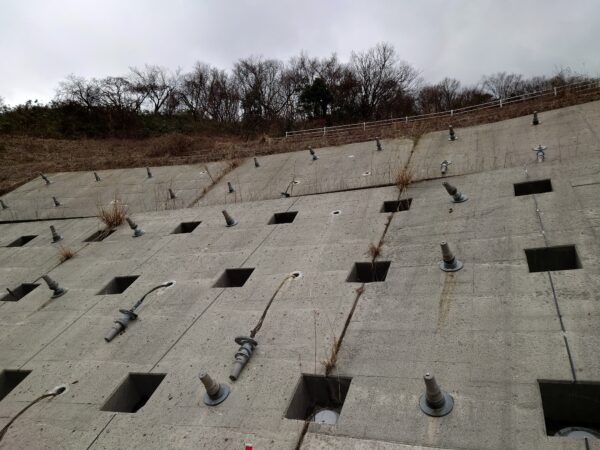
That's an SEEE anchor that has come loose, isn't it?
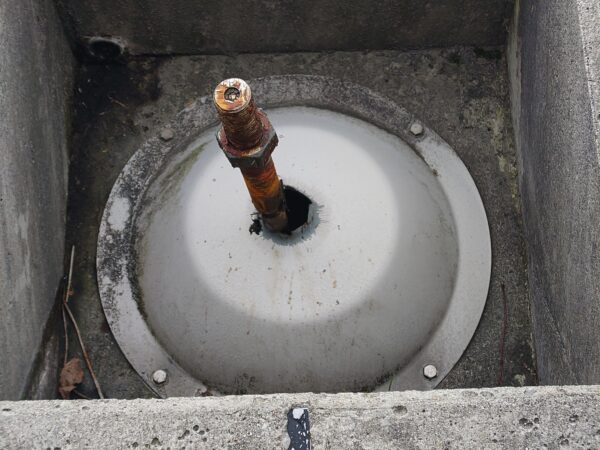
The apartment building is sticking out of the lid.
I wonder if this one is also a sticking issue, huh?
Size-wise, since the pressure plate and other parts are large, is this a pretty big anchor?
You won't really get a sense of the size unless you go there in person, though.
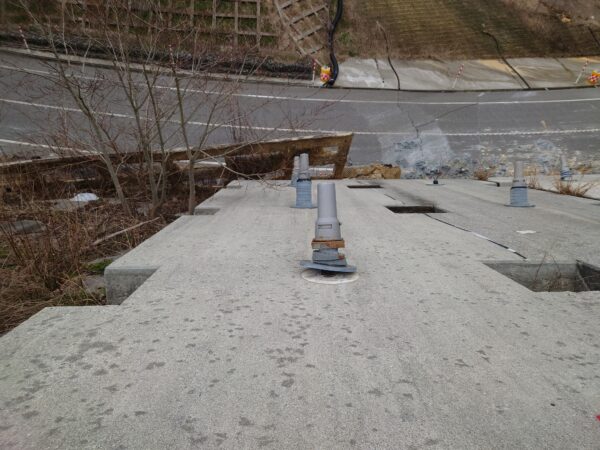
And here it is.
Do you get it??
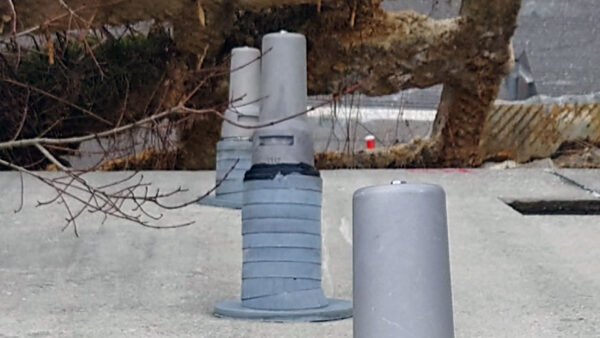
This is it lol
The one next to it, too—it’s all stretched out like that.
Doesn't this really make you wonder?
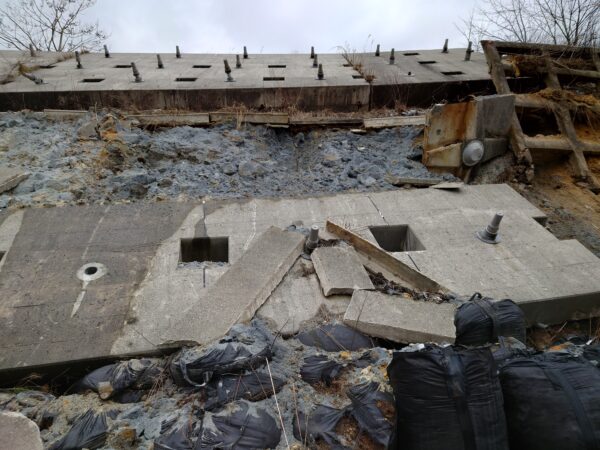
In the upper-right corner, lol
It stands out.
Let me think about this. (As a possibility.)
1. Although the holes were drilled and the plates inserted prior to pouring the pressure-bearing slab, the installation location (drill depth, etc.) was incorrect.
2. Work was proceeding on its own while the supervisor was away
3. We drilled to the planned depth, but due to internal backflow, the anchor could not be inserted, so we left it as is.
4. I tried to reposition the anchor, but it wouldn't come out (a common problem)
5. We reported the shortfall in production volume to the local government, had that amount deducted, and increased the number of pressure plates to address the issue (this was the final solution).
6. The drilling depth I gave the craftsman was incorrect.
7. The excavation of the earthen embankment was deeper than planned.
8. Fixing construction mistakes with pressure plates? lol
Here are some possibilities.
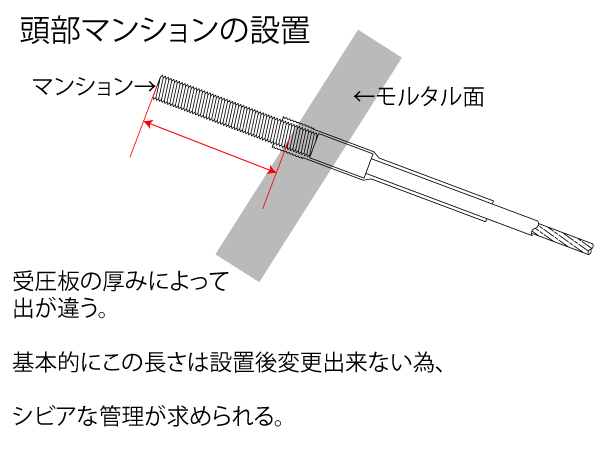
As I've mentioned before, it's very difficult to determine the correct installation position for SE's table anchors.
The location of the apartment building at the top is fixed, so the installation location is set in stone.
The market for new condos in Taiburu Anchor is tough! That’s exactly why you don’t need a reserve!
When You Mess Up the Precise Head Position of a Tie-Down Anchor
When You Mess Up the Precise Head Position of a Tie-Down Anchor (Part 2)
When You Mess Up the Precise Head Position of a Tie-Down Anchor (Part 3)
When You Mess Up the Precise Head Position of a Tie-Down Anchor (Part 4)
If the apartment building is too long, the solution is to,
I need to talk to the city office, but maybe I should downsize my apartment a bit (I have a little extra space),
As shown at the site above, this method involves placing shims under the load-bearing plate.
It may not look great, but since its capabilities and effects remain the same, I think it’s fine to just explain it.
Well, if the government official in charge is ignorant and rigid, there’s a good chance we’ll have to start over… lol
It would be best to prevent this kind of situation from happening, but that’s not always possible on the job…
It’s part of the director’s job to handle that well, but I feel like the director bears too much of the responsibility.
See you later.


Conversely, it’s also possible that there were too many anchors, resulting in insufficient tension reserve, so a coupler was used to connect two pipes of the same diameter.
Thank you.
That's true, too!!
Too much or too little?
We really have to take that kind of thing very seriously, don't we?
Thank you.
That's certainly a possibility.
However, in that case, we can't connect them using fittings of the same diameter, so the cap ends up being larger.
Couldn't it be that the free length was too long, so when it stretched more than the screw in the upper housing due to tension, there was nowhere to attach the nut...?
Almost all the other anchors are using plates to raise their height too—do you think the pros will make a string of mistakes?