Hello, everyone.
This is Enta.
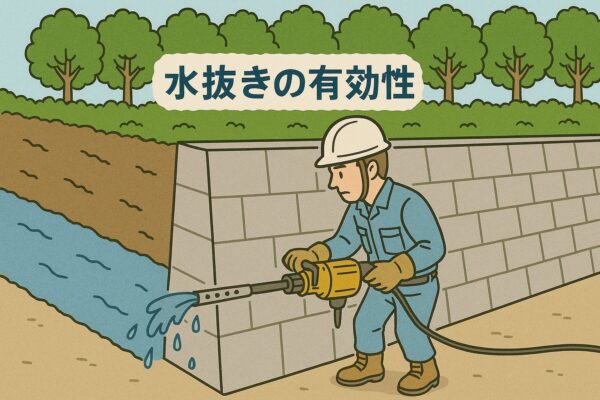
I think I’ve written quite a bit about the angle of dewatering boreholes on my blog before.
The design specifications state that it is approximately 5 to 10 degrees.
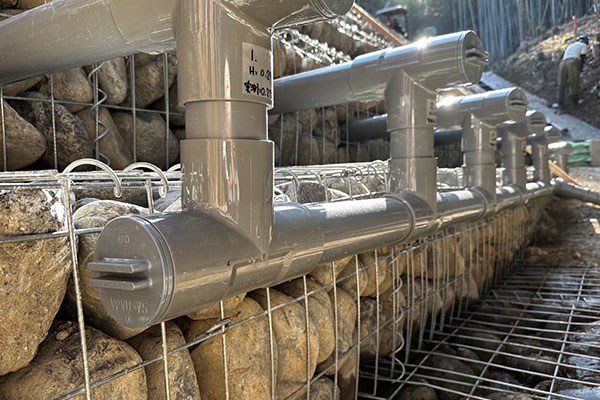
It's like asking, "What do you think of this angle?"
What is the concept of angle in dewatering drilling?
Please watch the video in the article below.
Handling the Head Section When There Is a High Volume of Spring Water
Water is leaking from the gap in the anchor head.
At first glance, this looks weird, doesn't it?
This is despite the fact that the drilling is being done downward.
What do you all think?
In situations like this, one might think,
1. The water has risen to the level where the head has been treated.
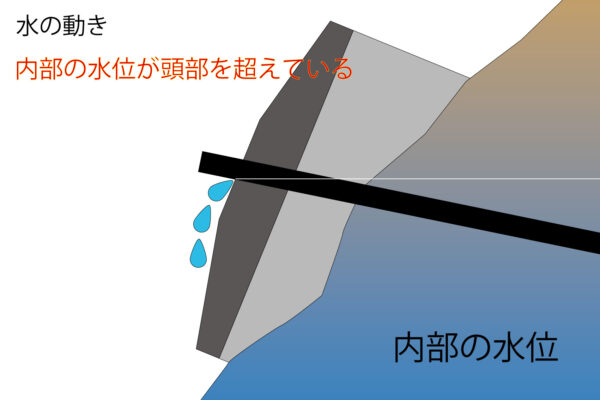
It's just a possibility that something like this could happen.
If that's the case, if there were a drainage well drilled here, water would be gushing out like crazy, lol.
I think the internal pressure is rising.
2. Due to high internal pore water pressure, water is rising up the surface of the grout after drilling and grouting (surface tension).
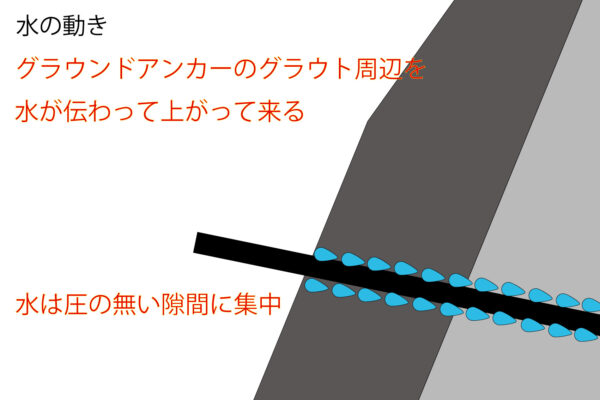
Water is seeping out along the surface of the grout, which has hardened due to surface tension.
This kind of thing happens all the time.
What this suggests is that dewatering boreholes are sufficiently effective even when drilled downward.
It means you don't have to hit it high!
Intuitively, I’d think a slope would improve drainage, but in reality, there isn’t much difference.
From the mountain's perspective, it's a hole as narrow as the tip of a needle.
Back in the day, they used to say, “Since the water drains out, pour it upward!!”
I’m sure there are people who’ve already made up their minds about this, but I think it’s about time we revised it.
After all, there are plenty of project examples, case studies, and track records available now compared to the past.
More efficiently, more rationally.
See you later.