Hello, everyone.
This is Enta.
Does your company set sales quotas for you?
When there's a quota, don't people tend to fudge the numbers? lol

Are the big companies, in particular, bound by quotas? Or are they being forced to set targets?? lol
"Quotas" and "goals" may seem similar, butTheir meanings and psychological implications are vastly different.
I Googled it, so let's take a look ^^
🔻 Quota (Quota: Quota)
◆ Meaning
- "Mandatory targets" and workloads that must be met
- MostImposed from above and mandated as an obligationthing
- Failure to meet these goals may result in a lower evaluation, disciplinary action, or penalties.
◆ Example
- I have to make 100 phone calls a day.
- I have to close 10 deals a month.
◆ Psychological Impression
- Pressure, Sense of Duty, Stress
- Things you “feel forced to do” or “do to avoid punishment”
🔺 Goal (Goal)
◆ Meaning
- Goals and metrics that you or your team aim to achieve
- Toward Achieving Our GoalsI can work hard with a positive attitudething
- Even if you don't get results, the "effort" itself is sometimes recognized.
◆ Example
- I want to increase sales to 120% this month.
- I want to pass the technical certification exam
◆ Psychological Impression
- Positive Attitude, Initiative, and a Sense of Fulfillment
- "Something you take on to challenge yourself and grow"
⚖️ Comparison Summary
| Item | Quota | Goals |
|---|---|---|
| Properties | Compulsion/Obligation | Proactive and Ambitious |
| Decision-maker | Supervisors and Organizations | Set it yourself or after consulting with someone |
| If not achieved | Responsibility, Reprimands, and Possible Point Deductions | Evaluations are flexible and lead to the next challenge |
| Psychological Impact | Pressure and Fatigue | Motivation and Sense of Accomplishment |
🎯 How do you distinguish between them in practice?
- Quota: The minimum required threshold (e.g., number of contracts, number of workdays, etc.)
- Goal: Challenges aimed at achieving ideals or personal growth (e.g., improving skills, number of improvement proposals, etc.)
✅ Key Points
A quota is an “obligation that must be met,”
A goal is the "direction to take."
It's important to strike a balance between the two, but,Workplaces that share common goals tend to foster a more positive atmosphere.
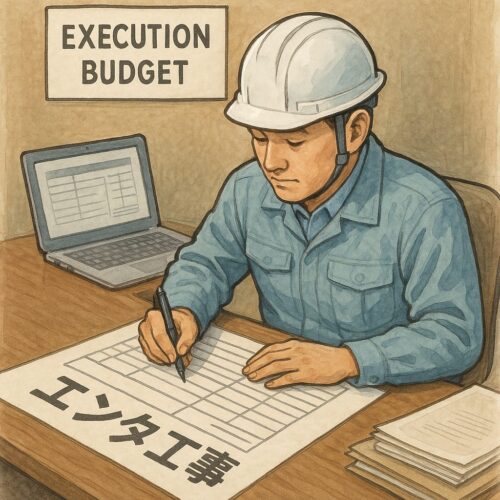
From a construction perspective, it's the actual budget.
The company will probably say we have to hold on to this profit at all costs, right? (Quota)
However, in reality, there are always hidden expenses and costs that couldn’t be fully anticipated during the planning stage.
So, what should we do?
When that happens, we factor in some flexibility at the operational budget stage.
Basically, they're just inflating the actual budget.
For example, for a 10 million construction project, we start by strictly setting the profit margin at 15 percent. (We put serious thought into this part of the planning.)
However,
"If I release this as is and profits happen to drop, it could affect my performance evaluation!"
In reality, even for construction projects that aren’t particularly difficult, if you look at the final profit purely in terms of numbers, it’s judged solely on whether it went up or down.
Especially the company's top management.
In that case, it’s obviously better if it goes up, right? (It makes it easier to assess.)
Therefore, we will reduce the profit margin on the above project to around 10%.
And by allowing for a margin of about 5% in case something happens on-site, things will ultimately work out just right.
This is the final form of the quota.
On the other hand, suppose this profit had fallen even further.
If profits at the operational level drop too much, the department heads in charge of managing and supervising those operations will receive lower performance evaluations.
So what should we do then?
In other words, we're shifting the profit to other operations that are generating a profit.
Reallocation of ProfitsThat's right. (Accounting fraud)

This refers to paying construction costs (such as subcontracting and material costs) using funds from other profitable projects.
This is a common occurrence in the construction industry. (Absolutely not allowed for tax purposes!)
After all, because they have quotas to meet, they tend to stick to those quotas even if it means breaking the rules.
Otherwise, it could lead to self-criticism.
How can we complete the work on a challenging job site within budget without reducing profits?
But that's also what makes being a site representative so rewarding.
A workplace where the atmosphere is too tense isn't fun at all, and a workplace that doesn't turn a profit isn't fun either.
And I’m getting tired of construction projects that get way too much praise.
I think finding a project goal that’s just the right level of challenging and rewarding is the best way to maximize profits.
It's always fun on the field, and it's great when you can play aggressively, isn't it?
I hope that our senior management and supervisors will be the kind who don't stand in the way of that.
(Speaking for all the office workers, lol)
That’s exactly why I think we need a shift in mindset—not to focus on quotas, but to set our sights higher.
And that’s why it’s so important not to judge things right then and there!!!
People who are capable can do it whether they like it or not, and you can tell right away who isn't lol
It's not just about profit margins in the budget anymore, is it!?
If a competent person does something and profits decline, it means something unexpected has happened.
If it's someone who can't do it, it's no surprise they couldn't do it, lol.
Is the budget too generous just because they can't do it?
See you later.