



Hello, everyone.
This is Enta.
It's kind of bad—there are fewer people, but the workload just keeps piling up...
I'm going to introduce you to some contractors I know, but it seems they're all busy...
To be honest, I don't really have that many connections with people around me, lol.
I do know a few people who work in slope stabilization, but there are really very few of them.
There are only a few people there, and we don't really talk about work much when we're together...
I wonder what happened to that "leveling out" the Ministry of Land, Infrastructure, Transport and Tourism was talking about before? lol
But that's beside the point.
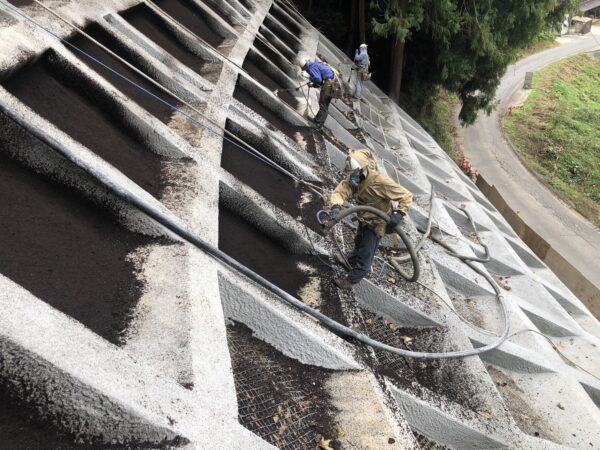
Best Time to Install Vegetation Engineering Structures
The other day, at a construction site, we got to talking about the timing of vegetation restoration work (with the official in charge).
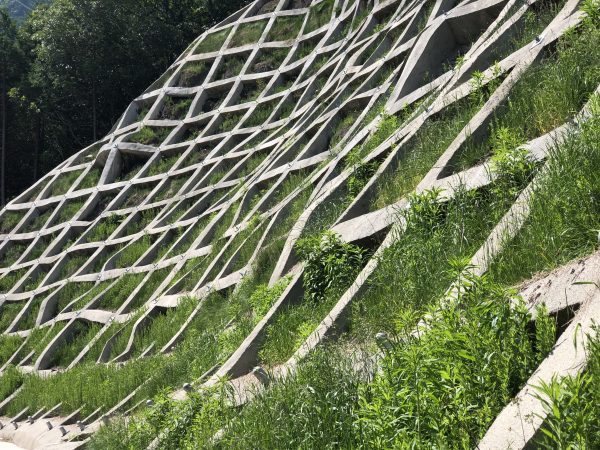
When is the best time to plant?
So, basically, spring and fall are the best!
That's what I'd say.
Conversely, why aren't summer and winter suitable?
That's what I was told.
What do you all think?
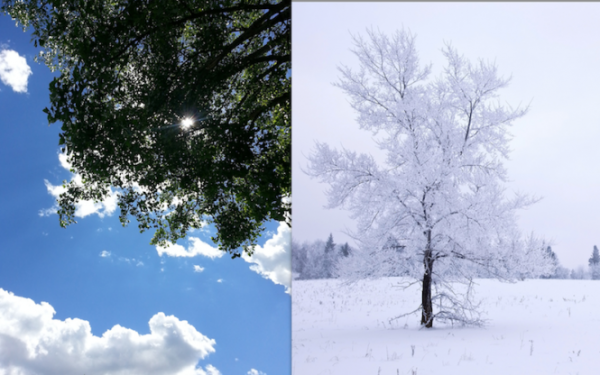
There are probably various reasons, but,Basically, it's covered in specialized books.From! lol
This is probably the root of the problem.
Actually, there’s no other reason besides this.
That's because government agencies won't accept anything that isn't written in specialized textbooks.
It's hard to put into words, but one person alone can't take responsibility for this.
What’s more, since no one wants to be told they failed at planting based on their own judgment, the result is that they end up not planting at all.
The reason is that it's written in the book. Or because it isn't written there.
Conversely, we’d turn that around and explain it by saying, “As it says in this book…” right?
So they’ll say things like, “Let’s go ahead with the work,” or “Let’s hold off for now,” steering the conversation to suit their own interests.
Now, when it comes to vegetation, specialized books do specify the optimal time for planting, but,
Actually,Unless it's an extremely cold region, plants will generally grow there.
Even if you spray it in the middle of winter, it usually grows anyway lol
Plants planted in the middle of winter will survive the winter and sprout in the spring.
It can grow almost anywhere, even in the sweltering heat of midsummer.
The reason for this is simple: plants (seeds) are extremely sensitive to temperature and light.
It may seem like we're the ones trying to grow them, but in reality, we're leaving it all up to the plants.
We're just providing the soil and fertilizer.
So,Whether a seed germinates or not is up to the plant.That's right.
That's why, even in very cold regions, the seeds must be enduring the cold, waiting to bloom once it gets warmer.
On really sweltering days, I just stay put—I’m sure I’m planning to bloom around fall, lol.
That's why they'll grow back pretty much no matter when you plant them.
Speaking from my own experience, the vegetation project I sprayed while shoveling snow during the bitterly cold month of January in Niigata (Kojitani) was already growing wildly by that summer!
Back then, I was worried it wouldn't grow, lol.
I don't know about areas north of Niigata, but I'm thinking it probably isn't that different.
However, in areas with heavy frost or extremely low temperatures, there are factors to consider, such as thickness.
It's true—spring and fall are, in a sense, the peak season for plants.
Since it germinates easily, it looks great during the final inspection from the contractor’s perspective, doesn’t it?
Back in the day, if the seeds hadn't sprouted, we'd sometimes just call off the test lol (Looking back now, that was totally ridiculous.)
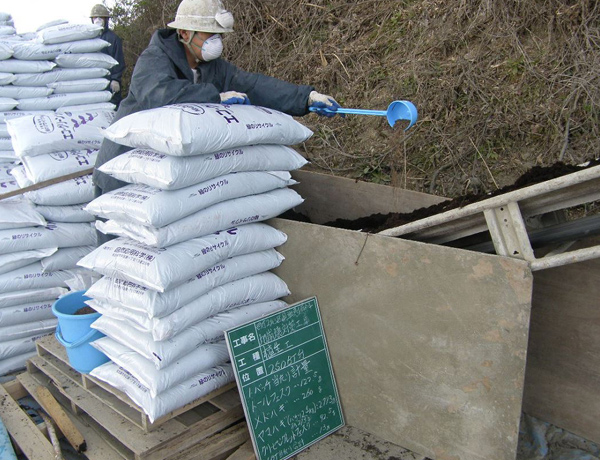
In reality, whether it's spring, fall, or any other season, the construction work isn't that risky.
After all, it's up to the plant whether it sprouts or not, lol.
It will definitely grow no matter when you plant it. (Damage from wildlife, etc., is a different matter.)
Furthermore, since vegetation engineering projects come with a two-year warranty against defects,
If the plants don't grow, you can address the issue by applying mud or scattering seeds during the peak season.
However, if it really isn't growing, there are other factors at play. We'll need to start by investigating those.
It's not that the book is telling lies.
This is purely my personal opinion, based on my own experiences.
See you later.

Hello. I always enjoy learning from your lessons. Does the liability for defects under the second year of the Vegetation Engineering program apply to all construction sites—whether at the municipal, prefectural, or national level? If so, what is the legal basis for this?
Thank you as always.
I think this basically applies to any worksite.
I believe this is specified in the Special Specifications and General Specifications. However, it may not always be included, and the details vary by prefecture, city, and municipality.
If you don't have that information, I think it's best to check with the staff member in charge at the municipal office.
Since it depends on the construction project itself, it will depend on the client who commissioned that project.
Thank you for your prompt reply.
Up until now (though I have very little experience and am still learning how to stay on top of things, haha), I’d only been told this once, so I assumed that since vegetation is a natural phenomenon, the concept of “collateral” didn’t apply to it.
I'll keep studying.
Thank you very much.
Thank you very much as well.
I hope this is of some help to you.
We look forward to your continued support.