Hello, everyone.
This is Enta.
Volunteering at a local festival for two days in a row. (Youth Division of the Chamber of Commerce and Industry)
It's exhausting, lol.
Even though I'm a volunteer, people still complain to me.
All we can do is tell them, “Please take that up with city staff.”
It must be tough for civil servants at times like this, right?
However, I think this is true for local governments everywhere: festivals and other events rely heavily on volunteers.
There are also people who pick fights with volunteers over unreasonable things.
And this is despite the fact that the festival couldn't be held without volunteers.
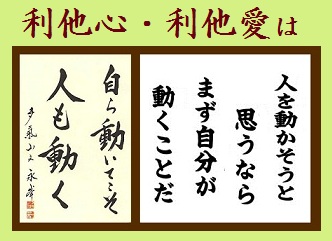
You really shouldn't just think about yourself, should you?
I want to approach both my volunteer work and my job with a spirit of selflessness!
But that's beside the point.
I think the term "mud balance" came up after the post about the flow rate of cement slurry.
So, what exactly is "Mad Balance"?!
A new slope manager asked me about that.
I won't do a mud balance unless I've had experience with the Nexco group, you know~
So, this time, it's Mad Balance.
What Is Mad Balance?
This is a slurry hydrometer typically used to easily measure the specific gravity of slurry on-site.
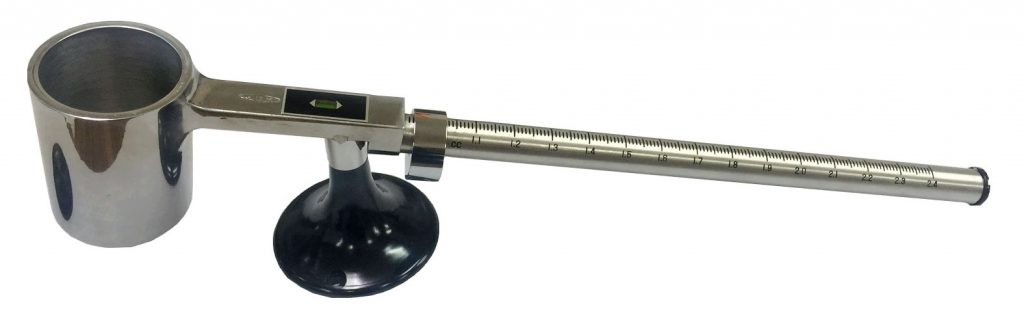
It's easy to use: simply fill the container to the brim with the item whose specific gravity you want to measure.
When you put the lid on, excess material comes out through the hole in the center of the lid.
While firmly holding down the hole in the lid, wipe the area around it clean and place it on the stand.
Slide the weight while keeping an eye on the level indicator.
The point where it is level is its specific gravity.
So, as for what this is useful for—the flow rate is one thing, but,
By setting and managing upper and lower limits, it is possible to minimize quality variations.
Regarding measurements after mixing: a higher specific gravity means the mixture is concentrated. A lower specific gravity means it’s diluted (contains more water).
If it's too thick, workability decreases, but to be honest, cement slurry is better when it's thicker.
If it's too thin, it tends to lack strength.
The point is that it’s better to err on the side of being too strong than too weak.
If the mixture is too stiff to work with, adjust it using an admixture such as Leobild.
Never dilute it with water.
Of course, it can't be so thick that it won't come out of the blender. Haha.
Tomorrow we'll cover calculation methods.
Selecting the Right Cement and Flow Tests
See you later.