Hello, everyone.
This is Enta.
On slope construction sites and in mountainous areas, the “material and equipment access routes” determine the success or failure of the project.
Construction cannot begin until the materials and machinery are delivered to the site.
People often ask, “How are we supposed to get the materials and machinery onto the job site?” But if you don’t plan ahead, you’ll end up with a lot of rework, lol.
In this article, let’s take a practical look at the approach to planning routes for the delivery of materials and machinery.
1. Understanding Site Conditions in Advance
- Be sure to conduct a site survey (road width, gradient, road surface conditions, and obstacles such as power lines and branches).
- Since Google Maps and Street View have their limitations, we need to actually drive the route to verify it (which is a must for construction contractors).
- Also check for times when traffic is prohibited (school commute hours, local events)
2. Vehicle Selection
- Will the large one fit?
- If a 4-metric-ton truck cannot fit, split the delivery between a 2-metric-ton flatbed truck and a 2-metric-ton dump truck.
- Can items be lifted and brought in using a truck with a crane? What can a backhoe (BH) handle?
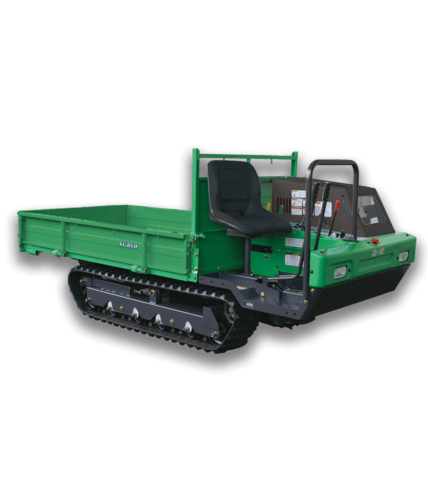
- All-terrain transport vehicle, as needed
3. Measures to Address Obstacles Along Delivery Routes
- Check the inner wheel clearance at turns (via test run or simulation using drawings). Can a BH handle it? Can an off-road transport vehicle handle it?
- Any guardrails or concrete block walls that may interfere must be removed in advance—
- Temporary relocation of power lines and tree trimming
- Approach Angle, etc., for the Pilot Road
4. Ensuring Safety During Delivery
- Deployment of Traffic Directors and Lookouts (on curves with poor visibility, steep slopes, and within residential areas)
- Preparation of Traffic Control Plans (Road Closures, Alternating One-Way Traffic, Road Use Permits)
- Prepare lighting and reflective materials for nighttime deliveries
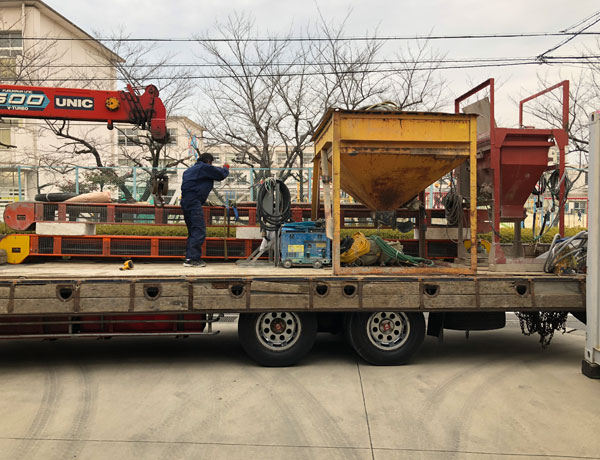
When I arrive at the site, these are the things I prioritize.
This raises the question: "What kind of machine should we install?"
The design specifications say something like "55 kW drilling machine."
A 55-kW core drill usually weighs close to 2 metric tons.
It’s a common question: “How on earth do you get this 50 meters up??”
A monorail? A 4-metric-ton dump truck? An all-terrain transport vehicle? Those are the options.
A long time ago, we moved a side-shifting drill 150 meters to the side.
The scaffolding was about 4 meters wide, but it took us a whole day to move across it slowly. (It was kind of hell, lol.)
I assume this means you didn't even consider it in the first place because it wasn't part of the design, but,
I think things like that are going to keep happening more and more from now on. (It’s already happening.)
See you later.