Hello, everyone.
This is Enta.
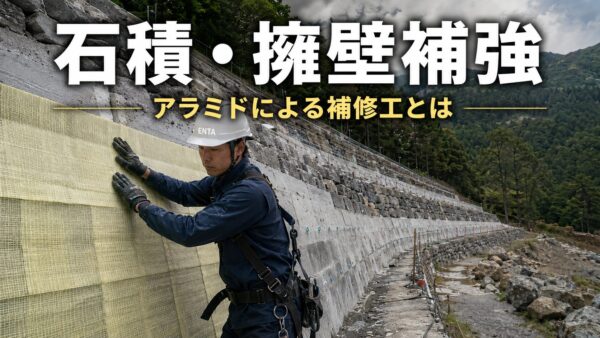
This time, we reinforced the stone wall shown below.
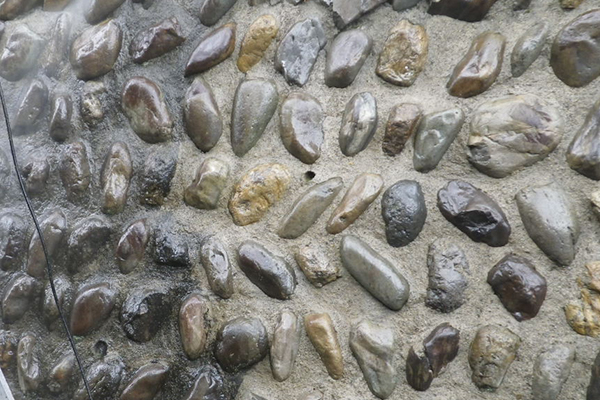
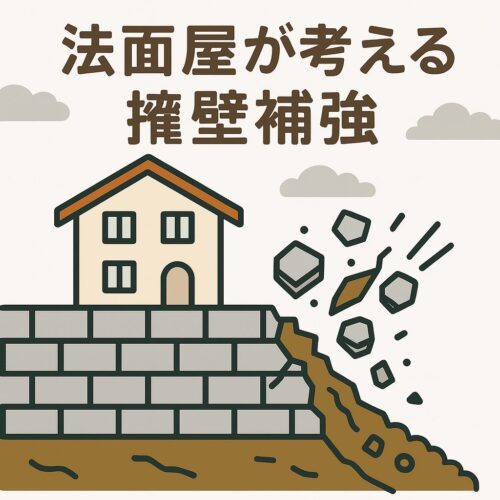
I was asked for advice on a stone wall like this one, and there’s a house built on top of it.
But reinforcing stone walls like this is actually quite difficult, isn't it?
The stones themselves are embedded in mortar, so if we chisel out the grout—or whatever it is—the stones will come out too. So how are we supposed to reinforce it?
That's how it works.
First of all, when I tried to come up with a shape for this reinforced concrete—or rather, reinforced concrete with embedded stones—that wouldn’t buckle, it was totally impossible lol.
I suspect that if a large earthquake were to cause cracks, the structure would tilt all at once, so we decided it would be best to reinforce the soil behind it. As a result, we proceeded with the work using rebar insertion and mortar spraying.
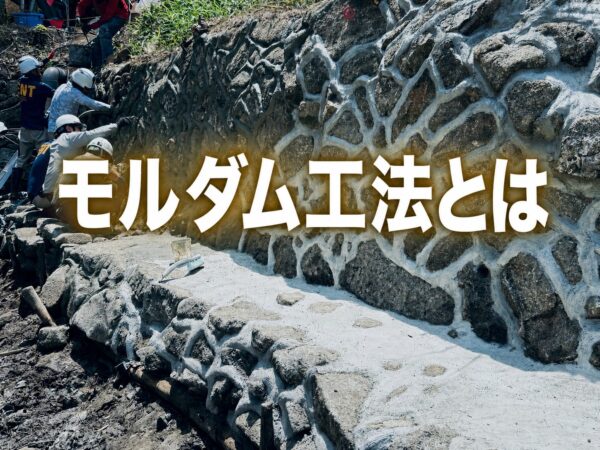
Although sprayed mortar only covers the surface, it should make the structure more durable by bonding firmly to the original concrete. (No examples of this type of work are available.)
We designed the structure so that the rebar inserts would support only a small portion of the building’s weight. (The rebar was installed with the top load in mind.)
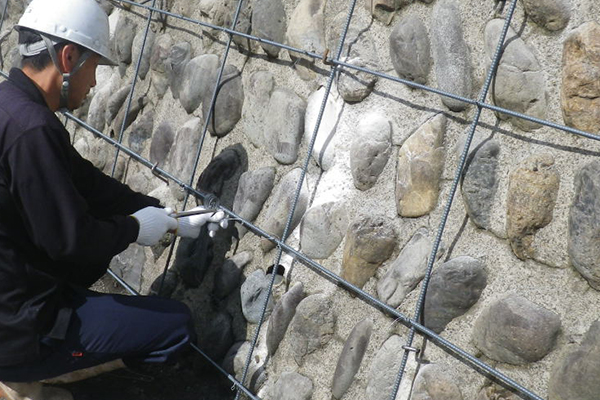
Wash the stonework, lay the rebar at 500-pitch intervals, and install lath over it.
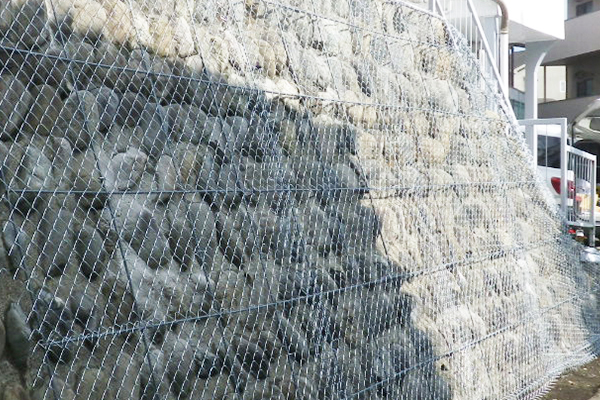
I think this will definitely make it much less likely to break.
(Actually, it occurred to me later that the spacing between the rebar bars might be better if it were a little smaller.)
However, since this is strictly a surface-level repair, you can’t expect it to provide much resistance to collapse; it’s intended solely as a reinforcement for the stone masonry.
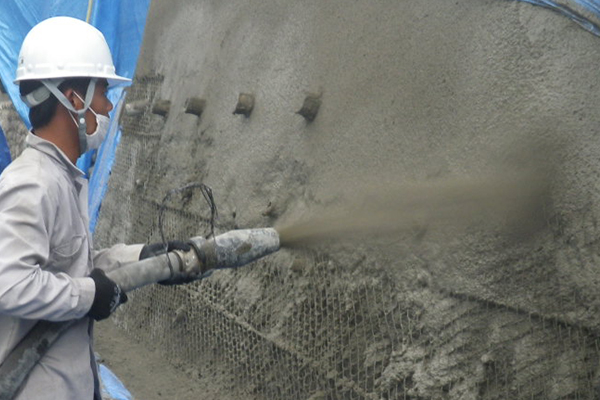
Next, we’ll apply a 1:4 mortar spray coat and then proceed to the rebar installation phase.
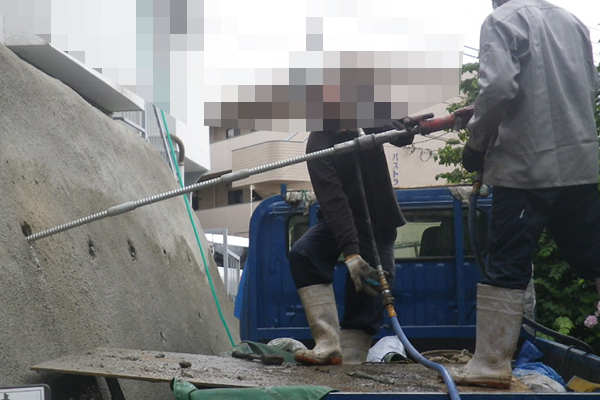
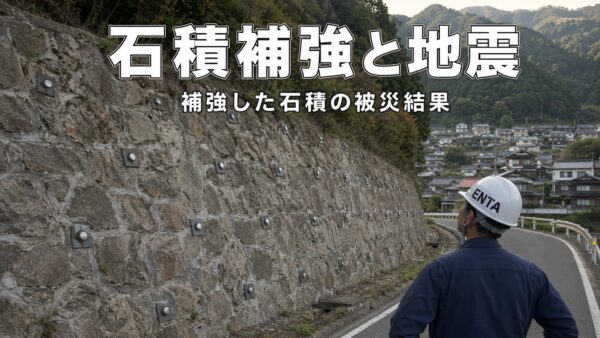
We have completed the installation of the self-drilling rock bolts.
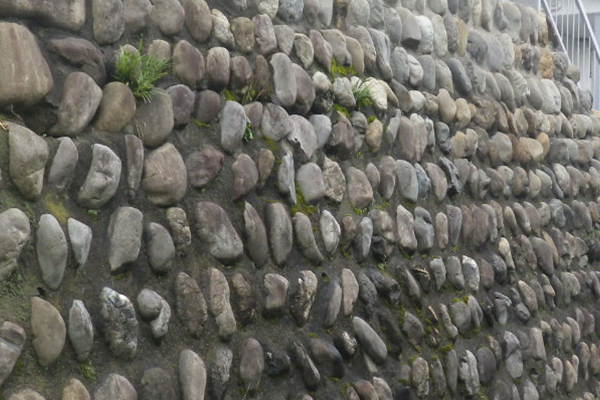
Before Construction
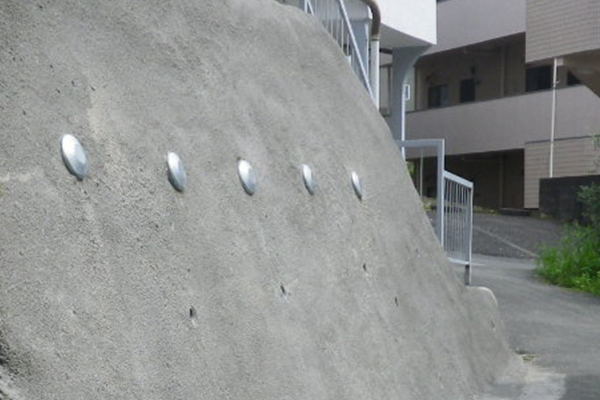
After Installation
It's a shame I can't show it off very well, but it looks quite sturdy.
While a major earthquake might cause cracks in the mortar itself, I don't think it will cause any damage to the house.
We’ve been seeing more projects like this lately, and we’ve identified a number of challenges for the future.
It's not bad working in an environment that's quite different from public works projects.
However, the private sector is quite cost-conscious, so it’s difficult to strike a balance with them.
See you later.