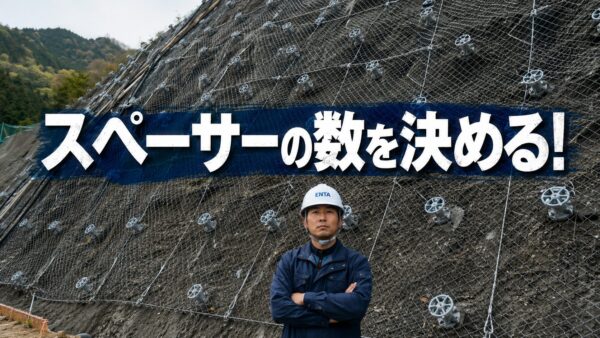
Hello, everyone.
This is Enta.
In slope stabilization work, do you cut the reinforcing mesh when installing joints (Elastite)?
Since I received that question, I’ll answer it.
I asked the AI about grout.
----------------------------------------
Q: What role do concrete joints play in civil engineering?
The role of concrete joints in civil engineering is as follows:
- Preventing Cracks Caused by Contraction and Expansion: Absorbs the contraction and expansion of concrete caused by temperature changes and drying, thereby preventing random cracking.
- Absorption of Structural Displacement and Settlement: Joints absorb the stress caused by ground subsidence and structural movement, thereby preventing adverse effects on the structure.
- Ensuring Construction Joints: When it is difficult to pour concrete over a large area, this serves as a joint when the work is divided into sections.
- Response to Earthquakes and Vibrations: It absorbs external forces, such as those caused by earthquakes and traffic vibrations, and reduces the load on concrete structures.
- Ensuring Watertightness: It functions as a waterproof joint to prevent water and moisture from penetrating concrete structures and to improve their durability.
- Ease of Maintenance: Performing regular maintenance and repairs on the joints extends the service life of the entire structure.
These are key factors in ensuring the safety and durability of concrete structures in civil engineering projects.
----------------------------------------
That being said,
In the case of slopes, since they lack thickness, I believe it’s impossible to prevent cracks from forming—I think the best we can do is guide them.
Furthermore, unlike concrete structures, the thickness varies from place to place—it’s thicker in some areas and thinner in others. (The thinner areas correspond to the design thickness.)
The unevenness of the slope is just crazy, isn't it?
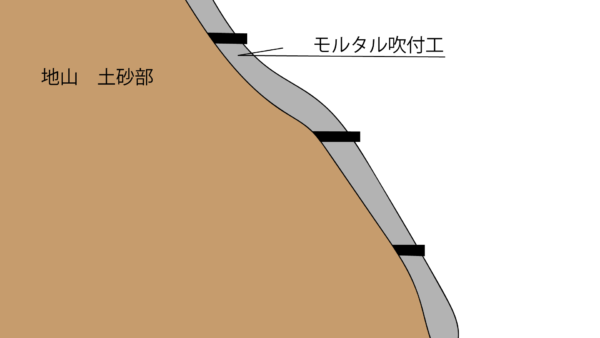
So, um...
To cut the last piece or not?
If you're just looking at it from that perspective, you should cut it.
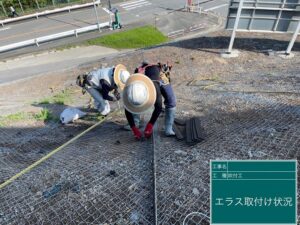
However, from the perspective of overall continuity in terms of the purpose of installing lath on a slope,
This means that continuity is lost at the joints.
It's a tough call—which one should I choose?—but basically, if I don't cut it, I can't think of a good excuse.
However, as a product, Ras wire mesh is not treated as a high-strength material at all.
It's basically there to help the mortar adhere better when it's sprayed on.
That's why I think it's okay to install it as is, without cutting it.
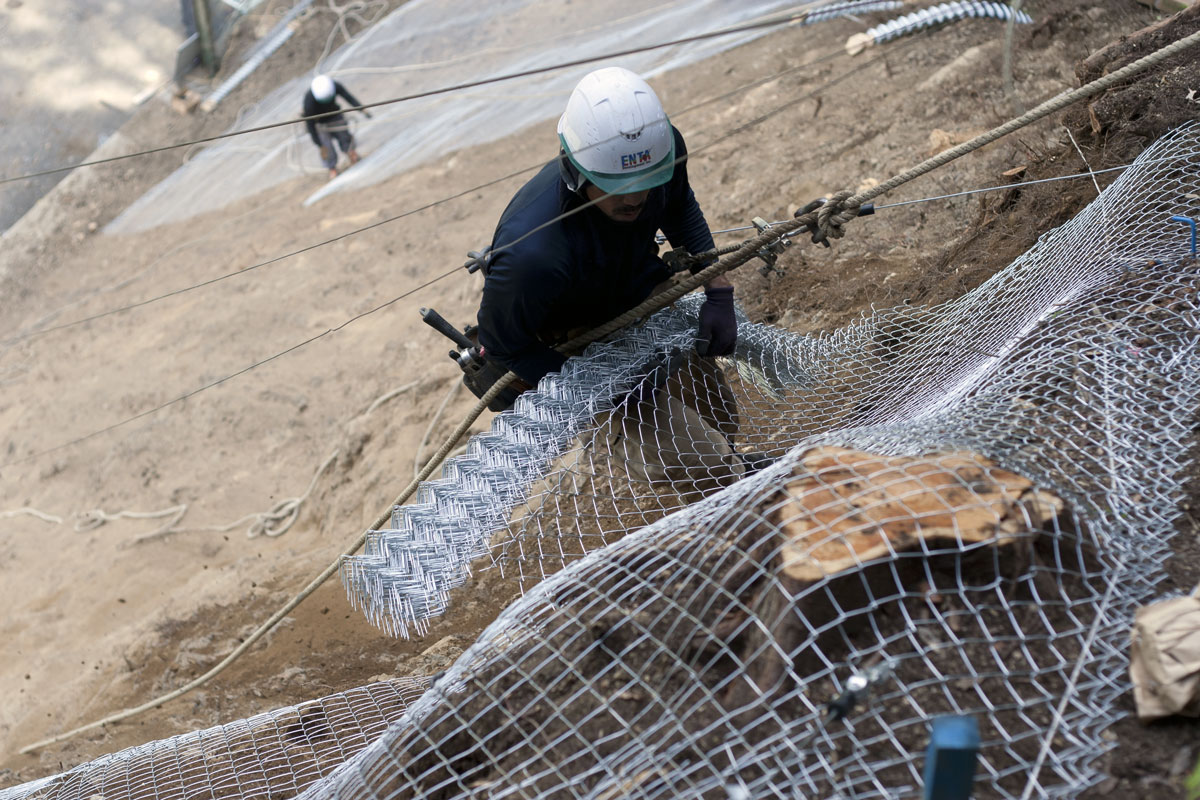
Personally, I think it would be better if we could maintain continuity, but what do you all think?
Whether you cut it or not, the result won't change much, right?
But what if they tell me that during the inspection or while I'm present...
Well, I suppose if internal stress were applied to a specific part, only that part would collapse, but,
In any case, since sprayed mortar has no deterrent effect, considering that the entire structure could be compromised,
Do I really have to cut it?
Should I cut it?
See you later.