Hello, everyone.
This is Enta.

Last night, the whole staff went out for yakiniku!
Everyone's doing their best!
We decided to go out and have some fun for a change, so we went.
What makes me happy is that I’m constantly amazed by how much our young employees have grown.
That young guy who joined a few months ago is getting bigger and bigger.
Since I almost never get to work with them on site, I’m always happy to see them when we meet after a long time.
It really makes you realize how they’re becoming a valuable asset.
And the foremen are starting to act like foremen.
You can really see how much he cares for the younger guys and how they're growing together.
I'm really happy.
Since there are a lot of younger people here, they really dig in. As for those of us in our 40s and older—myself included—a little bit here and there is fine lol.
If I eat at the same time as them, my stomach starts acting up late at night... lol
I look forward to seeing how they grow in the future.
But he sure does eat a lot!
But that's beside the point.
It finally made the news the other day!
A 100-year safe service life for bridges
The other day, the Ministry of Land, Infrastructure, Transport and Tourism set the service life of bridges at 100 years, andRevise Design StandardsI did.
Try searching Google for “100-year service life of bridges.”
This trend has been around for a few years, but it’s finally here.
A hundred years is pretty amazing, isn't it?
It's been 50 years so far.
Current Status of Bridges and Bridge Piers
Currently, bridges and other structures are deteriorating rapidly, and the volume of inspections—such as those of bridge piers—is enormous each year.
Most of them have been in service for more than 40 years.
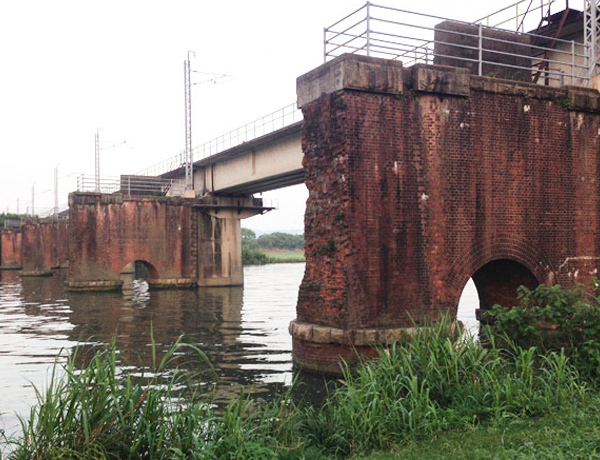
It is said that there are 700,000 bridge piers over 2 meters tall, and the Ministry of Land, Infrastructure, Transport and Tourism requires that they be inspected once every five years.
Well, I can't check it right now, lol.
What's more, it's the municipalities that are responsible for maintaining bridges and other infrastructure.
Since it's a rural area that's already short on staff, they can only inspect the main areas, right?
There probably aren't many inspectors, either.
Technical Standards for Bridges, Elevated Roads, and Other Structures
Next Steps
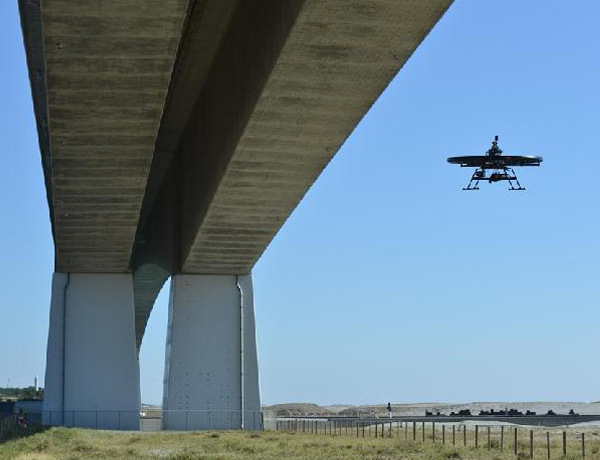
Naturally, bridge inspections will gradually shift to drone inspections.
I can fully understand why the Ministry of Land, Infrastructure, Transport and Tourism launched i-Construction to automate that process.
However, there are many other things that come up as well.
First of all, we need to make the bridges more durable. After all, they’re supposed to last 100 years.
This will lead to an increase in life-cycle costs.
This goes without saying, but it does have at least some impact on us slope engineers as well.
For example, what about bridges on major roads?
There's definitely a section with a slope on the side, right?
That bridge is supposed to last 100 years, but the embankment only lasts 50 years??
No way!!
There isn't, is there? lol
The embankments will also reach the 100-year mark before long.
It probably won’t actually last 100 years, lol, but construction methods will shift toward those that take into account slope reinforcement and life-cycle costs.
Should we repair it or rebuild it?
It costs money to demolish buildings in Japan.
Even in standard structures, the concrete strength is 18 kN or higher.
Since tearing it down would cost an astronomical amount of money, people will likely end up opting for repairs or expansions.
Unless it's really bad, I don't think there's any need to redo it.
Actually, I don't have any information on that, so I don't know.
However, as far as existing slopes are concerned, repair methods are currently widely used.
We'll likely see more construction methods like that in the future.
I'm looking forward to it.
I’d like to try making all sorts of things at home, too.
See you later.