Hello, everyone.
This is Enta.
Golden Week has started, hasn't it?
At our house, the Golden Week break lasts up to 10 days for some people!
As usual, while everyone else is taking a break, I'm running around doing research and working on designs, lol.
I'm bored even when I'm off, so I'm going to work.
か
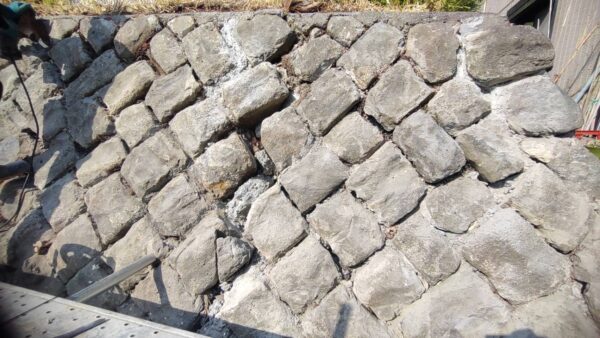
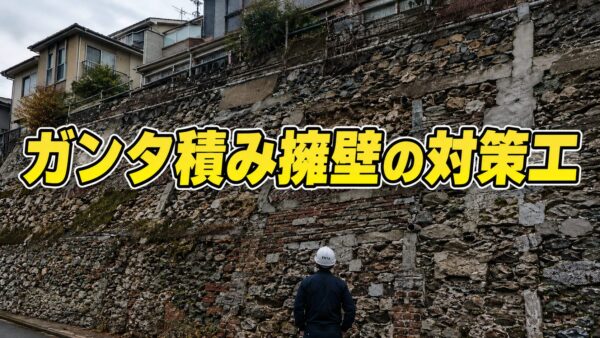
For stone masonry (interlocking blocks) and retaining walls in residential homes,
Do you know which construction methods should not be used?
I was asked for advice because it seems there are contractors in the Kanto region who use this product for residential retaining walls and stone masonry, and the client wanted to know if that was acceptable.
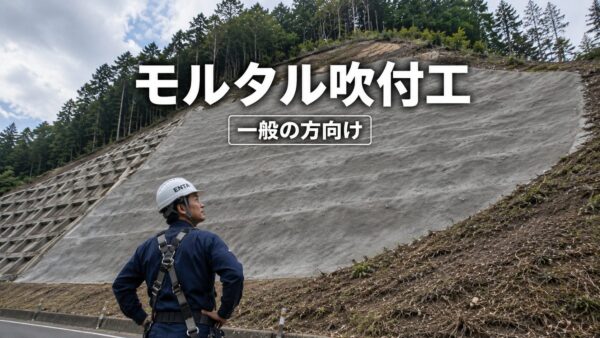
Well, since we're slope specialists, we'll naturally end up using slope construction methods, but the answer isMortar Spraying WorkerThat's it.
This would be absolutely unthinkable in public civil engineering projects, but,
I don’t think sprayed mortar is used on retaining walls or stone masonry. The only exceptions are when retaining or stabilization measures are installed afterward.
You’d use other construction methods for structures that are sagging, on the verge of collapse, or under earth pressure, right?
In this post, we’ll be discussing examples of masonry structures, such as L-shaped retaining walls, interlocking blocks, and rubble masonry.
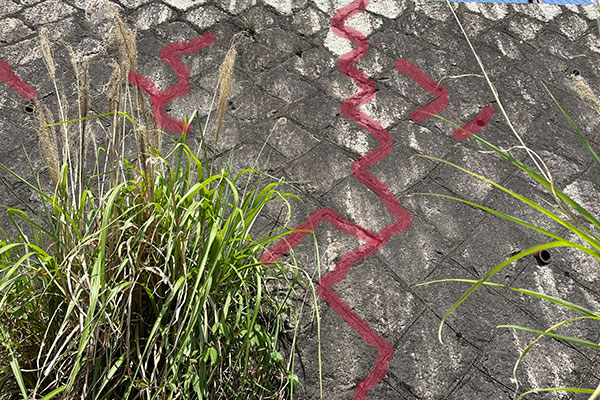
What would you do if you came across a stone wall like the one shown above?
What's more, there are numerous vertical cracks, and it's possible that rain caused internal pressure to build up.
What happens if you spray mortar on this?
These cracks and their causes will disappear completely.
This condition clearly shows the extent of the damage.
The plan is to just spray some mortar on top and pretend it never happened, lol.
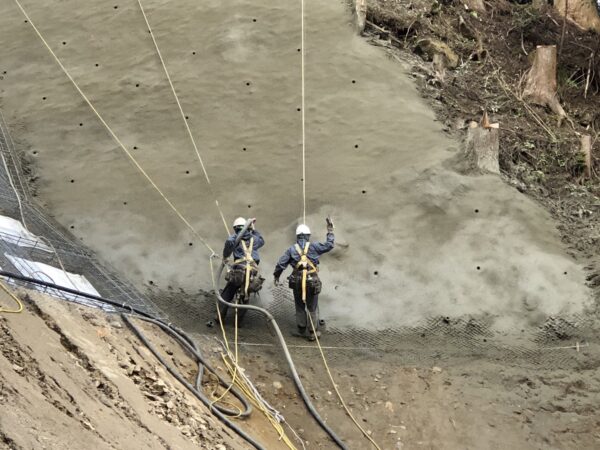
A craftsman will carefully spray the mortar from above, so it will turn out beautifully.
In public works projects, this construction method was selected based on a minimum level of justification and a cost-benefit analysis.
However, this is probably not the case for private construction projects.
It's just a matter of saying, "There's a crack, so let's cover it up with mortar!"
What's more, it's thin, and it's just covered with a crack-prevention mesh.
Well, I suppose people will say, “It’s a private organization, so we can’t really know,” or “It’s unavoidable because the budget is limited,” but,
When I see work that’s just so poorly done, as a professional in the field, I can’t help but think, “What’s up with that?”
There aren't many contractors specializing in the reinforcement and repair of unique stone walls, masonry, and retaining walls.
That’s exactly why I wrote this article—to help people avoid being deceived.
The thing is, as I wrote the other day, there are people on YouTube who write in a way that can lead to misunderstandings, and it really bothers me.
It doesn't really concern us, but from our perspective—as a company that specializes in disaster prevention construction—it makes us feel uneasy.
As someone who’s been in this industry for nearly 30 years, there are so many things that make me think, “Isn’t that a little strange?”
I wrote this to help prevent the general public from being deceived.
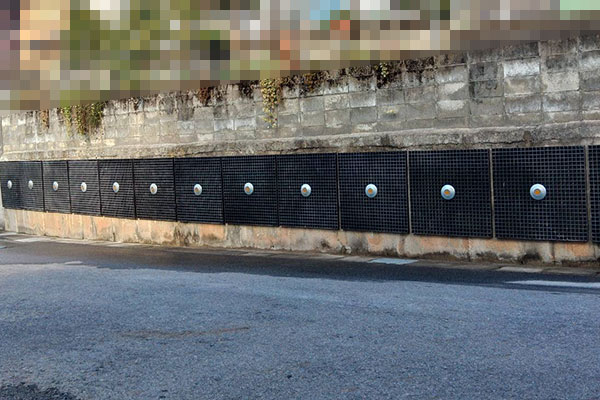
So what do you do in a situation like that!?
With that in mind, we need to clearly identify the underlying causes and address them.
I really think the only options are retaining walls and retaining structures.
You can't just hide that, can you?
There are definitely measures in place to prevent it from collapsing.
And there is a solid design and theory behind it.
Well, it’s, after all, a design theory based on public standards.
The price is a bit steep, though lol (I guess that’s the part people can’t accept?)
I really hope you don't get fooled.
See you later.
(One criterion for evaluation is whether the construction company is a public-sector entity and whether it is capable of construction management and design.)