Hello, everyone.
This is Enta.
These days, the sheer volume of quotes is just insane, lol.
At a small company like ours, we don't have that many people who can prepare quotes, so it's a real hassle, lol.
Well, that's just part of the job, but to everyone waiting for a quote, please bear with us a little longer ^^;
But that's beside the point.
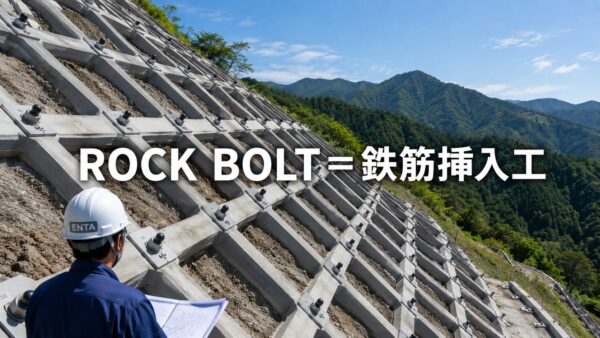
Tips for When Rebar Just Won't Go In During Rebar Installation
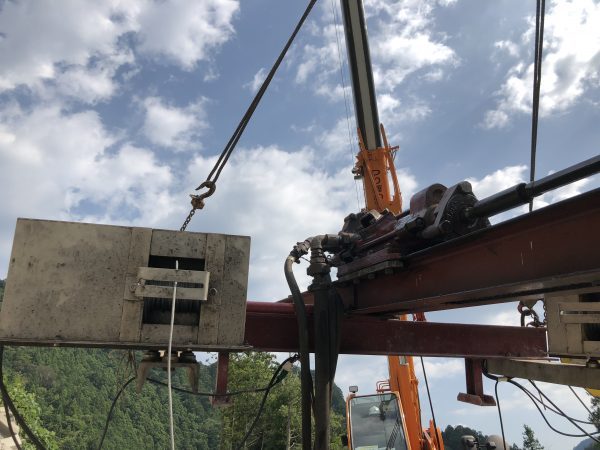
So, what do you do if it just won't fit?
Honestly, there's nothing left to do but hit it with a hammer.
If it’s still in that condition even after thoroughly cleaning the inside of the hole with a core drill, there’s nothing more we can do.

Attach a nut to the head of the rebar and hammer it in firmly. (Be careful not to damage the head of the rebar.)
In some cases, it is possible to modify the design to use double piping, but in many cases, this is not possible.
Sometimes it ends before you even have a chance to respond.
It's harder to use a hammer, but it's guaranteed to go in.
It would be great if there were a simple machine—kind of like a rebar inserter—that could rotate the rebar while applying a slight impact.
There's no such thing. It's fine to just push it in while turning it, though. It doesn't exist.
All I have are my own two hands and a hammer.
It would be great if I could fit the injection hose in there too, but it’s already too tight—how on earth is the hose supposed to fit?!
In that case, there's just nothing we can do about it.
When doing so, please insert the injection hose as far as possible.
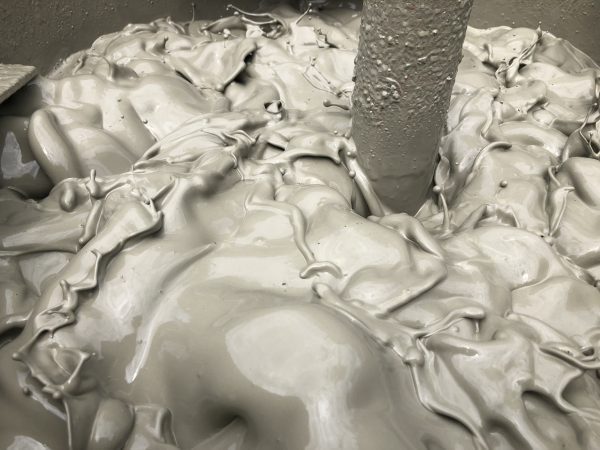
Regarding the grouting of the driven rebar, please use ReoBuild as much as possible.To increase liquidityPlease.
Adjust using ReoBuild without changing the water-to-cement ratioThat's it.
If possible, it’s better to have a consistency that’s quite runny, with a flow time of around 20 seconds or more. (Regular cement is even better.)
This is because grout sometimes has trouble flowing around the rebar that has been driven into place.
Therefore, by injecting a thin cement slurry and simply shaking the rebar up, down, left, and right, the grout will reach all the way to the tip.
Shaking is extremely importantThat's it.
Pour in some thin cement slurry, give it a shake, and the slurry will flow down smoothly.
The cement slurry spreads throughout the rebar. (There is a possibility that this may not always be the case.)
While it is important to use thick cement slurry to bring the overflowing cement slurry up to the borehole opening,
It is also important to ensure that the rebar adheres firmly using a thin cement slurry.
If the design does not fit the site conditions, one of the decisions made by the supervisor and the construction crew is to adjust it so that it fits as well as possible and to minimize the risk of construction defects.
Government agencies always tell you to "think things through" at times like this, even though they never actually change anything lol
But when I suggest using double piping, they say it'll cost too much and refuse to change it...

There are times when construction simply cannot proceed unless some compromises are made.
We want to think about how to implement it—and what it would take to make it happen—so we can make the best decision at that moment.
See you later.