Hello, everyone.
This is Enta.
There’s something I’ve really wanted to write about for a while now, and actually, the other day...
The fact that we're selling construction services
Actually, I wanted to write about the role of anchor pins in that article!!
While I was writing this, for some reason...UncertainAnd then I ended up writing about something else lol
That said, it's always like this...
Even when I start writing, thinking, “This is it!” I end up writing something completely different, and I usually end up rewriting the whole thing.
Guess I just have way too much I want to write about, lol.

But that's beside the point.
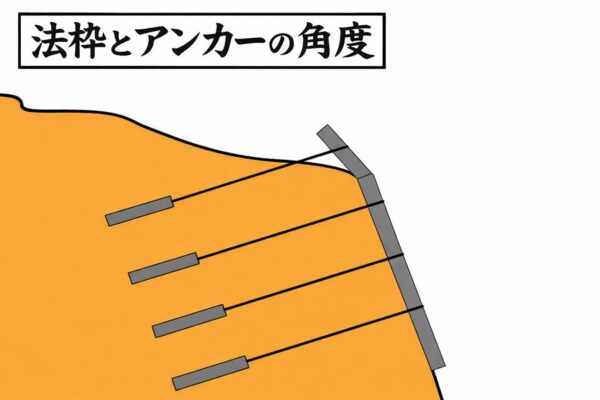
Main Anchor Pins for Formwork!
There are quite a few people who think they know what this is for, but actually don't.
Well, as people get older, more of them come to understand it—like, “Oh, I see”—but when you’re young, you’re bound to react with, “Huh? Really??”
There are people like that.
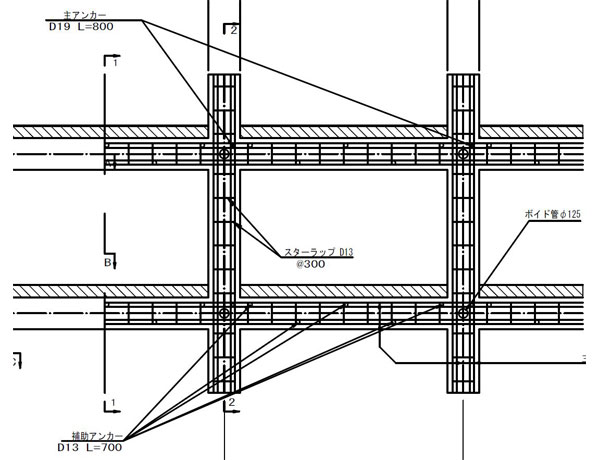
Actually, this is... sprayed on...Preventing Shifting Until the Mortar SetsThat's it.
If this anchor pin is not installed, the formwork will shift under its own weight before the concrete hardens.
Once it hardens, it won't shift.
This is because the formwork stays in place due to its own weight and the friction on the back of the formwork.
Therefore, unless a very large external force is applied, the frame will not move.
However, the crossbeam may sag under the weight of the mortar.
If it sags, it looks really bad. (There are no performance issues.)
It’s better if it doesn’t sag, but inevitably, there will be some areas where it does.
Reasons for sagging include a steep slope, significant depth, loose material, and soil conditions that make it difficult for anchors to hold.and so on.
Ideally, we’d like to apply the spray in a single pass, but for areas like this, it’s safer to split the application into two sessions (morning and afternoon).
If you absolutely don't want it to sag, you can increase the number of anchors, or
If you take measures such as pulling it from the top along the guide line, it will be much less likely to shift out of place.
Creative Uses for Anchor Pins
Come to think of it,Using ingenuity to apply a plated finish to the anchor pinsI did that a long time ago.
Since everything except the anchor pins is covered in mortar, rust doesn't progress as quickly, but,
The tip of the anchor pin extends a few centimeters into the ground. The machined tip is prone to rust.
So they're promoting it as being rust-resistant because it's plated, huh? lol
If you drill a hole with a hammer drill and insert it gently, it'll be even less likely to rust, lol.
When you pour it, it turns out to be plated!! lol
(There's also something called "galvanized spray"!)
Kurokawa Reinforcing Steel
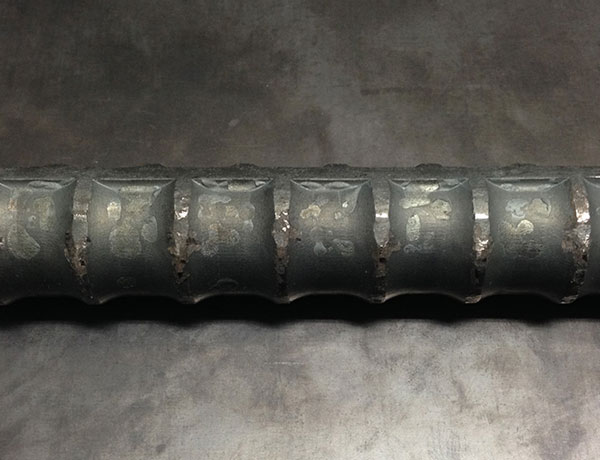
By the way, I think regular rebar tends to be a bit blackish.
That is actually called "black skin"—it's an oxide film that forms naturally during the processing of raw wood.
It's actually a little less prone to rust than shiny, untreated iron.
The heads of anchor pins driven in with a hammer get all shiny and are the first to rust, right?
If you apply a rust-preventive coating to the top on the day it's poured, the entire structure will be less prone to rust. (That's where rust starts to form.)
(You can also just give it a quick spritz with zinc-plated spray!)
Come to think of it, we poured the concrete...Applying rust-preventive coating to the head of the anchor pin is another ingenious idea.It looks like that's going to happen.
See you later.