Hello, everyone.
This is Enta.
Regarding the recent article on blue tarps, I only mentioned covering things in that post, but there’s another important point to consider.
That's a sandbag.
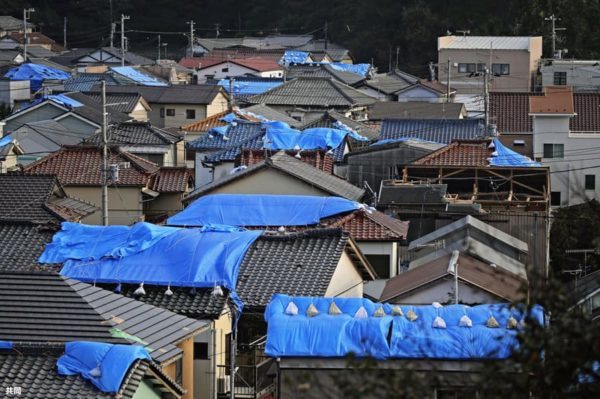
https://www.nikkei.com/article/DGXMZO50123410U9A920C1CC0000/
Just like in the photo from the other day, you're using mostly white sandbags, aren't you?
It's not bad, but,
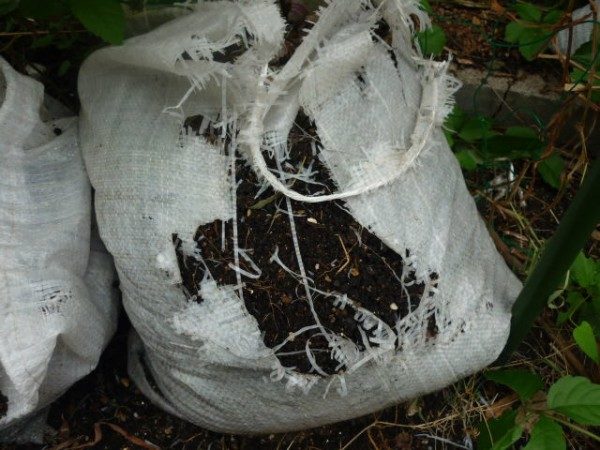
Standard sandbags wear out faster than blue tarps.
After we have implemented landslide and rockfall protection measures on a slope (cliff), we may remove the protective sheeting (six months or a year later).
In that case, the sandbags were completely ruined before the blue tarp was.
Roughly speaking, it falls apart in about two months.
This means that if we had covered the roof with blue tarps and placed sandbags on it the other day, the sandbags could deteriorate within a few months and be vulnerable to wind damage.
In public works projects, it has become standard practice to use weather-resistant sandbags for construction purposes.
One standard is the “Guidelines for the Installation of ‘Weather-Resistant Large Sandbags’ in Disaster Recovery Projects, etc.”
As for the quality standards within that context,"It can be transposed in a year."There's a part that goes like this.
The fact that it can be moved and installed a year later means that these sandbags are capable of maintaining their shape for a year.
Basically, these guidelines refer to large sandbags (1-metric-ton sandbags), but
Recently, many small sandbags with similar functions have been appearing on the market.
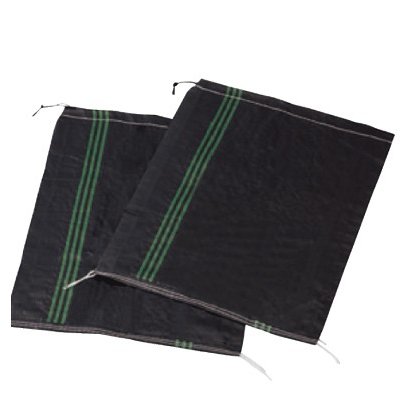
Most of them are black, UV-resistant, weatherproof sandbags, but there are also translucent UV-resistant sandbags and white ones.
Compared to standard sandbags, these are thicker and slightly stiffer.
Unlike ordinary sandbags, it is incredibly durable.
That’s why many companies in the scaffolding industry even use them as bags for sorting clamps and other items.
If the roof collapses and you need to cover it with blue tarps, be sure to use these UV-resistant sandbag covers.
If we go to the trouble of having a contractor come out to install sandbags on the roof, but they tear within two months, we’ll have to have them come back again.
To avoid having to do the same thing twiceTemporary Curing Is Perfect in One GoPlease go there.
This is common knowledge in our civil engineering industry, but many people in the general construction industry are unaware of it.
If you're dealing with a contractor you don't know, specifying that they use sandbags will likely give you a much greater sense of security.
Actually, I think you should be more concerned about these sandbags than about the blue tarp.
If you're worried that it might only last a year, using two layers of these weather-resistant sandbags should make them last longer.
And,When purchasing, be sure to check for UV resistance and weather resistancePlease select the product that says this.
See you later.
On Amazon, the prices are as follows:
If you keep about 10 of them at home, you can use them in an emergency, and if you store them in a warehouse, they’ll last for quite a long time.