Hello, everyone.
This is Enta.
Recently, there has been an increase in articles related to disasters.
But since we’re slope engineers, after all, I think we should probably write about crisis management in the event of a disaster.
Or rather, why haven't they been writing in a way that's easier for the general public to understand lately?
That's what I was told... (by a member of the general public)
I feel a little bad about this, but it’s partly because I was writing for professionals in the field.
So, I’ve decided to start writing for the general public as well.
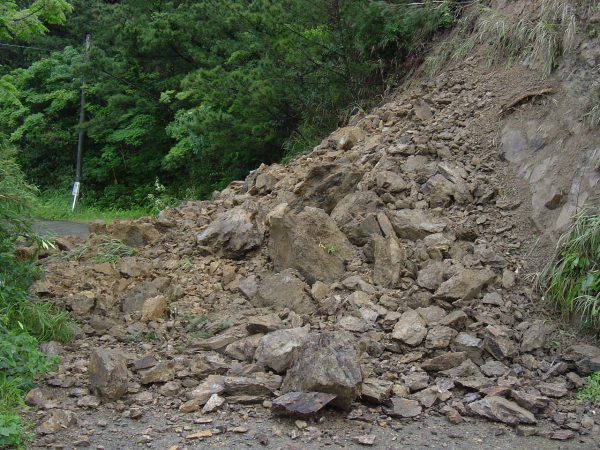
So, in this post, I’d like to focus on the question: What kinds of slopes and cliffs are prone to collapse when an earthquake strikes?
Let's take a look at skidding in residential areas this time.
First of all, the areas around your homes that are prone to landslides are slopes (cliffs) that are 2 meters or higher.
And this is exactly the kind of place where things come crashing down in a spectacular fashion.
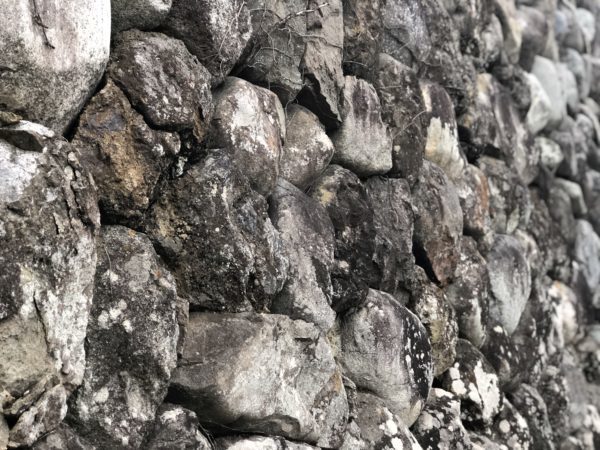
This is dry masonry (stonework without mortar or concrete).
It looks sturdy, but it’s actually not very strong at all.
That's because a stone is a solid object.
例
There are pins at the bowling alley.
Since the pins are just individual pieces, they get knocked down with a "clang" when the bowling ball comes at them, right?
What if all these pins were connected?
Most likely, none of the pins will fall, and the ball will just bounce off.
The point is that even if individual power is immense, it will crumble unless it is connected to others.
The reason the steel frame is so resistant to collapse is precisely because it’s connected.
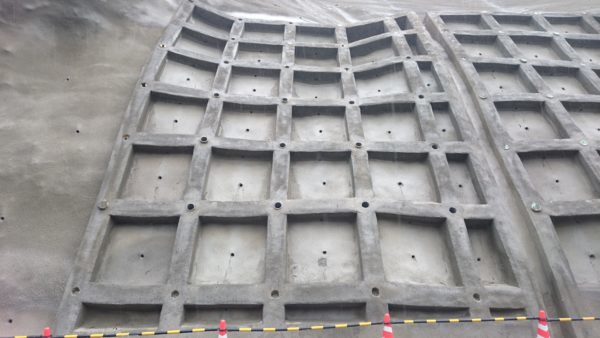
It's kind of like how one person's strength may be weak, but if we join hands, we become stronger.
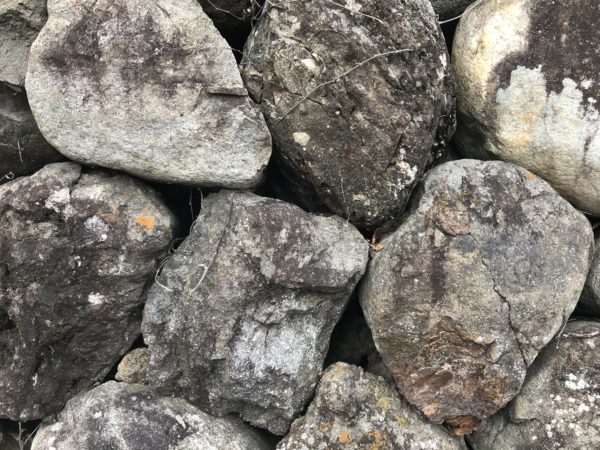
What do you think of the photo?
Dry-stacked stone wall.
Do you think he's strong?
There's no doubt that if even this one piece is removed, the whole thing will fall apart.
It's easy to imagine what would happen if one piece came loose during an earthquake, isn't it?
If you think, "I haven't had any problems so far," then that's fine.
However, rocks weather over time, so they do loosen up quite a bit.
I'm not trying to stir things up or anything, but from our professional perspective, we're thinking, "I guess we'll tackle this area next."
Please consult someone you know in the civil engineering field to find out what measures to take.
There's a chance that a good idea might come up.
If you have any doubts about it—even just as a second opinion—please let Enta know, and we’ll look into it. (Of course, this review is free of charge.)
Things might be fine now, but there's no telling what tomorrow will bring.
It might even last another 100 years.
That will depend on your crisis management skills.

There are ways to handle this. However, unless you place an order with us first, there’s nothing we can do.
The general public will just have to struggle through it on their own. (Please do your own research.)
If you work for a public utility, please contact us. (That would be easier, right? lol)
See you later.