Hello, everyone.
This is Enta.
The other day, I wrote about curing cement-milk test specimens.
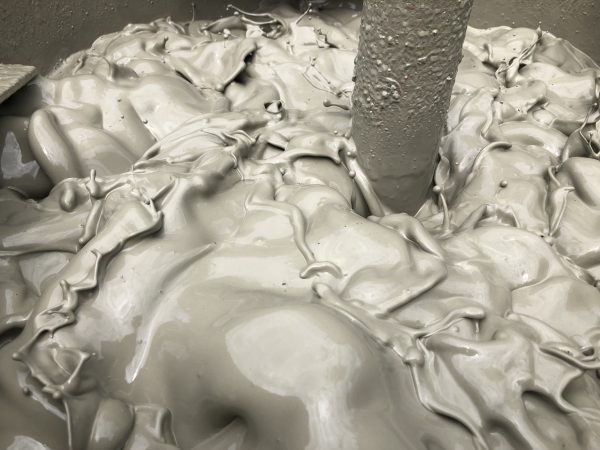
Come to think of it, I haven’t written anything about curing sprayed mortar, so I’ll share my experience here.
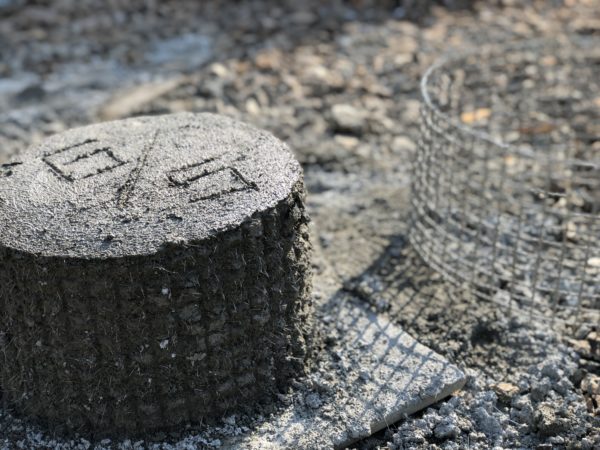
Those sprayed mortar test specimens are huge, aren't they!?
It's a real hassle to try to protect this.
Especially in winter.
Whether it's a steel frame, sprayed mortar, or sprayed concrete, we know that the strength will eventually develop.
However, if the strength isn't there in the 4-week compressive strength test, it's a non-starter.
We really need to see some strength here.
So, what should we do?
There's actually a pretty simple way to deal with this.
There's some really nice protective covering at the site, lol.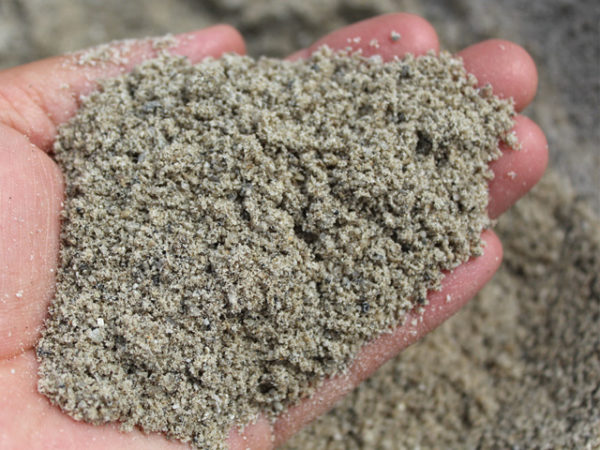
This is it lol
Just drape it over from the top.
That alone will speed up the curing process considerably.
It protects mortar and concrete in both winter and summer.
When kept moderately moist, it helps mitigate temperature fluctuations caused by the wind to some extent.
Just dig it up when you're thinking, "Okay, time to pull out the core."
Just be careful not to hit anything with the tire shovel, lol.
I once buried it in a corner of a sand pile, but I’ve had the experience of it being stolen by a tire-tracked excavator driven by a worker.
If you're working next to a sand pile, it's a good idea to put up some kind of sign and talk to the workers beforehand.
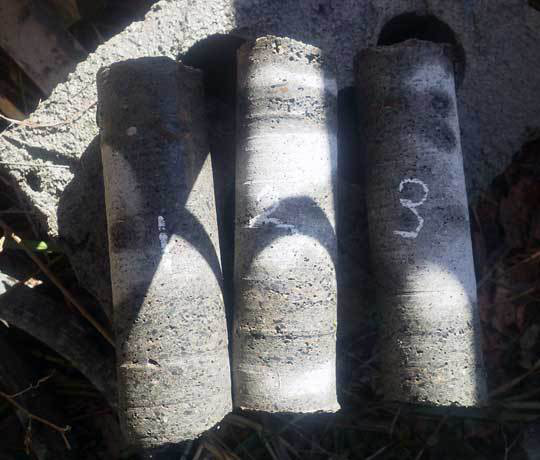
I'm sure there are some of you out there who are thinking, "No, no—I've already removed the core!"
If that's the case, it's best to cure the material inside a styrofoam box, but this will cause it to dry out somewhat.
You’ll want to avoid watering them every day or filling the Styrofoam with water, since if they get too cold, it can delay the development of their strength, right?
Back in the day (though I don't remove the core anymore...), I used to cure it underwater after removing the core.
Use this.
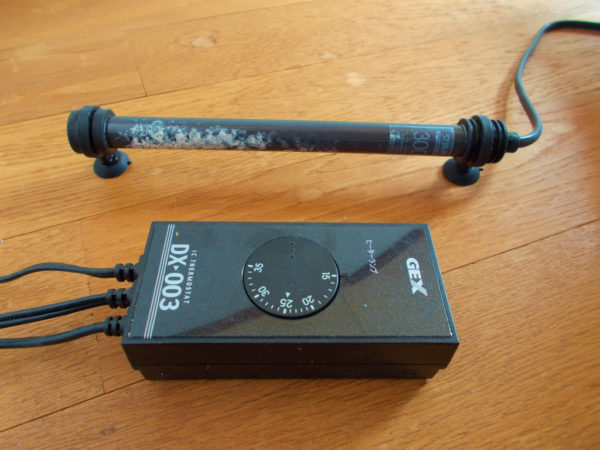
This is a heater for tropical fish.
Put this in a Styrofoam container, add water, and set the temperature to 20 degrees.
Cure the concrete underwater until about three days before the compressive strength test.
After that, we'll take it to the lab for testing.
I think I ended up doing things this way because I’ve often had less-than-satisfactory test results in the past.
Taking care of yourself really is important.
Since the results depend entirely on this one method, let's make sure to prepare thoroughly.
Reading books such as the *Standard Specifications for Concrete* and *Essentials of Concrete Technology* is a great way to learn.
I recommend it.
Key Points of Concrete Technology
See you later.