Hello, everyone.
This is Enta.
Over the past few days, I've been exploring the mountains, cliffs, and slopes of Tokyo.
Starting today, I’ve been enjoying the mountains, cliffs, slopes, and steep inclines of Yokohama.
Based on my recent experience, it seems that slope surveys for seismic retrofitting tend to pique clients’ interest.
Specifically, regarding slope stabilization, which is our area of expertise.
They tend to do quite a bit of research, and in some cases, they may even get quotes from several companies.
So, there are quite a few things that concern me, but the vast majority of them have to do with how cliffs (slopes) are conceptualized?
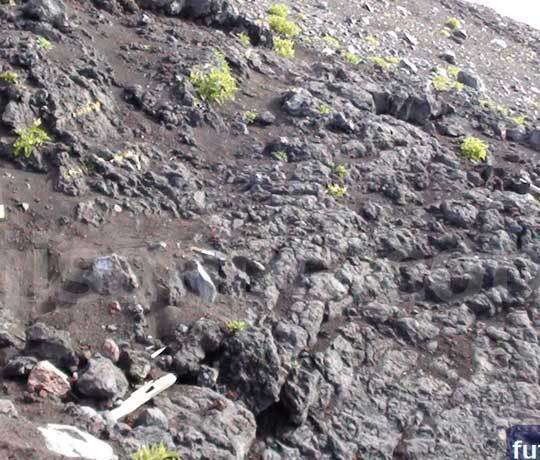
"This slope just needs to be landscaped—that's all!" or something like that
Sprayed mortar should be fine. It probably won't crumble.
It seems that many contractors say this. (According to the client)
When I look at the quotes, they vary widely—some are very expensive (more than public utilities), while others are extremely cheap.
But all the proposals seem to be just sprayed mortar or mat installation, lol.
I haven't seen anything else like that. Well, I did have to laugh at that outrageous estimate of 100 million for stonework, though lol.
Basically, people who don't know anything about design are casually taking on private construction projects and submitting estimates based on the assumption that "this should be good enough, right?"
What's more, the terms of the estimate state, "This does not guarantee protection against collapse."
I'm not saying that's not true, but since it's the client who ends up having to deal with the problem, I just don't understand it.
It's not right to do a sloppy job just because you're getting paid, is it?
Clients who find this suspicious often come to us for advice through a civil engineering contractor they know.
I'm sure it'll be fine!
If that’s what they’re going to say, I’d like them to give a little more thought to the construction methods.
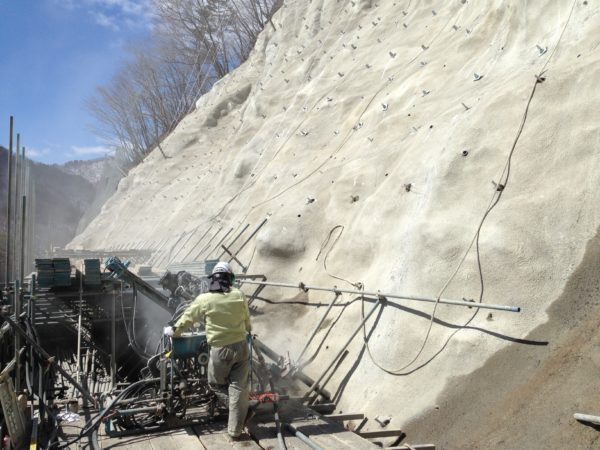
If I were to say, "Personally, I think it'll probably be fine!", then based on NEXCO's proven methods for rebar placement, I'd recommend casting the rebar in a staggered pattern at 1-meter intervals!
Saying that makes me feel a lot more at ease. (Price-wise, ↑↑↑)
Since sprayed mortar and vegetation won’t be enough to prevent slippage or collapse, we should at least install rebar using the rebar insertion method.
And generally speaking, cliffs on private land are almost entirely made of soil and sand.
To prevent gaps, I think it would be best to use a staggered arrangement for rebar installation, combined with open-style greening or vegetation mats.
If you don't have a drilling machine, you can just dig by hand using self-drilling rock bolts.
If possible, having a stability analysis report would give the client greater peace of mind, and I don’t think anything too serious will happen as long as the design accounts for the live loads.
However, since it’s a private project—unlike public projects—I don’t think there will be many instances of additional work.
To help you decide, are you looking to protect the surface, grow grass to protect the soil from erosion, or prevent slipping?
I think these three types are all that’s needed to carry out private construction projects.
Mortar Spraying, Vegetation Installation (Vegetation Mats), and Rebar Insertion
Occasionally, if it were a company, there might be proposals regarding legal frameworks or anchors.
When preparing a quote for a private construction project, I think it’s best to first find out the minimum requirements and then consider which construction method to use.
See you later.