Hello, everyone.
This is Enta.
I’d like to upload another video on the Moldam method, but please bear with me for a little while longer lol (Some of my seniors have been asking me, “When’s the next one coming?” lol)
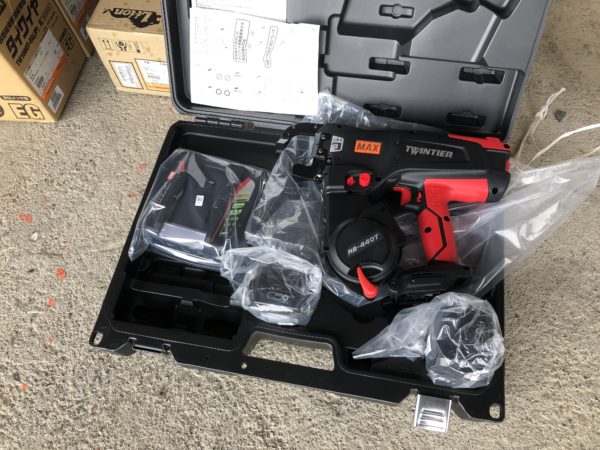
The two of these I ordered have arrived, and I’d like to share my impressions of them lol
However, I need to edit the video first, so please bear with me for a little while longer.
But that's beside the point.
With COVID-19 cases on the decline nationwide these days, how are things in your area?
We haven't been affected much here, but the delays caused by this situation are making things difficult.
It's especially tough for factory-based production, isn't it?
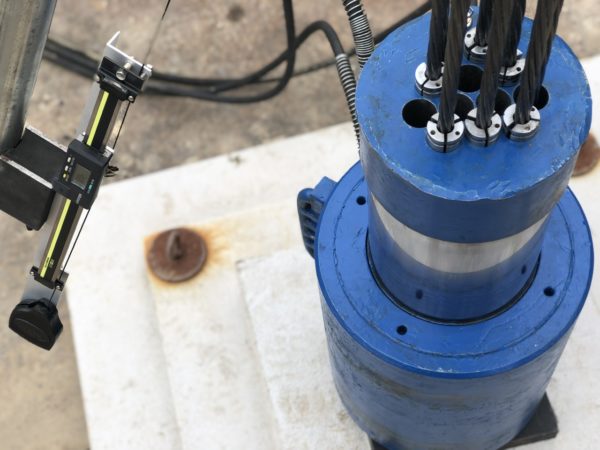
We ordered those heavy-duty factory-made ground anchors and conducted the basic tests.
I really pushed the manufacturer to get the anchor body made in about three days.
A basic exam that was scheduled at the last minute.
I was asked all sorts of questions at the government office during my first basic exam.
As anyone who has worked on ground anchor projects probably knows,
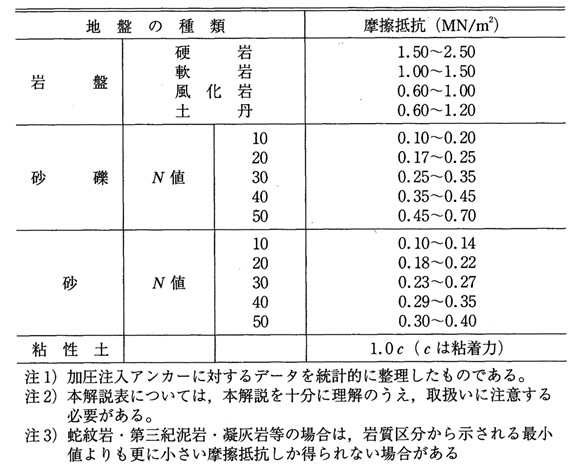
The basic test is used to determine τ (tau), which serves as the basis for the design. (Circumferential friction resistance)
(Sometimes this is done using an actual anchor.)
This time, we installed it using actual anchors.
In the end, the anchor came loose, but the local government and the general contractor were like, “Wait, is that really okay?” lol
It came loose under a load that was lower than the expected load.
The most important thing on the basic exam is: Where did the load fail? (This is the most important part.)
What was the creep like in the lead-up to that? (Was there any activity?)
Based on experience, I can tell when I'm about to get past them with a creep, but the moment I actually get past them feels great lol
From dozens of meters undergroundDonYou feel a vibration like that.
This means that the circumferential friction resistance is limited to the load at the point where the part came loose, so we redesign that specific section.
Some people say, “Don’t pull it out,” and that’s fine, but it’s actually easier to understand if you do pull it out.
That way, you can get a rough idea of the τ value (tau).
I know that if it doesn't come out, it means it's at least as big as the design specifications—or even bigger—but it still feels better to know the actual numbers, lol.
Personally, I prefer it when it stops at a certain point, because that makes it easier to interpret and more convincing.
I explained the situation to the government office as well and told them, “You should probably drop it, don’t you think?”
"This is just my personal opinion, though," I added with a laugh.
This job site involves interlayers, which are a bit tricky, so we’ll likely need to be creative with the construction process.
In that sense, too, it’s really helpful to have these preliminary tests before the actual construction begins.
See you later.
Dealing with a Loose Anchor (Part 1) | Identifying the Cause