Hello, everyone.
This is Enta.
I know I've said this a bunch of times already, but my phone went flying—and so did my contact list, lol.
If you have my LINE ID or phone number, please give me a call or send me a message when you have a chance.
Let's talk about African elephants, shall we? ^^

But that's beside the point.
In an article I wrote the other day, I discussed the trend of moving away from general contractors.
Here Are 30 Reasons Why People Might Be Turning Away from Major General Contractors!

That said, since I was just stating the facts, I got calls from seniors and juniors offering their critiques lol.
So, I figured I should write about the opposite perspective this time, and I’m going to give it a try.
Why Do We Dislike Construction Projects Handled by General Contractors?
When you step onto a general contractor’s construction site, I think you’ll often find yourself thinking, “Why is it so strict…?”
However, underlying this is a gap that arises precisely because general contractors (construction companies other than general contractors) have lax standards.
It's not that I dislike general contractors; it's just that the difference from my usual environment is too great.
Here, we'll outline the reasons for this.
1. Because I'm inexperienced when it comes to safety management!
2. Because I know far too little about process management
3. Because they are too lenient when it comes to construction management
4. Because cost management isn't strict enough
I think it boils down to these four points.
I'll go into more detail about this.
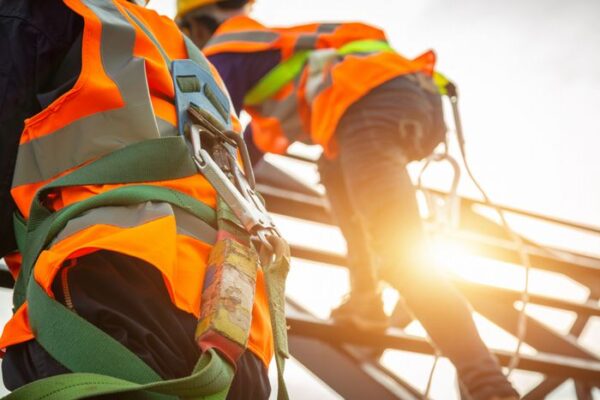
1. Because I'm inexperienced when it comes to safety management!
In general construction work, the rules regarding the use of safety harnesses and hard hats are often vague (especially in the private sector),
KY (Hazard Prediction Activities) often end up being nothing more than a formality.
On the other hand, since general contractors are required to strictly maintain a “zero-accident” record, they receive detailed guidance.
For companies that tend to be lax about safety management, that difference can be a major source of stress.
That said, it’s true that we slope contractors—since we mainly work on public projects—do do a thorough job up to a certain point.
However, general contractors expect even more than that.
There’s a world of difference between a general contractor that “aims for 100% zero accidents” and one that just thinks, “It’d be nice if there weren’t any accidents, right?”
2. Because I know far too little about process management
In general construction, it’s not uncommon for sites to proceed based on “temporary arrangements.”
At general contractors, sticking to the schedule is an absolute must. (That said, there are quite a few delays in the earthwork...)
Adjustments may be necessary in the event of inclement weather or other issues, but reporting these situations and implementing countermeasures is essential.
If you're not used to process management, you might find yourself thinking, "Do they really have to be so strict?"
Ultimately, there will be some tough consequences, but this is all part of process management, isn't it...
3. Because they are too lenient when it comes to construction management
In general construction projects, there is sometimes still an atmosphere where the attitude is, “As long as it’s done, that’s good enough.”
However, general contractors enforce strict quality and as-built management, with detailed requirements regarding dimensions, as-built documentation, photographic records, and inspection procedures.
From the perspective of contractors who don’t go into that much detail in their day-to-day work, it’s understandable that they might complain, “General contractors are too nitpicky,” isn’t it?
4. Because cost control isn't strict enough
In general construction projects, material waste and labor cost overruns are sometimes not taken too seriously.
However, general contractors calculate and manage costs down to the yen, and they are thoroughly opposed to waste even on the job site.
In particular, the Purchasing Department maintains strict control over cost management, and most major companies conduct monthly financial closings. (Monthly financial closings)
Every month, we calculate our current costs and develop a forecast! Then, we determine what adjustments and actions to take in response—and we do this every month.
For companies with lax management and construction firms run by craftsmen who have never worked under such conditions, this strictness can make the work feel “difficult” or “restrictive.”
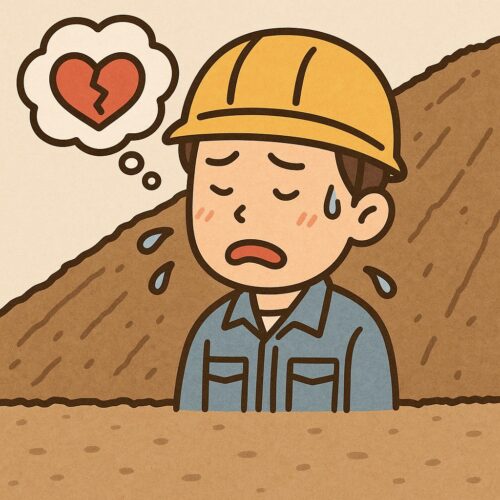
I'm just not good enough yet!
If you’ve been in a comfortable environment and then find yourself in a challenging one, feeling discouraged or thinking you can’t handle the work is a sign of immaturity.
Others do it with ease, but I just can't.
It's because I'm not mature enough. (In the sense mentioned above.)
As far as the actual construction work goes, everyone is a professional, so there’s no problem there; rather, it’s that I’m still inexperienced when it comes to being on the receiving end of management.
It’s only natural that the discrepancy feels even more pronounced precisely because standard construction work is generally too lax.
Actually, I believe that the strict standards imposed on general contractors serve to protect the company’s reputation in society and represent the “highest standards” for a contractor.
That’s exactly why we front-line workers feel like we’re going overboard, lol.
In other words, the reason we dislike general contractors isn't because "they're so strict," but because our own standards are too low.
I also wonder if it might be necessary for the slope engineering industry to adopt this perspective, even if only partially, going forward.
As a construction manager, I have worked on numerous projects for major general contractors in the past.
It's really tough. But there's a lot to gain from it.
That’s exactly why I believe construction managers are the ones who should be working for major general contractors.
It’s probably a good idea to know the names of a few contractors.
While craftsmanship is a given, gaining an understanding of the work done by major general contractors will definitely benefit you in the future.
I believe growth comes from facing challenges like these.
See you later.
Call for Advertisers