Hello, everyone.
This is Enta.
There are times when you use sprayed mortar as a weed control measure, right?
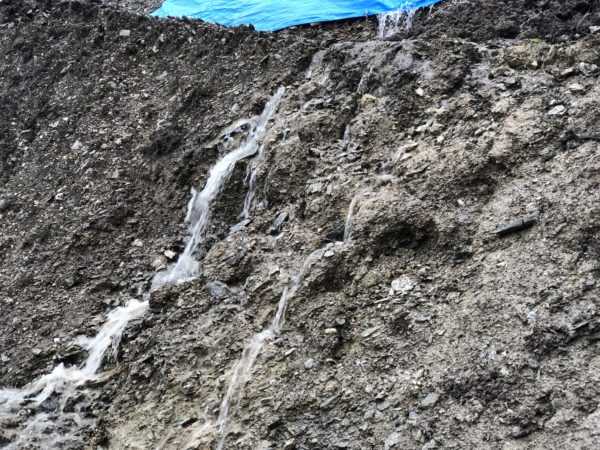
This photo was taken after the collapse, but since it’s a weed-control measure, it has been applied to a significant portion of the soil area.
There was someone on YouTube who was claiming—as a joke, I guess—that applying sprayed mortar as a weed control measure actually helps prevent slipping? lol
Well, maybe it’s a little less slippery than a blue tarp because of its weight? It’s possible, I guess.
Since many of the readers of this blog are professionals, I imagine most of you already know that sprayed mortar has no deterrent effect, but,
It seems that some people are making a big deal out of this.
With the way things are these days, people who post on YouTube tend to come across as the "righteous ones," but there are a lot of lies out there, so you have to be careful, lol.
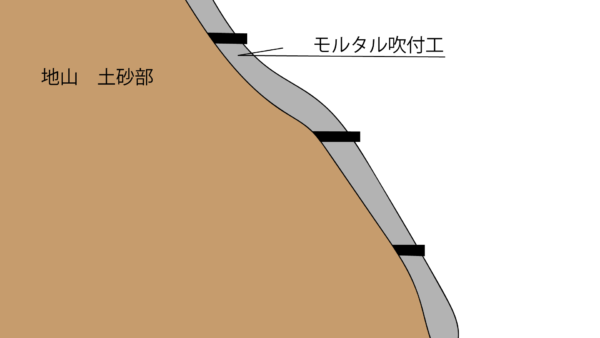
What happens when you apply sprayed mortar to a soil section?
Weeds will have a harder time growing. (That's only natural, since it covers the ground.)
However, as time passes after it rains, the interior becomes hollow, increasing the risk of collapse.
But this is the kind of thing that just gradually eats away at you without you even realizing it, isn't it?
Soil particles are constantly coming out of the drainage pipe.
It’s often the case that by the time you notice it, large holes have already formed in the natural ground and the sprayed mortar sections.
This happens quite frequently in public works projects, too!
However, many providers don't mention this (the risk), and
I think there are many cases where a contractor who has no supervisor and is unable to draw up plans is commissioned, and construction proceeds without either the client or the contractor being aware of the situation.
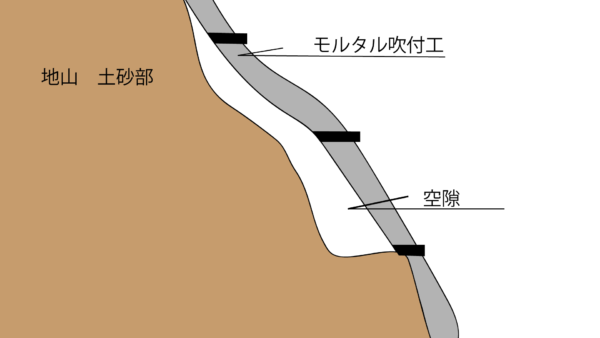
Once a gap has formed, what steps should be taken to address it?
When you think about it, that’s really tough, isn’t it? lol
Once gaps start to form, rainfall will cause erosion and weathering to progress, so...
Well, should we inject and fill it, or should we remove the mortar first and then spray on a new layer?
If possible, about once every six months,
If you have any concerns about a mortar spray job we’ve done in the past, I recommend tapping the mortar with a hammer to check it.
If you tap it lightly with a hammer, you'll find spots where the sound is different.
Areas that produce a light sound are hollow, while areas that produce a heavy sound are solid.
I highly recommend it because it makes it easy to perform a tap test!
If there appears to be a gap, I think other measures will be necessary.
See you later.