Hello, everyone.
This is Enta.
Are you enjoying Golden Week?
I'll write this blog post while having a little fun too! lol
Let's get right to it, lol
The person who knows everything there is to know about construction management is the site supervisor.
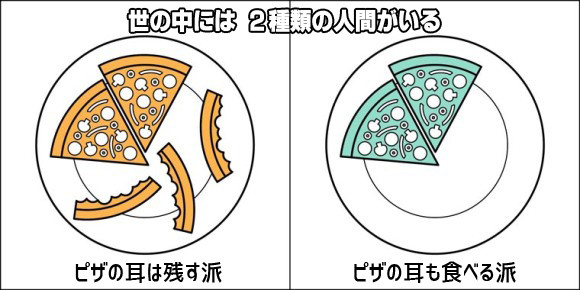
But actually, there are two types of site supervisors.
A site supervisor with experience in general contractor projects versus a site supervisor with no experience in general contractor projects.
Even though they're the same director, there's still a difference.
I'm not saying that having no experience is a bad thing, but having experience makes a huge difference in how well you can handle dealing with government agencies.
Also, the way you prepare the documents and take the photos is different.
Some of you might be thinking, “Aren’t they basically the same thing?!” but they’re 99.9% different.
The general contractor's supervisor holds direct meetings with government officials to determine the course of action, and documentation is required at that stage.
First, here is the meeting log. (The format varies by prefecture.)
We’ll prepare the meeting minutes and supporting documentation in advance, while discussing the matter with the local government and subtly hinting at the general direction.

Isn't that something general contractors often say—asking, “Do you have any supporting data or documentation to back that up?”
This is extremely important, as it serves as documentation for design changes.
If your application is approved, you'll receive the money, and you'll get a document from the government office serving as an authorization letter.
If it isn't approved, either don't proceed with the work, or use the magic phrase "creative ingenuity" to see if it qualifies for bonus points or is considered a corporate effort.
If these discussions affect the construction schedule, we will, of course, be required to submit a construction schedule as well.
It’s not like you should just do everything and anything.
While providing good service is important, the role of a general contractor’s supervisor is to do their job while also taking the government agency (the client) into consideration.
When it comes to differences in how photos are taken, the key question is whether you can take a photo that meets the government agency’s requirements.
The important thing about construction photos is,
A photo where anyone can tell what's going onThat's it.
The point is, you shouldn't post photos that make people think, "What is this?" the moment they see them.
And I think the person who took that terrible photo would say, “It’s like this and that—you can tell, right?”
It’s only understandable because you say so; photos that aren’t understandable unless you explain them are no good.
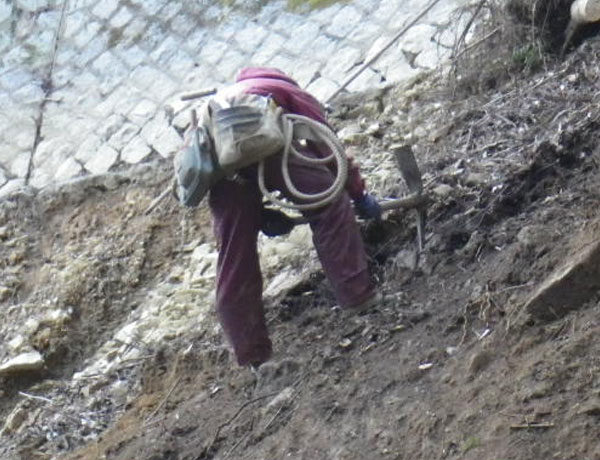
For example, suppose there is a photo of slope cleaning like the one shown above.
It's hard to tell exactly where and which part this is in this photo, isn't it?
If this were an inspector, they might ask, “Isn’t this a photo from some other site?”
In short, you're being suspected of cheating.
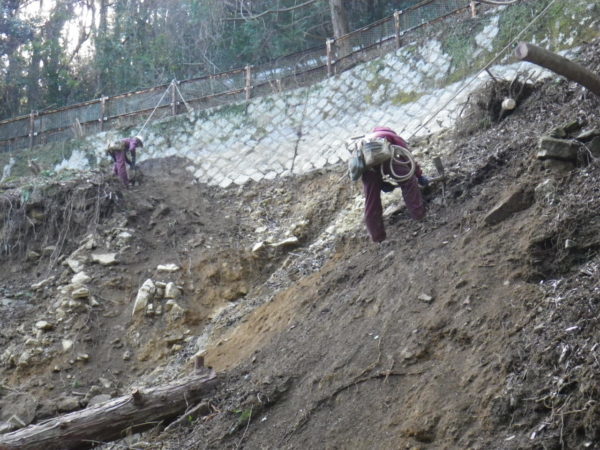
No one ever says this is a photo that captures the whole scene clearly.
The purpose of construction photos is to show who is doing what and where.
I think a supervisor with no experience as a general contractor wouldn't understand this part.
It's because I've never been called out by an inspector.
So, here’s what an inexperienced director should keep in mind:"A photo that anyone can understand at a glance, without needing an explanation"
It means making taking photos the core focus.
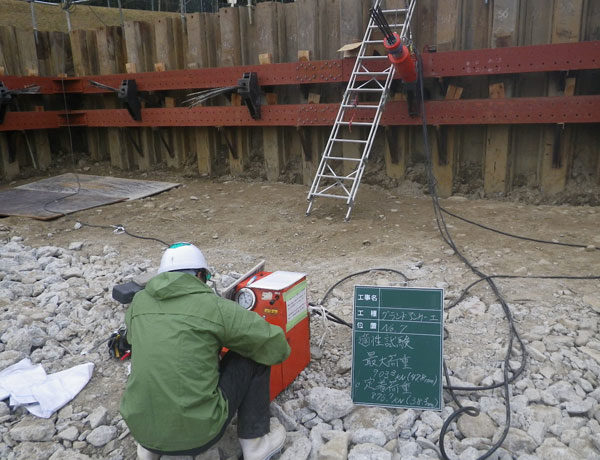
Here is a photo showing the tension during ground anchor installation.
Overall, everything looks fine.
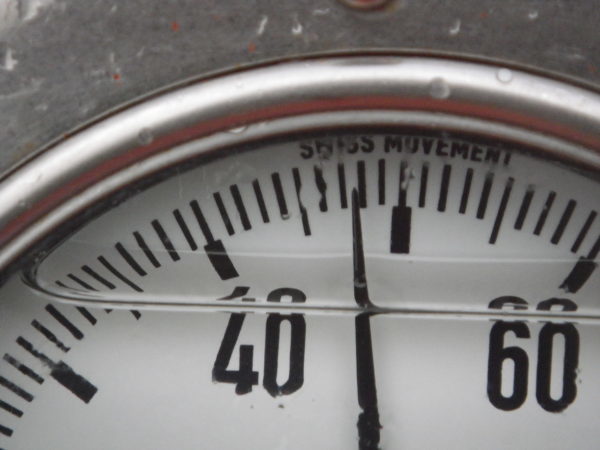
What do you think of this photo? (Don't worry about the different numbers, lol.)
Here's a close-up of the jack's pressure gauge.
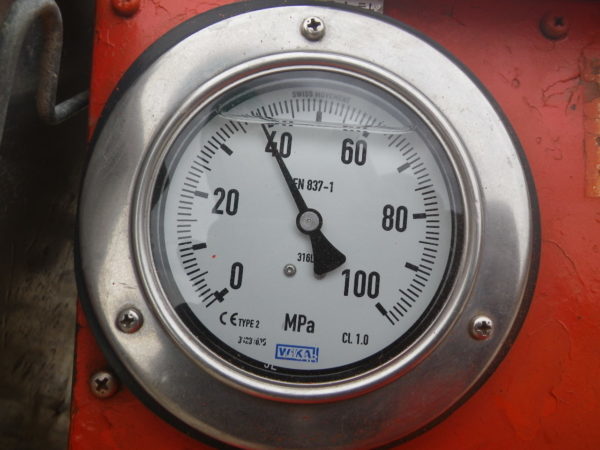
Here's another one.
What do you think?
If it's the same close-up, which one do you think is better?
For this photo, the close-up shot below is the best one.
The reason is that the top is too high.
With today's inspections, we review photos on a computer (electronic submission), so it's easy to upload them.
I don't need to take super close-up shots. (I don't even need reading glasses, lol.)
And, more importantly, the model number is printed on this pressure gauge.
The same goes for identification numbers and the like.
Use this identification number or model number to determine whether the device has been calibrated.
The government office will check the jack's calibration chart to verify which pressure gauge was calibrated.
That's why this number is so important.
This means there’s a chance the inspector might say, “If the image is zoomed in too much to make out the details, isn’t this from a different site?”
There may be a big difference between those with experience and those without, but it depends largely on the mindset of the construction manager.
ConsciouslyJust by taking photos and organizing your documents, you can take your self-management to a whole new level!
In fact, I know someone who has never worked as a general contractor but produces excellent documentation.
Let's take our work to the next level, too!
See you later.