



Hello, everyone.
This is Enta.
Speaking of the rain in the Tokai region the other day—it was absolutely pouring!
It seems our site got swept away a little, too...
Sudden rain at this time of year is scary!
We'll make sure to take good care of ourselves.

But that's beside the point.
What on earth is surface moisture content measurement?!
This is probably common knowledge for experienced managers, but for new managers, general contractors, and people in other industries...
That said, people in other industries probably don't read this blog anyway, lol.
Also, as I mentioned in a previous blog post on this topic,
Since this post has a lot of views, I'll write it out in more detail.
I really hate surface moisture content tests, though (lol)
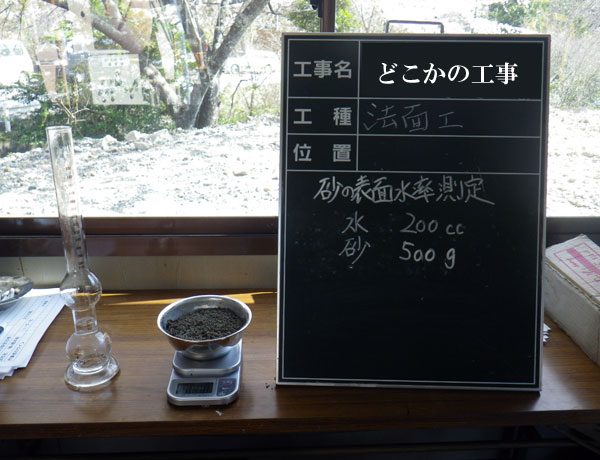
You see this all the time, don't you?
One of the must-have items for slope workers
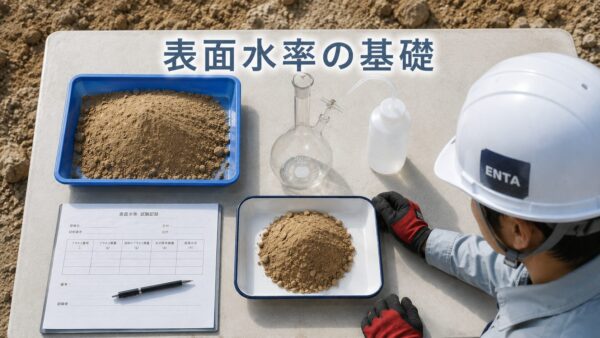
Chapman Flask
This thing falls over at the slightest thing and breaks so easily!
A while back, when the tip cracked, I kept using it as is until a replacement arrived because the markings were still intact.
I remember that back when I was still working, there was no online shopping, and it took quite a while for items to be delivered.
When I think about it that way, slope stabilization work seems like a job that hasn't progressed at all—we're doing exactly the same things we did 20 years ago...
Mechanization has advanced, but the fundamentals remain the same.
Fujiwara Sangyo carries protective inserts for Chapman flasks.
Next, a measuring cup and a bowl for the sand
A scale with a capacity of about 1 kg is sufficient.
The surface moisture content test uses only 500 grams of sample.
Well, considering the weight of the ball, I think it should be under 1 kg, or maybe around 2 kg.
This method is performed in accordance with JIS A 1111.
I think most slope contractors use 500 grams of sand and 200 cc of water.
We will use this to conduct a surface moisture content test.
Before we get into what this test is all about, what are mortar and concrete products made of?
When someone says that,
Mortar = sand, cement, and water
Concrete = Sand, Gravel, Cement, Water
So, it's done, right?
And then, this sand. This is a bit of a digression, but this sand is classified into mountain sand, river sand, and sea sand.
Even though we say they come from the same place—the mountains—there are subtle differences in their composition and the amount of mud mixed in.
In particular, since seawater sand contains salt, it has been washed quite thoroughly.
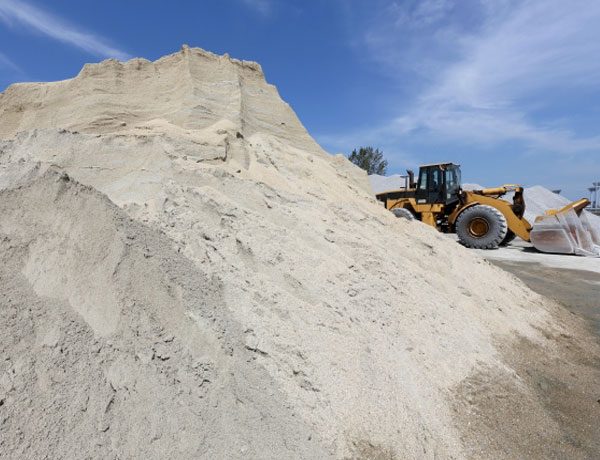
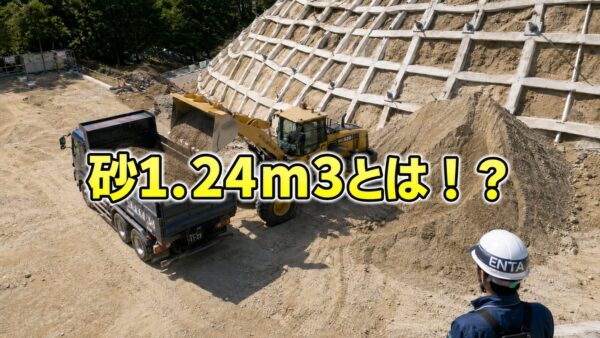
We use a sprinkler to douse the pile of sand—like the one in the photo—and give it a thorough wash.
Doing so washes away the salt and silt from the sand.
We do the same thing with mountain sand and river sand, adjusting the particle size accordingly.
We at the slope construction company use that washed sand.
What would happen if you used sand that was soaked through with water like that?
The amount of water added to the mortar and concrete mixtures will increase.
For example, if you were planning to add 30 liters of water, but the sand was extremely saturated with water, the total volume would be more than 30 liters, right?
In the case of mortar, even though the specified mix ratio is cement + sand + water,
Actually,Amount of cement + sand + water contained in the sand + waterThat's how it works.
To restore this to its original formulation,Cement + Sand + Water – Water contained in the sandYou need to do this.
That's whereSurface Moisture Content TestWhat?!
See you later.

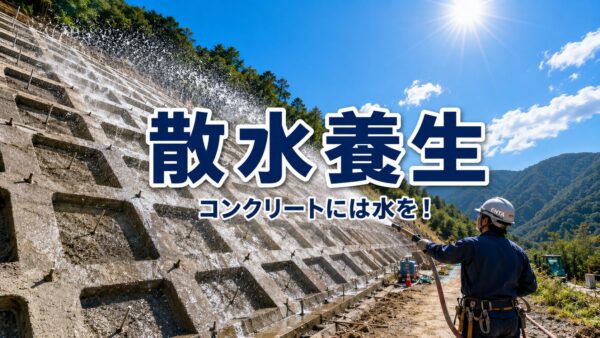
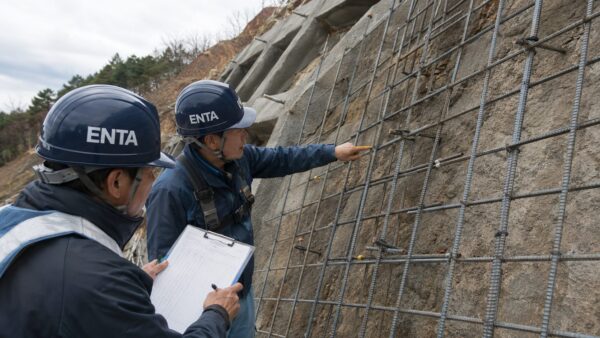
I hate them, too—I’ve broken so many flasks (sob).
Other than glass... it doesn't come out, does it?
If it doesn't break, it won't sell...
Thank you as always.
I wonder how many Chapman flasks slope engineers have broken over the years? (lol)
I think plastic would be fine, but there just isn't anything that feels quite right, is there? lol
Maybe I'll just have to make one myself? Haha.
When measuring the surface moisture content twice and calculating the average from the flask readings…
For example, if the readings are 402 cc and 403 cc, the average would be 402.5 cc, but in this case, my senior told me to round up the average to 403 cc.
I don't quite understand the reason for this.
Could you please tell me?
Thank you as always.
As for the average surface water value, strictly speaking in terms of quality, it should be rounded up.
If the reading is low, it indicates a low moisture content, so you will need to add water.
If the reading is high, it indicates a high moisture content, so it will be necessary to reduce the water content.
When it comes to which one yields higher strength in terms of quality, the one with a lower water-to-cement ratio will have higher strength.
SoRounding up results in better quality.I think that's the line of thinking.
But!!!
In real-world situations, even if we were to be this meticulous, it wouldn't make any difference.
The reason is that, for one thing, water meters aren't that accurate.
The timer on the spray gun is pretty rough, lol.
Furthermore, with a moisture content error of 0.X%, no deviation in concrete strength development can be detected.
We don't actually know.
However,Essential Knowledge for AdministratorsThat’s why I think questions like this one are extremely important.
We look forward to your continued support.