

Hello, everyone.
This is Enta.
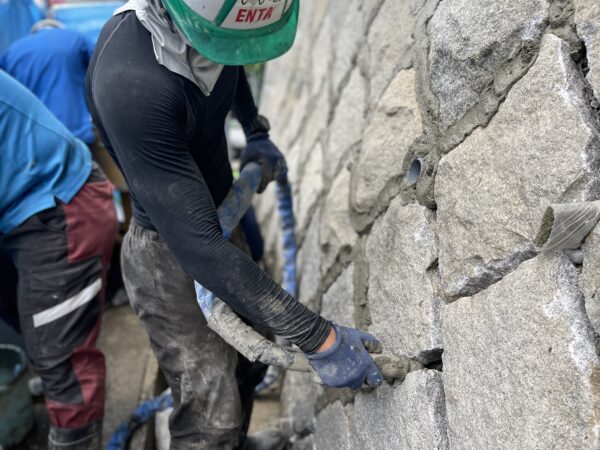
Lately, we’ve been doing a lot of dry stone masonry work in Nagoya City.
What's more, since we're working in an upscale residential neighborhood in Nagoya, we have to be quite careful.
Since this job site wasn't in a cramped area, it wasn't too bad, but if it were cramped, it would be really tough, wouldn't it?
Since we haven’t applied for a road use permit or similar authorization, we only carry out work within the scope that can be completed in a single day and wrap up operations by the end of that day.
If it were a public space, we’d get a road use permit and go all out, but that would increase the client’s costs, so we’re keeping it to a minimum as much as possible.
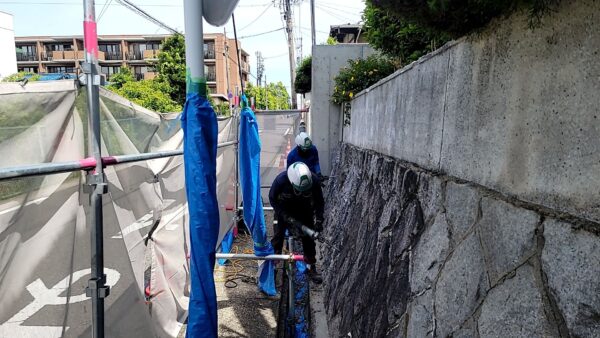
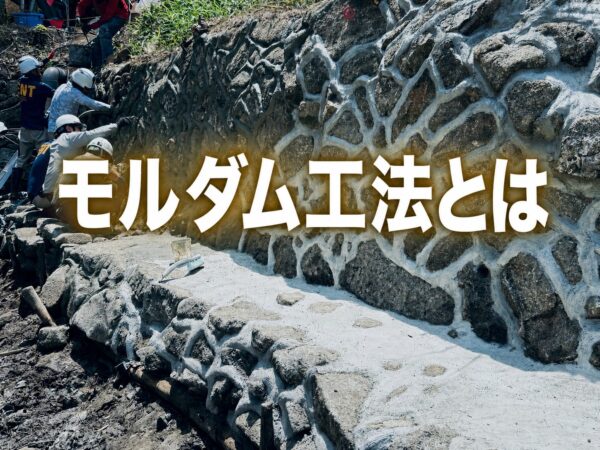
We are enclosing the work area on all sides and performing chiseling and grouting.
So, when you look inside after cutting it open, you'll find that it's surprisingly full of dirt and sand.
(The photo below shows us using a pressure washer to remove some of the dirt and debris.)
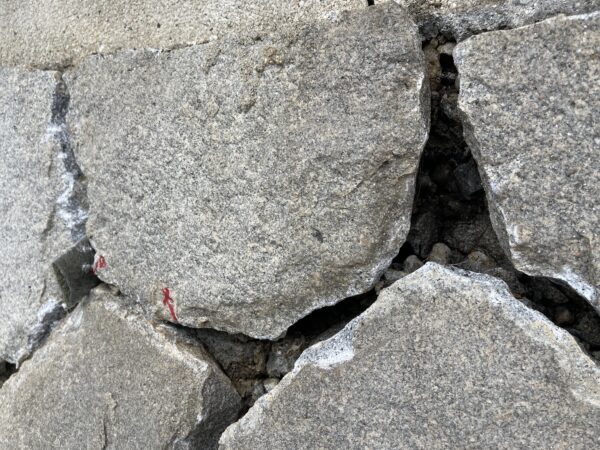
At first glance, it doesn't look bad, so I thought, "It's packed, so it should be fine, right?"
That's what people say.
That's right. It's actually pretty packed, lol.
It actually looks pretty good.
On the other hand, if there are spots where the soil particles have washed away, sometimes only the stones get washed away...
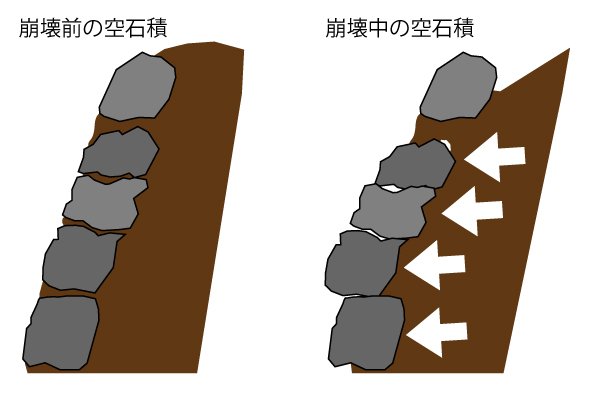
In fact, because it’s packed so tightly, the soil behind it actually pushes against the stone itself.
Once the soil and rocks have been pushed aside, there’s no way they’ll go back, so all we can do is wait for it to collapse.
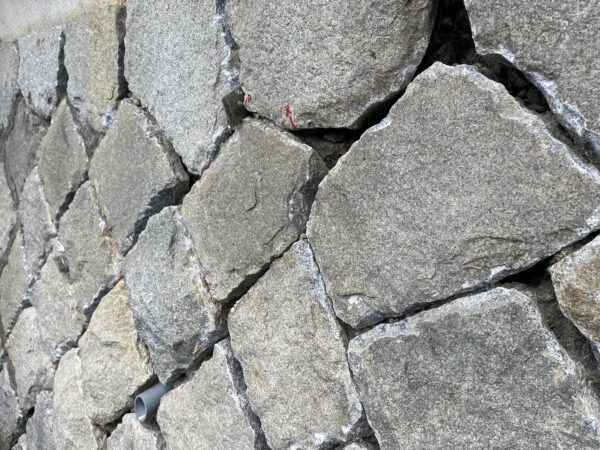
This stone wall was built quite solidly by stonemasons of old, but,
We’ll carefully chisel out the joints to widen them as much as possible.
Then, we use a high-pressure washer to wash away the loose soil and debris inside.
Doing so increases the area of application, which in turn increases the surface area that can be bonded, thereby improving strength.
However, there’s a common misconception here: measures for stone masonry are, after all, merely cosmetic.
A stone wall is made up of individual stones.
By bonding them together with resin mortar, we create a "chain."
Maintaining continuity can prevent partial collapse.
However, when it comes to whether it can withstand internal pressure (earth pressure), I can’t say for sure that it can!
After all, there’s no choice but to use appropriate construction methods to deal with earth pressure.
These include rebar installers and drainage workers.
This will be determined based on the results of the investigation.
Please keep in mind that while it does make it much less likely to crumble, it’s not a guarantee.
Stone walls that have already collapsed or are showing signs of spalling require appropriate measures.
See you later.