Hello, everyone.
This is Enta.
I've actually been writing a multilingual blog for a few days now lol
Well, it's just a translation of the same content, but it helps foreign workers understand how Japanese slope construction workers work, lol.
Lately, we've been getting traffic from Vietnam, China, the U.S., Nepal, and South Korea, so we're taking "Hokumaya" global, lol.
That's what I'm thinking, and I'm still mulling it over.

The Meaning of "Spacer"
What are your thoughts on the spacers used on slopes??
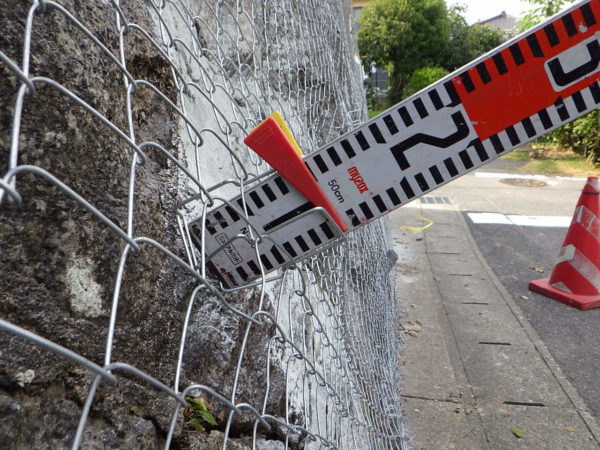
Most people think you're supposed to place the net in the middle, right?
That's half right.
I don't really get half of it, though...
There's actually no reason to put this net in the middle! lol
This all started back in the Showa era, when people began drawing cross-sectional views of wire mesh on blueprints to make them easier to understand.
Back in the day, since we didn't have spacers, we would spray the material while pulling the mesh taut.
And then, once the inspection pointed out that the mesh was positioned incorrectly, everyone suddenly started saying, “The middle of the spray thickness is the way to go!” lol
Contradiction
Is there a contradiction here!?
The anchor pins holding the mesh in place are buried in the soil or attached to the bedrock, right!?
What are you going to do then??
And why do you have to be so particular about it when the bottom net isn't even strong enough??
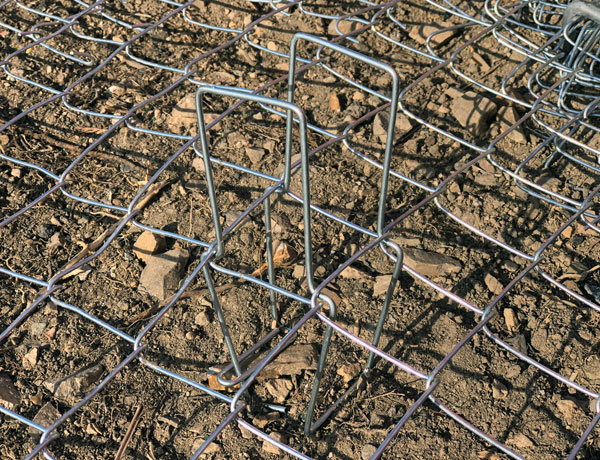
Recent Trends
Well, I don't think there are many inspectors who are particular about the position of the last net.
After all, it's meant to help the mortar bond better to the mountain, you know~
A product designed to prevent peeling or dripping during application.
It doesn't even have to be in the middle, lol
However, the closer the mesh is to the surface, the less likely it is to develop cracks.
However, the current meaning of “spacer” isEnsure the spray thickness!
This is a guideline for inexperienced foreign workers when they're holding the nozzle and blowing.
This is very important.
For example, when applying a 100-mm-thick spray coating, a skilled worker should be able to apply it fairly evenly.
However, it’s extremely difficult for first- and second-year wind instrument players to play!
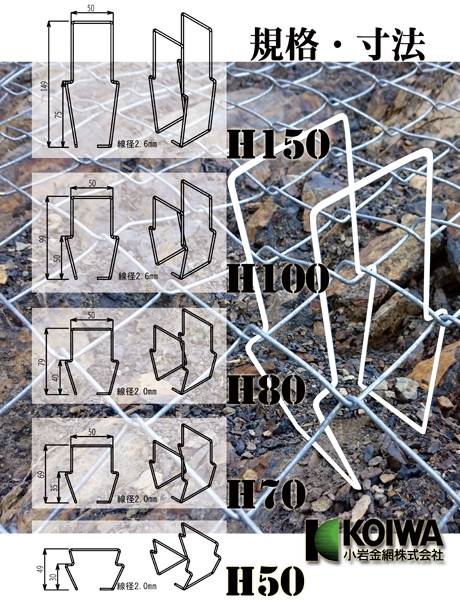
The more spacers you install, the greater the spray thickness you can achieve.
There's no doubt about that.
If you hide the spacers, you can free up more than 100 mm of space.
I'd recommend using about two per square meter.
This is the minimum standard, and the less mature the nozzle is, the more likely it is to be used with materials like these.
Ensure that the finished product meets specifications.
Other Methods
Galvanized test pins are also used.
This method is quite old, but it seems to still be used for galvanized applications.
I want to go into a little more detail about this, so I'll save it for next time lol
See you later.