



Hello, everyone.
This is Enta.
Do you buy single-pipe scaffolding at home improvement stores?
And isn't that a far cry from the professional-grade version—it's not exactly lightweight, is it?
It's a little different from the home improvement store models and the professional-grade ones!
Scaffolding Material Specifications
Did you know there are standards for scaffolding materials?
This is it.
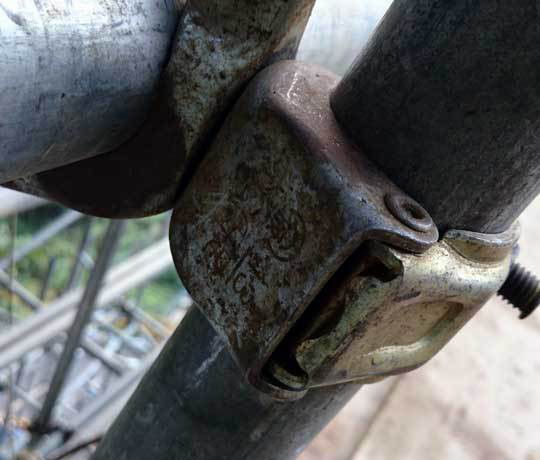
On the side of the clamp"Temporary," "Temporary Measure"It has all sorts of symbols on it.
On the other hand, there are some things that aren't included.
All of the single pipes and clamps we normally use meet specific standards.
Single-wall pipe: Carbon steel pipe for general structural use, JIS G3444 STK500
Clamps: Orthogonal clamp 4900 N (500 kgf) Universal clamp 3430 N (350 kgf)
The important thing about “temporary” and “temporary measure” is
Quality Assurance.
This mark certifies the quality of this material.
Calculations for scaffold stability and the like are performed in accordance with this standard.
This means that if a collapse occurs due to the use of non-standard products other than this scaffolding material, supervisory liability may arise.
However, if the design specifications are calculated using values other than those from quality certification, this is not a one-time exception.
Are there any non-standard items?
Yes, there is.
Most of them are made in China. There are many items that cost nearly half as much as their Japanese counterparts.
As expected, the strength and quality are poor, and they seem to break down more often than Japanese-made products.
(A Story from a Scaffolding Worker)
Most of the time, the threads on the clamps get stripped, or the bolts come loose.
The Pros and Cons of Inexpensive Materials
In any case, the low price is its biggest draw.
If it's nearly half the price, that means you can buy about twice as much material.
Well, of course I'd buy it, lol.
I think I'll probably end up buying it, too.
If it gets bad, you can just throw it away and buy another one.
I suppose this is probably the most rational approach, considering the era of consumerism.
When you think about whether it’s good value for the money, it’s pointless if the durability is only half that of a Japanese-made product—even if it costs half as much—so,
If it's more than that, you could say it offers good value for the price.
Also, if you mix it with products made in Japan, it should be safer, and I think it will wear out a little less quickly.
Ultimately, whether or not to use it will depend on whether it's safe.
In fact, I've never heard of a building made in China actually collapsing.
However, while there do seem to be some instances of partial misalignment, if it’s a single-tube scaffold that’s supported as a whole...
From the perspective of government agencies and general contractors,
Since the government considers it temporary work, it isn't taken seriously.
There are a few photos, and as long as I know the dimensions and quantities, that's good enough.
I have never had the opportunity to examine the scaffolding in detail by comparing the quantities listed in the inspection report with the photographs.
At this point, the photos of the scaffolding are just for reference, lol.
From the general contractor's perspective, what kind of scaffolding materials are being used?
We don't check whether they comply with JIS standards or if they're made in China.
In other words, you could say that there haven't been any accidents involving structural collapse.
In particular, since the scaffolding on the slope is leaning against it, its dead weight is directed toward the slope.
It's highly unlikely that it will collapse backward.
Considering factors such as stability calculations, as well as safety and the longevity of the components, Japanese-made products are probably the best choice.
*General Incorporated Association: Temporary Construction Industry Association
See you later.

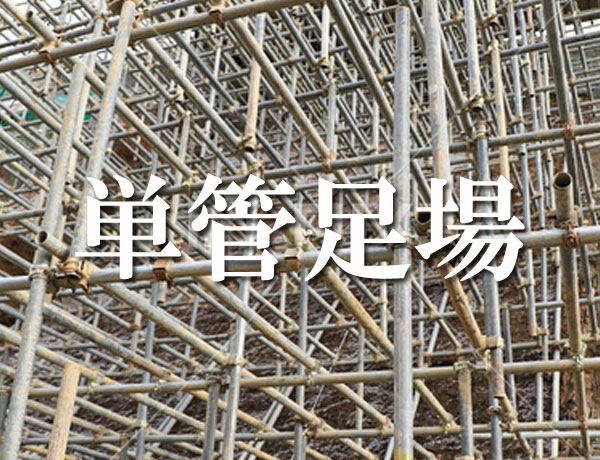
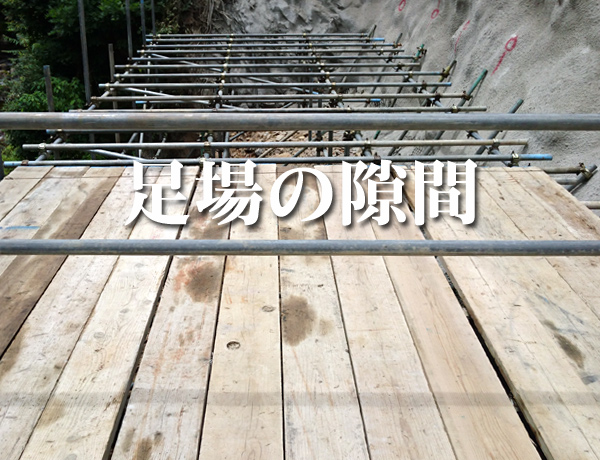
This story dates back to over 10 years ago, when I was working for a general contractor. A subcontractor doing scaffolding work ran out of clamps on site, so they used some they’d bought at a home improvement store. There were two accident reports where those clamps broke, resulting in workers’ compensation claims. As expected, they weren’t certified products from the Temporary Structures Industry Association. When strength tests were conducted, it was found that their breaking strength was only about 70 percent of that of certified products. Since then, that general contractor has banned the use of non-certified external materials, and this has become a standard checkpoint for safety patrols. Recently, more home improvement stores have started carrying certified products, too.
There are quite a few materials out there that can be dangerous if they aren't certified, aren't there?
Especially those cheap ones from China—they're seriously bad, lol.
It's a bit of a headache because it's expensive, but you can't put a price on safety.