Hello, everyone.
This is Enta.
The other day, I went on a little hike.
There’s a place called the Gozaisho Ropeway, and there’s a mountain there called Mount Gozaisho.
Well, since there's a cable car, I guess there must be a mountain (lol)
There was a trailhead suitable for beginners, so my child and I hiked up for about an hour before turning back halfway.
I had planned to turn back partway from the start, but people I passed asked, “Huh! Are you leaving now?” and “Is it okay to bring kids?”
People would say things like, “Aren’t you dressed a little too lightly?” and every time we passed each other, they’d say, “Hi there,” “Hey,” or “Good luck!”
People say things like that, and so on.
Plus, this mountain is a pretty popular spot, so there are lines...
It’s like, “How many times do I have to say this?!” (lol)
But they don't know that. I've been fixing things all over this mountain as part of the construction project. (I know it quite well.)
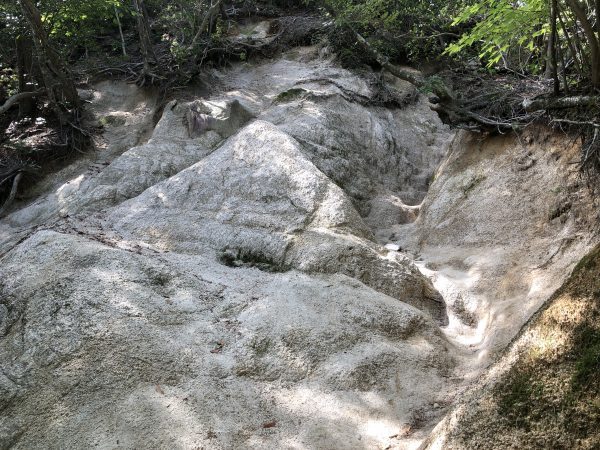
And actually, the purpose of this trip isn’t so much the hike as it is the granite.
"I told my kids, 'When this granite weathers, it turns into nice sand!' so we came here to see it for ourselves."
That was the only reason I was dressed so lightly (lol)
Sorry that my goals are different from everyone else's lol
But the mountains have been so noisy lately!
But that's beside the point.
When the soil conditions at the site differ from those specified in the design
It happens all the time, doesn't it?
A particularly common scenario is when the location of the exploratory borehole is significantly farther away from the construction site.
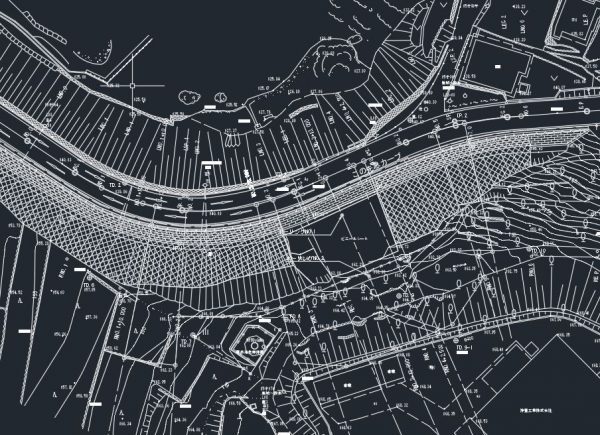
For example, if construction is to be carried out over three phases, exploratory drilling is performed during the design phase.
However, due to budget constraints, we may only visit one location.
I suppose they try to aim for the average as much as possible, but that rarely happens, and I think there are often situations where the actual implementation leaves you scratching your head.
No rocks in the anchorage layer? Does the anchorage layer look different from the design??
That's how it works.
However, while it’s quite difficult to make a judgment on-site, we’ll start by collecting and examining a sample of the slime from the attachment site.
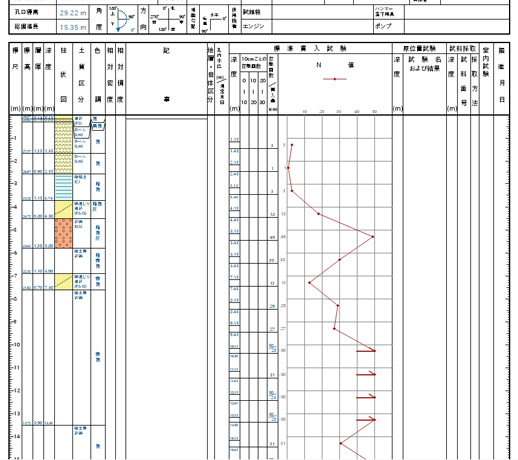
Next, please take a look at this table of borehole log data. (Be sure to obtain the design calculations from the local government office before beginning construction.)
The soil classification, color, and other details are listed here, so please compare them.
Since the N-value is listed, how hard was the rock during drilling?
We'll compare the on-site conditions with the design, taking all of that into account.

And if I think, “That’s clearly wrong!” I’ll discuss it with the local government.
As we continue our discussions with the government office, a representative from the consulting firm will also join us, so we’ll include them in the conversation.
If that happens, work on-site will be temporarily halted.
Everyone hates it when this project comes to a halt. I get it.
However,If you stop, things will definitely go in a better direction.
Holding a meeting even if it means halting construction is an action that helps bring the site up to a good standard.
It's far better than just plowing ahead and ending up in a terrible mess later on.
No matter what the outcome, it can be quite challenging when the soil conditions are different.
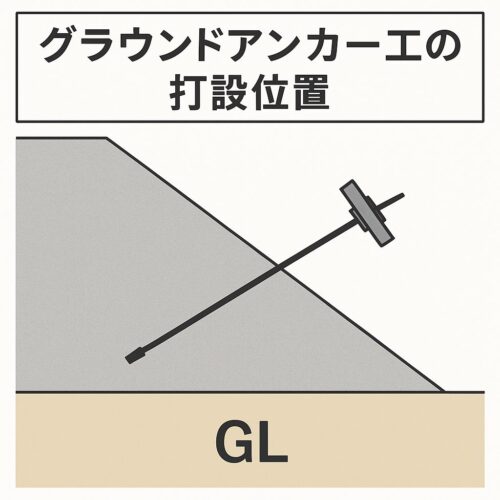
When considering design changes, both anchor installers and rebar installers must,
Make the attachment section longer.
Increase the bore diameter to increase circumferential friction.
Increase the free length.
Make the rebar longer. Make it thicker.
There are various factors to consider, but since there’s an original design philosophy to follow, we can’t just do whatever we want.
These design changes are intended to stay true to the original design.
I did this the other day: I collected soil samples using a rotary percussion sampler at 0.5-meter intervals, and
Sometimes we ask them to make their judgment based on soil that is as undisturbed as possible.
While this will mostly involve design changes, the process leading up to that point is extremely important, so please document everything with photos and samples.
It is very important to explain the reasons for the design change.
When performing anchor work, it’s generally better to be sensitive to changes in soil conditions.
See you later.