Hello, everyone.
This is Enta.
The other day, I was talking with a slope-construction worker I've known for a long time.
He says he’s gotten noticeably older lately and has lost his strength.
It seems he hasn't been out on site much either, but,
Anyway, I just need a job.
I heard that since the start of January, orders in the Tokai region have been a bit slow, and there are plenty of slope-construction contractors with excess capacity.
Since we, as public works contractors, rely on contracts from local governments for our work,
It's hard for us to generate our own work. There really aren't many private-sector construction projects, are there?
When the national budget is drastically cut, construction companies will also downsize.
Are there any slope stabilization or anchor installation contractors available in the Tokai region?
If anyone knows of any contractors in the Tokai region, I hope we can reach out to each other and help one another out.
But that's beside the point.
Types of Drill Hole Diameters for Rock Bolts (Reinforcement Bar Insertion)
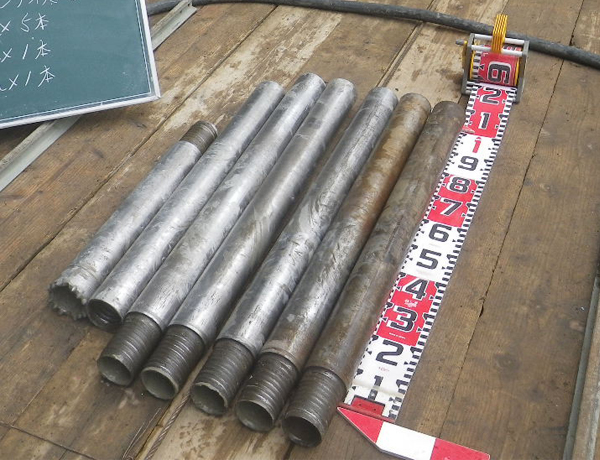
Site Conditions I = Suspended Drilling: Drill Hole Diameter φ65 mm (Market Unit Price)
Site Conditions II = Skid-Type Drilling: Drill Hole Diameter φ65 mm (Market Unit Price)
Site Conditions III = Hand-dug boreholes: Borehole diameter φ28.5–65 mm (market unit price)
Double-pipe drilling = skid-mounted drilling: Drilling diameter φ90 mm (cumulative total)
Double-pipe drilling = Crawler-type drilling: Drilling diameter φ90 mm (cumulative total)
This is the standard drill hole diameter for rock bolts today.
I get asked this quite often, so I'm sharing this for your reference.
See you later.