



Hello, everyone
This is Enta.
Since I get asked this a lot, I’ll write about it again this time.
"Grout Injection During Double-Pipe Drilling for Rebar Insertion"
I really get asked this a lot!
Is it injected one at a time?
Is it okay to inject them all at once?
Is there any literature on this somewhere?
And so on.
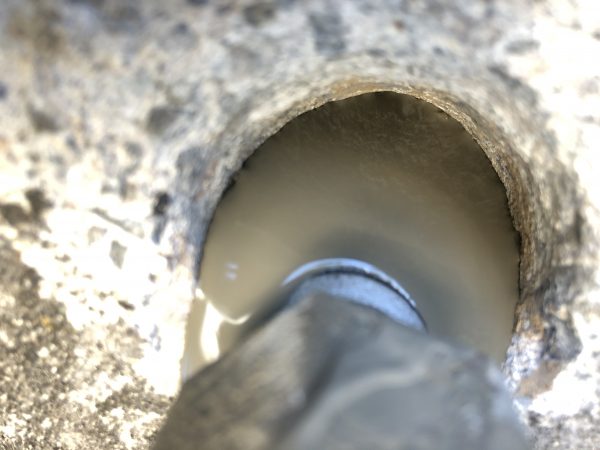
I'm going to write this out in detail this time, so keep it in mind lol
1. Why use double-pipe drilling?
Because rebar cannot be inserted after drilling in single-hole drilling (Site Conditions I). (Design Philosophy)
2. Is it necessary to inject one at a time?
If the mountain stands on its own, then there's no need for that, but...
Regarding 1
As the name "rebar insertion method" suggests, this is a construction method in which rebar is inserted and secured with cement slurry. (Full-surface securing)
Since the whole point is that it’s pointless if the rebar isn’t inserted, if the rebar cannot be inserted using a single-hole drilling method, a double-pipe drilling method is used.
However, when drilling a double-pipe borehole, it is often the case that the surrounding rock is consolidated by the rotation, impact, and friction of the casing, causing the borehole wall to become self-supporting.
In this case, you can wrap the injection hose around the rebar, insert it into the hole, and then inject the material all at once.
Regarding 2
The idea that we need to inject one dose just came out of nowhere, but,
It’s probably because the construction method for ground anchors is the same—using double pipes—that someone made that comment.
However, as mentioned above, when using double pipes in rebar insertion work,
Since they stand on their own quite often, it’s perfectly possible to inject them in batches. (This is strictly based on observations made during construction.)
In single-hole drilling, batch injection is generally used. (It’s the only option.)
But you might be wondering, “Wait, what do you mean ‘inject into one tube’ right after it becomes a double tube?”
I end up feeling the same way, lol.
Whether it's a single or a double, why is the only difference the bore diameter?
The construction method should have been selected based on whether or not it is possible to insert rebar.
In other words, this means it can also be interpreted to mean that even with bulk injection, as long as the injection hose is in place, there’s no problem at all.
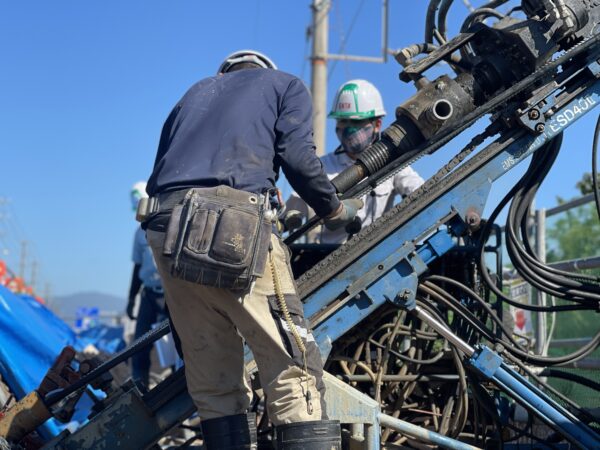
However,If you bring in the ground anchor construction method, it’ll end up being just one injection, lol.
Personally, I don't mind either way, but that will reduce construction efficiency and increase the estimate.
It also increases the cost burden on those purchasing the materials.
To perform a single injection, the mixing agent must be changed from Leobild to FT700. (This will result in a slight increase in the unit price.)
While the final strength may not vary much, there could be significant differences in weekly strength (depending on temperature and other conditions).
Since the strength verification is delayed, the final tightening (of the nuts) will be slightly delayed. (Well, that’s putting it a bit dramatically.)
As for subcontractors, the grout mixer gets dirty (the grout hardens), so cleanup work is required after installation.
If you outsource the surface preparation work to a maintenance contractor, the surface preparation alone will cost about 100,000 yen.
Ultimately, either option is fine, but using a single syringe does increase the cost.
I'm pretty sure the standard practice in Fukui Prefecture was to use a single injection in all cases!
I heard the supervisor stays right on top of them the whole time while they're working? lol (That's what I heard, but is it true? lol)
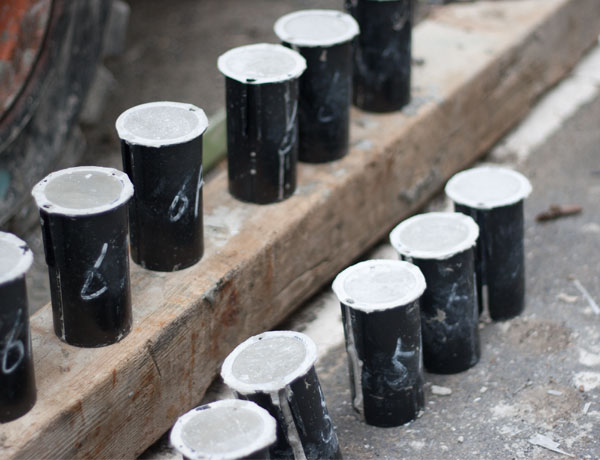
No matter what the circumstances are when administering the injection,
Please take photos of the test pieces at AM and PM, and be sure to take clear photos during the injection process as well (you know what I mean, right?).
And one more important thing: be sure to tap the rebar after grouting!
"Shaku" means to shake something back and forth or side to side, and
Vibrating the mixture improves the bond between the cement slurry and the rebar.
That way, you can be sure to inject the cement slurry properly and prevent construction defects.
It depends on the general contractor’s supervisor’s approach as to which method will be used, so I can’t say for sure, but,
In reality, single-hole drilling and double-pipe drilling are the same.
This means that just because the diameter changes, it doesn’t necessarily follow that the same approach used for ground anchor construction applies here.
Obviously, they’re different trades, so their approaches are different.
Make sure to hold the injection hose firmly and inject from the bottom! (This is absolutely essential!!)
And I don't think there are any books about this particular incident.
Is that mentioned on the NEXCO website??
If anyone knows, please let me know.
See you later.


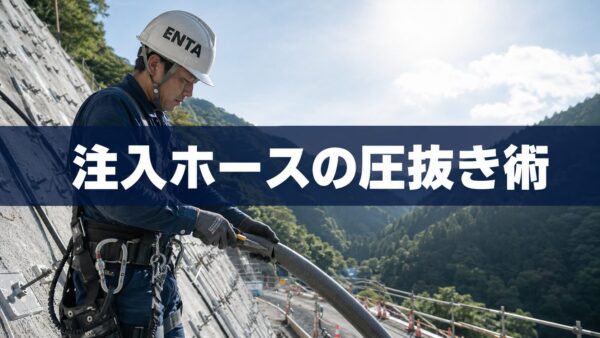
On a similar note, I’ve been asked before whether the injection hose should be left buried in the ground after injection or if it should be pulled out. What do you think, Enta-san?
Since I’m at it, I’ll write about this in tomorrow’s blog post as well!