Hello, everyone.
This is Enta.
Actually, I'm in Tokyo today.
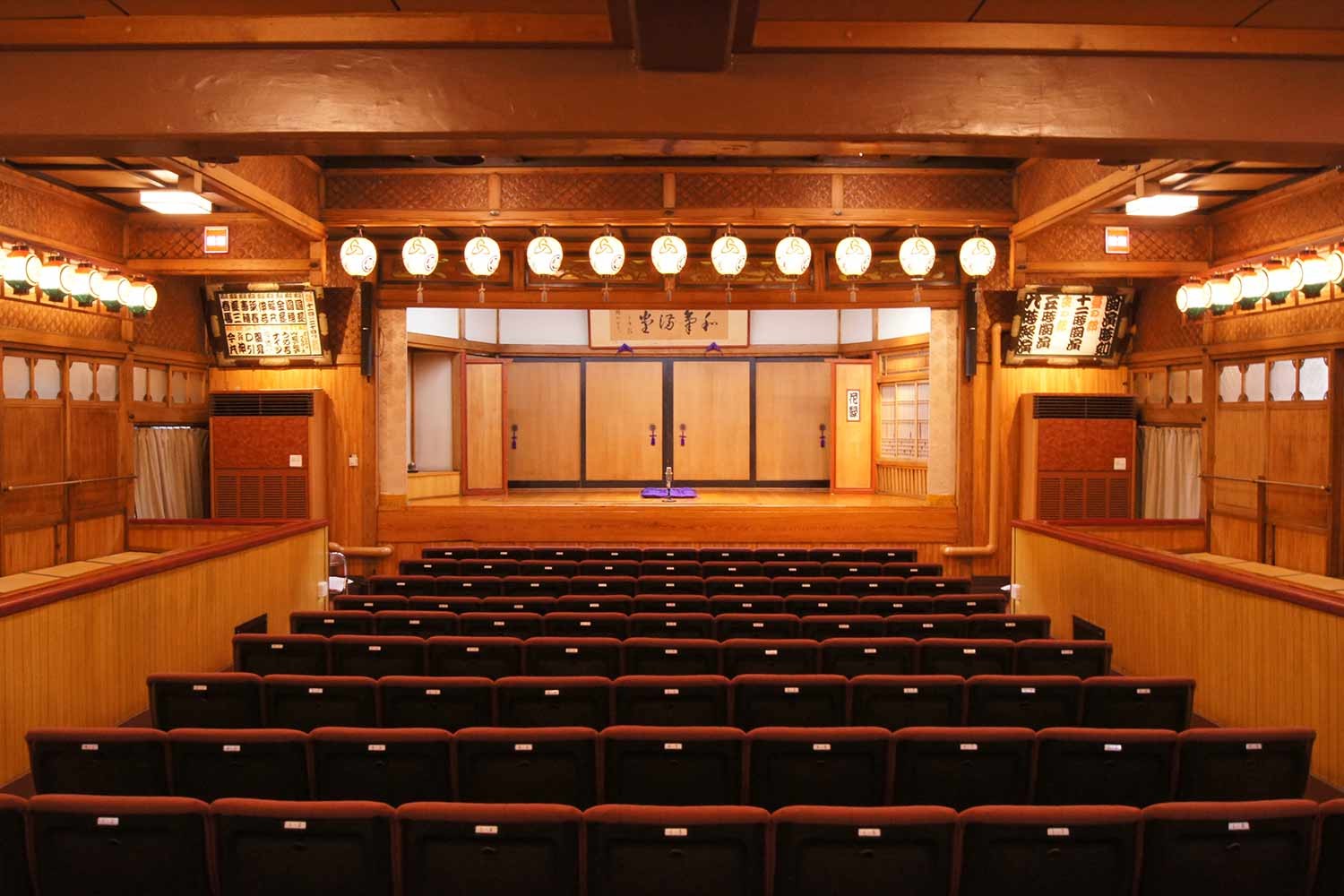
When you think of Tokyo, you think of traditional comedy theaters!
I really love traditional comedy shows lol
So, I'm off to a traditional comedy theater!
That said, today...KTB Anchor AssociationIt's the general meeting.
That’s the main reason, but I really want to go to a traditional comedy theater, so I’m taking the first flight in the morning!!
But that's beside the point.
JIS A1108
If the core test specimen is immersed in water at 20±2°C for at least 40 hours prior to testing,
During testing, the moisture content of the test specimens can be kept nearly constant.
Here's a surprising fact!
If the core removed before the test date is left to cure in the open air,Very dryDo.
Its strength decreases when it dries.
On actual job sites, the legal framework is subject to moisture from rain and other sources, so it isn't always dry.
Therefore, since this creates a difference in strength between the core and the field-cast concrete, if the core is cured underwater for more than 40 hours to ensure the same conditions,
It can be set to the same conditions as the actual siteThat's right.
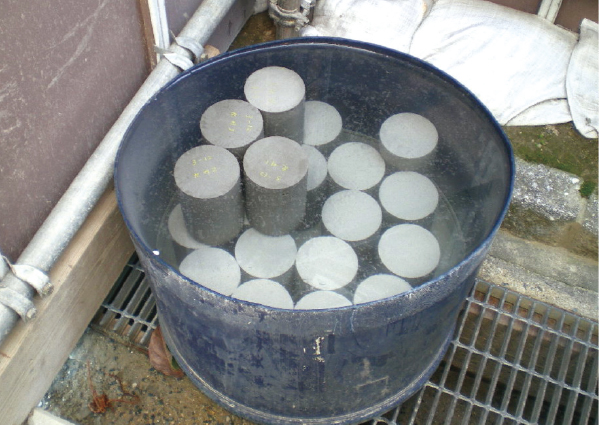
Comparison of Core Strength and In-Situ Strength in Core Curing Methods
Core (Aerial Curing) <On-site
Core (kept submerged in water at all times since extraction)> On-site
Core (cured underwater for at least 40 hours prior to the test) = On-site
While it’s fine to take core samples while the specimen is in the air, it’s recommended to switch to underwater curing two or three days before the test and then conduct the test.
Doing so ensures that conditions match those on-site and also helps minimize variation.
I recommend giving it a try at sites where there is significant variation.
By the way, if the contractors say to you, “Spray coating is supposed to be air-cured, isn’t it?!!”
JIS A1108
Go ahead and say with confidence, "It's in there!!" lol
In addition, it is said that the strength of a dry core is reduced by up to about 20 percent compared to a normal core. (↓See the reference below.)
See you later.
References: Methods for Taking Concrete Cores and Test Methods for Compressive Strength
JISA1107: Deliberated by the Japanese Industrial Standards Committee; Revised in March H24 (Published by the Japanese Standards Association)
Key Points of Concrete Technology 11 (Japan Concrete Institute)