Hello, everyone.
This is Enta.
Slope Construction Problem 3 (Lattice Installation)
Here is the answer to Problem 3 from the previous slope engineering problem set.
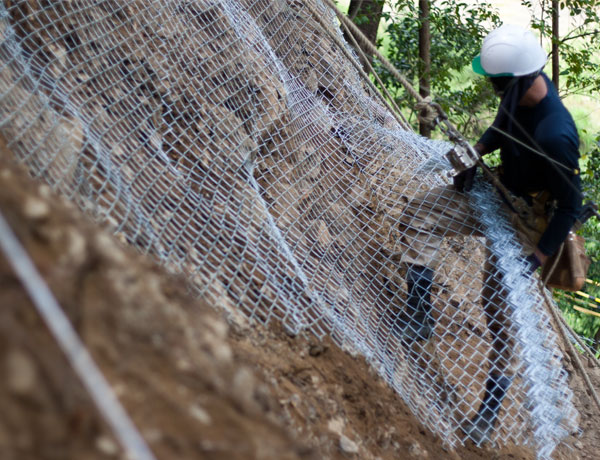
This is actually pretty simple: just drive in a lot of large pins (φ16 × 400)!
This is the only way to go.
Even if the small pin (φ9×200) is too short—which is unavoidable—hitting the large pin usually does the trick.
If you still want it to be even more effective, go ahead and use something like φ16×500 or 600! (It’s fine to use a larger diameter, too.)
Wouldn't a different diameter, like D16, work here?
That’s what you’re thinking, right?
Round bar is the way to go!
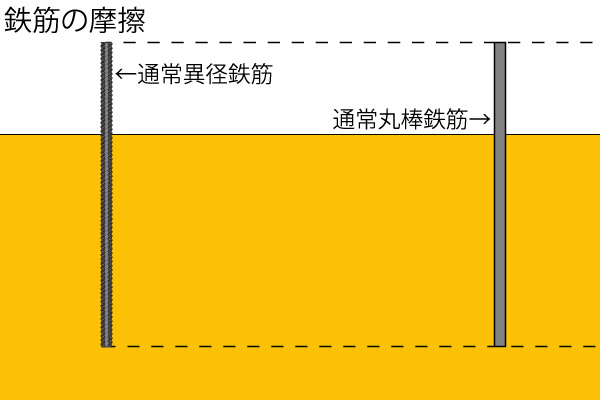
Suppose, as shown above, that there are round bars of the same length and rebar of different diameters.
At first glance, they look exactly the same.
If you look at this up close,
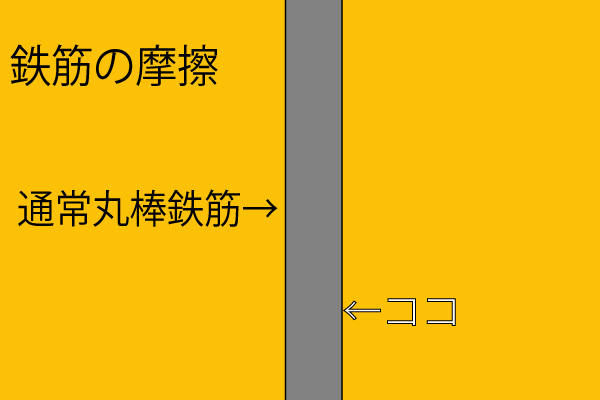
Friction in round steel occurs all around the rebar.
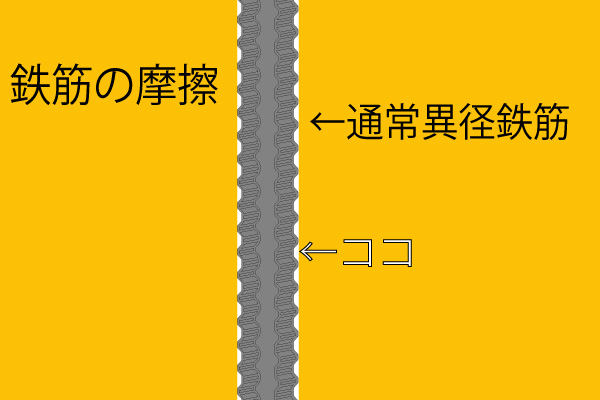
When driven into the ground, the friction caused by the different diameters wears down the surface due to the unevenness (knots) created by the different diameters.
That's why there's less friction.
And they come off easily!
You can see that when it comes to rebar used in concrete, rebar with varying diameters creates more friction than round bar, right?
It’s only in the case of embedded rebar that it’s better to use the same diameter!
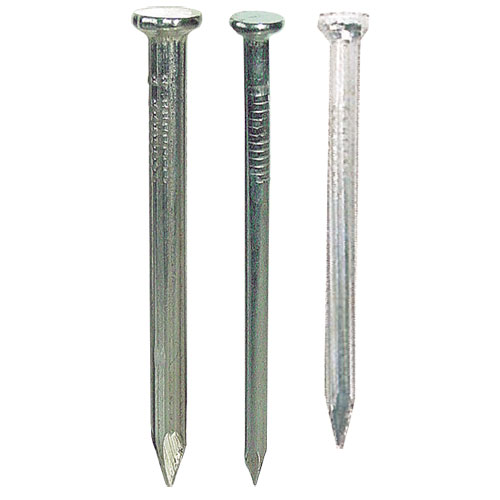
Concrete nails have vertical grooves on them, right?
This is designed to reduce friction as it goes in.
That's why it's vertical, not horizontal.
I think data entry would be extremely difficult without this.
Install lath on loose soil and drive in anchors like crazy!
And when pouring concrete, be sure to drive in round steel bars!
This is the answer for this time.
See you later.
By the way, most of the tent stakes used for setting up a tent at a campsite have straight grooves running down them, don't they?
It's designed to be easy to insert and to reduce friction.