Hello, everyone.
This is Enta.
Japanese Workers and Foreign Workers: The True Feelings and Realities Revealed on the Job Site
I received a question regarding the blog post I wrote the other day, titled “Japanese People and Foreign Workers: The True Feelings and Reality Seen on the Ground.”
[Question]
Once the foreign visitors are gone,With the understanding that operations would grind to a halt,I'd like to ask you about that.
If there are no foreign nationals, how can we manage with just Japanese staff?
・Would it be enough if there were advancements in [machinery]?
・Is having enough staff really enough?
・Is it enough to just increase wages tenfold?
・Or do we need people with strong physical abilities, like those from overseas?
That's a really good question!!
It was a good opportunity to reflect on what I experience every day on the job. I’ll answer each of your questions now.
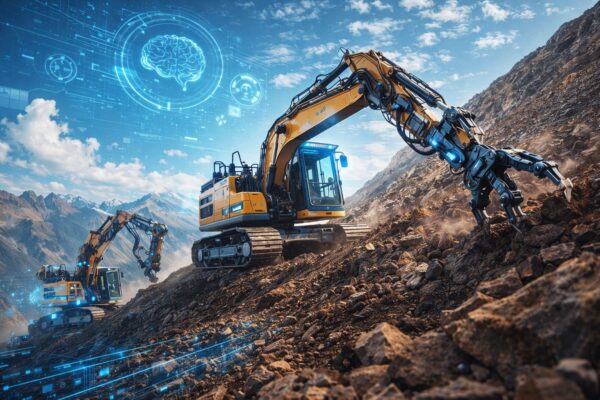
Q1: Would it be good if there were an evolution of [Machinery]?
Machinery is evolving every day.
This is really amazing!
Excavation work that used to be done by hand can now be done quickly and easily with a backhoe.
The efficiency of spray-applied formwork has also improved dramatically compared to the past.
But you know, things aren't really that simple on the job, are they?
When you work with nature, every situation is different. No two job sites are ever the same.
The hardness of the bedrock, the geology, the spring water conditions, the slope angle… they’re all different.
If it rains, we'll change our plans; if a typhoon hits, we'll suspend work.
Machines are great at performing set tasks, but they’re not very good at being “flexible.”
Take slope stabilization work, for example.
The drilling location, angle, and depth—all of these vary on-site, and the conditions inside the mountain where we’re drilling are also extremely diverse.
It will still take quite a while before machines can do this on their own. It seems they’re gradually getting the hang of drilling, though.
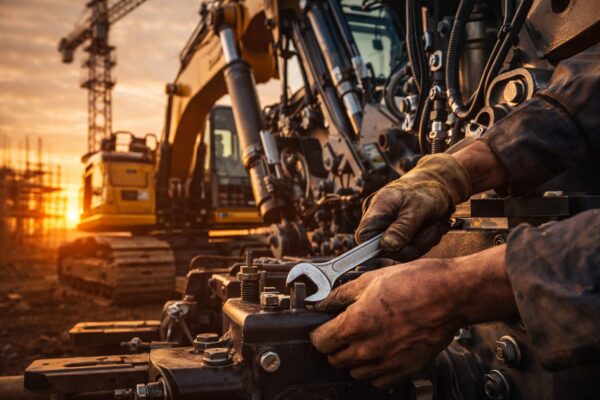
The same applies to civil engineering work in general.
Road construction, bridge construction, riverworks… all of these are jobs that involve working with nature.
The condition of the ground after it rains, the safety of scaffolding on windy days, how to handle materials depending on the temperature…
After all, only humans can make these kinds of subtle judgments.
Of course, AI may advance in the future, and we might see even smarter machines.
But how many decades from now will that be?
The evolution of machinery alone isn't enough.
A combination of human judgment, experience, and adaptability is absolutely essential.
And these days, machines are so over-engineered with all these sensors that if they break down on site, nobody can even figure out how to fix them lol.
I think it's good to be able to do a variety of things.
But if the sensor gets dirty on site, it won't work lol
Personally, I say don't put any sensors on it! I'm fine with the analog version.
I think anyone who’s actually working in the field would probably understand this well.
It’s pretty common for it to get stuck just because a blade of grass catches on it lol
As far as current engine types go, engines that meet the third-generation emissions standards are the most powerful right now!
Although engines that meet Stage 2 emissions standards spew thick black smoke, they can run on heavy fuel oil or diesel and are easy to use because they’re mechanical.
The current Tier 4 emissions regulations and beyond feel a bit excessive.
It's not uncommon for fuel to become unusable if you leave it sitting around for a while...
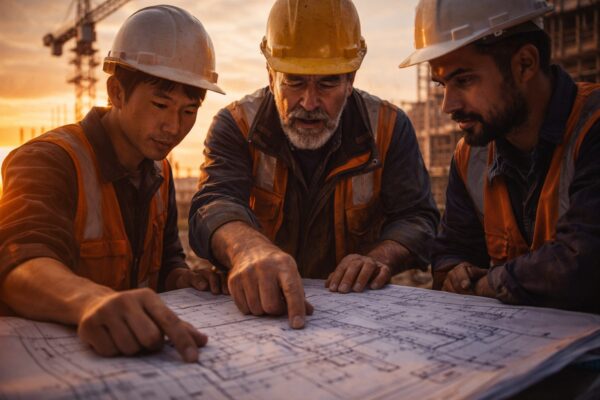
Q2: Is having enough staff enough?
This isn't exactly simple, is it?
Even if there were 100 amateurs, the job site wouldn't run smoothly.
On the other hand, even a single professional can't get the job done.
The construction industry is all about teamwork.
The Ideal BalanceIt looks something like this.
One veteran to every two novices
I feel like this combination is basically pretty low-effort, lol.
The veterans give the orders, and the novices carry them out.
Beginners learn the skills while working on projects.
One veteran, plus three to four second- and third-year employees
If you have some experience, you can handle a slightly larger group, but you still need experienced instructors to provide guidance.
Construction—including specialized civil engineering work—is essentially a combination of specialized technical skills.
All of them require both theory and experience.
And specialized knowledge is also essential.
Comprehensive knowledge of geology, materials, safety, construction management, and more…
Without this, we cannot guarantee a consistent level of quality or finish.
Take rock bolt installation, for example.
Some people think, “All you have to do is drill a hole and put in some rebar,” and they’re actually right lol
But how do you drill a hole? Do you use water? How much force do you need to apply?
When should the grout be filled? Where should the grout be discharged? Where should the load-bearing plate be positioned?
This entire process requires specialized knowledge, skills, and experience.
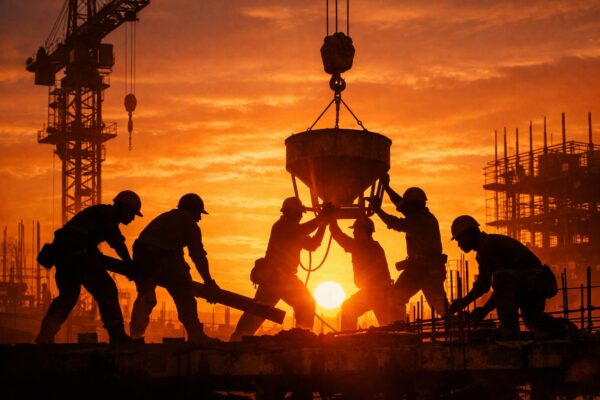
It's the same with civil engineering work in general, isn't it? Concrete pouring, rebar installation, formwork assembly…
None of these things are just a matter of “just doing them,” and even if I wanted to, I couldn’t do them lol
Reinforcement spacing, concrete cover thickness, concrete slump…
Everything has a meaning and a standard.
It's not as simple as just adding more staff.
A balance between experienced and young employees, as well as personnel with specialized knowledge, is absolutely essential.
It’s fine to feed knowledge into AI, but the question of how to use it—and in what situations—is also important, so the reality is that simply increasing capacity through automation or human labor won’t solve the problem.
That's it for now lol
Since these posts have been getting a bit long lately, I'm going to cut this short lol
See you later.