Hello, everyone.
This is Enta.
I mentioned this last time, but since I really liked it, I wanted to share it with you again.
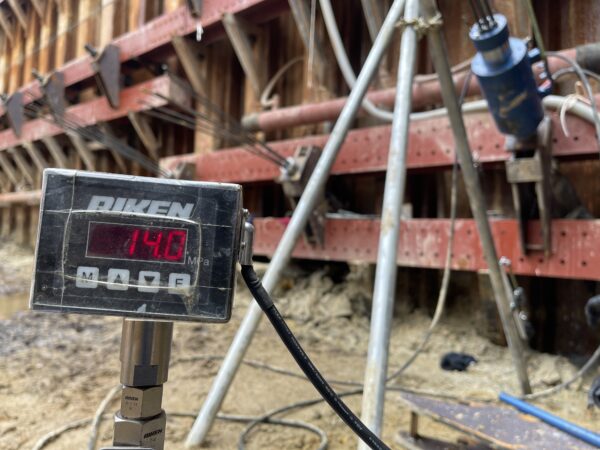
It looks better when we use this, so we've been using only this lately.
Don't you think the photo looks great?
Basically, jack calibration involves calibrating both the jack itself and the gauge attached to it.
For example, when a force of 100 kN is applied using a calibration pressure gauge, the analog gauge will display ○○ kN.
Suppose the calibration gauge reads 100 kN and the jack side reads 100.5 kN. This 0.5 kN difference constitutes the calibration data.
If you look at the calibration chart provided by the manufacturer, you'll see that it's set up that way.
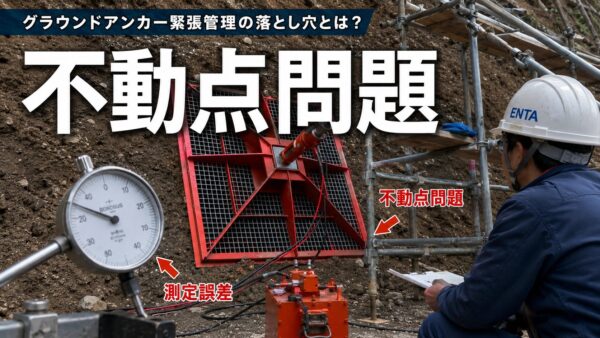
This digital meter is installed between the analog meter and the pump.
Therefore, since we set it to zero when it’s at zero, we get almost the same value. (I say “almost” because digital readings are so precise that analog readings seem unreliable by comparison.)
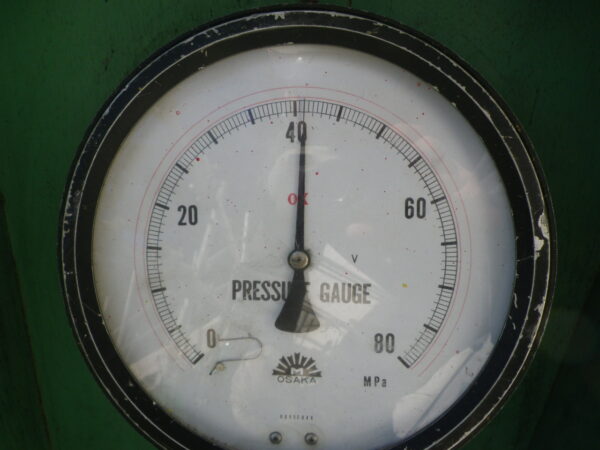
Analog meters generally look something like this, don't they?
It is marked in increments up to 0.5 MPa.
How's the data in our stress analysis report? It's in 0.1 MPa increments, right? lol
I know I basically can't read it, so I'll round it down to 1 credit or 0.5 credits. (Better to err on the safe side so I don't get too stressed out.)
There are inspectors who nitpick about this kind of thing, aren't there? lol
The real benefits of using digital technology areClear and easy to understandThat's what I mean
To be honest, I don't care if the numbers are hard to read because they're in increments of 0.5 or 1 lol.
A little bit of error doesn't matter at all, lol (I think it's stupid to go out and collect 1/100 data when even a slight breeze will change the results, lol).
With analog pressure gauges, it’s easy to miss things, isn’t it!?
It's hard to tell at first glance, isn't it??
With digital, you can tell right away at a glance.
It's almost impossible to mistake it for anything else.
We highly recommend this for future ground anchor tensioning projects!
See you later.