

Hello, everyone.
This is Enta.
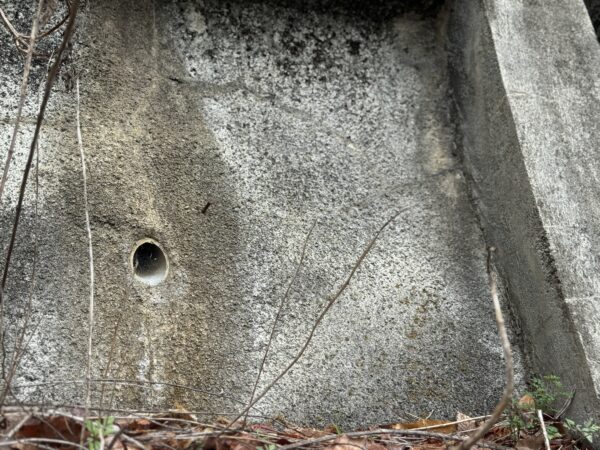
Did you know this?
The nail next to the drain in the frame.
What would the average person think???
Did you forget to take it out?
You might be thinking, “What’s the point of this?” but there’s a reason for it.
Well, I think anyone who’s been in the slope stabilization business for many years is well aware of this.
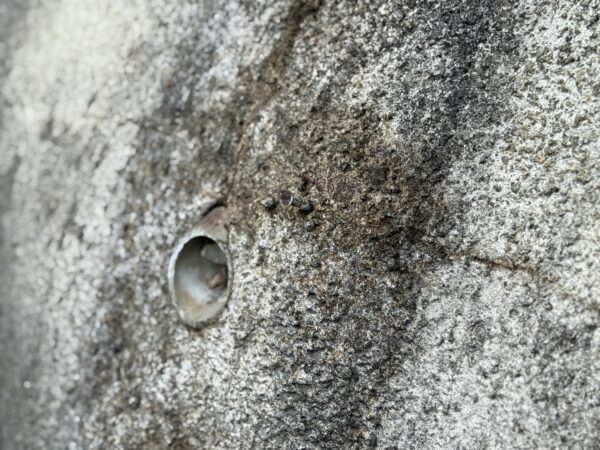
It's hard to see, but the nail head is sticking out about 10 mm.
Actually, this is a nail used to measure spray-applied coating thickness.
For example, if the sprayed thickness is 100 mm, drive a 5-sun nail (150 mm) into the natural ground.
Then drive it in 40 mm and extend it 110 mm.
If the sprayed thickness is 100 mm or more after spraying, the protrusion will be 10 mm or less.
I used this as a guideline for the spray thickness.
There are also prefectures where the special notes specify that this must be done, even under government administration.
I heard that Gifu Prefecture is installing D10 × 200 mm rebar.
I'm not sure if it's still there, though.
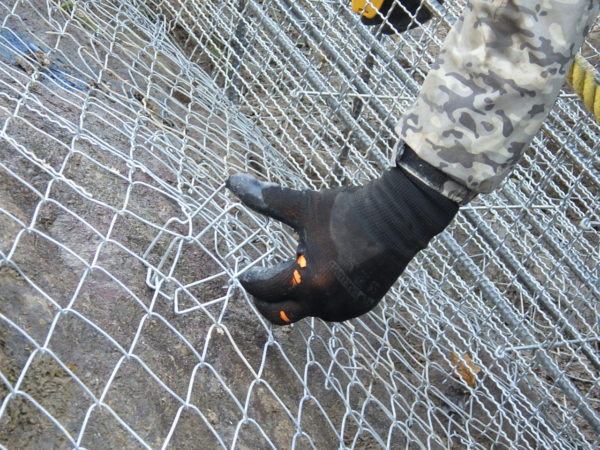
These days, PC spacers and similar products are designed so that when you blow air into them until they’re completely hidden, they reach the exact right thickness.
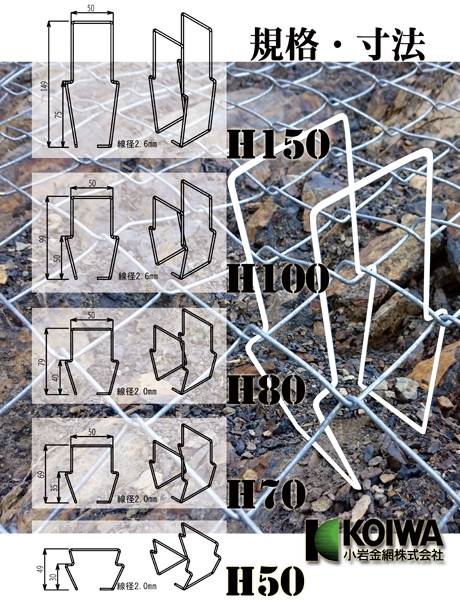
It's 1 mm shorter than the specified thickness, but if you cover it up, the sprayed thickness will be spot on!
With this approach, it's great that waste is kept to a minimum, isn't it?
The methods vary from prefecture to prefecture—how about in your area?
See you later.